
 (209) 878-7320
 info@sureguardmattress.com


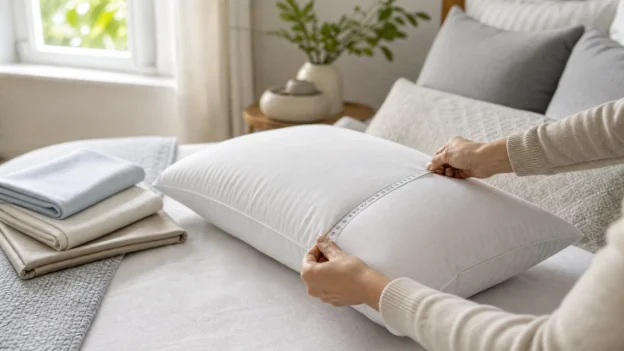
Not every pillow protector cover fits every pillow, and picking one based on the size printed on a label is where most buyers go wrong. Before you compare fabrics or waterproofing, you need to know your pillow’s actual measurements, how you want it to close, and how much protection your situation calls for. This guide walks through those decisions in order, so you end up with a pillow protector cover that matches your pillow and your household, not just the closest guess on a shelf.
Start With Your Pillow’s Exact Dimensions, Not Just Its Name
Pillow size names aren’t standardized across manufacturers. A “queen” pillow from one brand can be within an inch of a “standard” pillow from another. The safest starting point is a tape measure, not the tag.
How to Measure a Pillow for a Cover
Lay the pillow flat and measure its length and width in inches, edge to edge, without stretching the fabric. Measure it uncompressed, in its natural resting shape. A squished measurement reads smaller than the cover actually needs to be. Round up slightly if you’re between two sizes. A cover that’s a touch roomy protects better than one that pulls tight across the seams.
Standard vs Queen vs King Pillow Protector: What Actually Differs
Standard, queen, and king pillows differ by only a few inches per side. A cover that’s slightly too small leaves gaps that let dust mites, pet dander, and moisture reach the pillow anyway, so measuring the actual pillow matters more than trusting the label. As a general guide:
- Standard pillows run roughly 20 by 26 inches.
- Queen pillows run roughly 20 by 30 inches.
- King pillows run roughly 20 by 36 inches.
Body pillows are a different shape entirely, long and narrow rather than rectangular, so they need a dedicated long-format protector rather than a resized standard, queen, or king cover. If your measurements land close to a set size, standard size pillow protectors or a queen size pillow protector set are usually the simplest next step.
Zippered vs Non-Zippered Pillow Covers: Which Closure Fits Your Need
Once you know the size, the closure style decides how much protection actually reaches the pillow. A full-perimeter zipper seals the pillow on all sides, which is why zippered pillow covers are the standard choice when allergens, dust mites, or waterproofing are the priority. There’s no open edge for moisture or debris to slip through.
Envelope-style, non-zippered covers fold over and tuck instead of sealing shut. They’re faster to put on and take off, and many people find them more breathable for everyday use. The trade-off is a seam that isn’t fully closed, so they offer less complete protection against spills or allergens.
If you want a deeper comparison of zippered options against decorative, non-protective pillowcases, the zippered pillow cases versus decorative covers article covers that ground separately. For this decision, the short version is: choose zippered if protection is the priority, and consider a non-zippered style if ease of use and airflow matter more to you than a complete seal.
Waterproof vs Standard Pillow Protector Covers: Matching Protection to Risk
Not every pillow needs full waterproofing. This is really a risk assessment: what’s the realistic chance that liquid, sweat, or allergens will reach this pillow, and what happens if they do?
When You Need Waterproof Pillow Protector Covers
Waterproof pillow protector covers make sense whenever there’s a real chance of moisture reaching the pillow. That includes kids’ beds, homes with pets on the furniture, night sweats, and drooling during sleep. A parent choosing a cover for a child’s pillow needs a fully zippered, waterproof encasement-style protector to guard against nighttime accidents, while an adult without those concerns may not need the same level of sealing. Waterproofing also matters for anyone managing allergies, since a sealed barrier keeps dust mite waste and pet dander from working into the fill.
When a Standard Fabric Cover Is Enough
A standard, non-waterproof fabric cover is often enough for a guest room pillow, a decorative accent pillow, or any low-risk use where the main goal is keeping dust and everyday oils off the pillow rather than blocking liquid. If the pillow already has a low chance of a spill, mattress protectors and waterproofing add cost without adding much real-world benefit.
Terry vs Knit vs Other Fabrics: Choosing the Best Pillow Protector Fabric for Comfort
Fabric affects how a cover feels every night, not just how it protects. The best pillow protector fabric depends on what you’re layering it under and how sensitive you are to texture and temperature.
Cotton terry is soft, quiet, and absorbent, and it’s the fabric most commonly used on waterproof protectors because it hides the barrier layer well and doesn’t feel plasticky against skin. It’s a strong choice if you want a protector that can sit directly under a pillowcase without changing how the pillow feels. Knit and poly-blend fabrics are thinner and cooler, and they tend to be quieter under a smooth pillowcase, which suits sleepers who run warm or who are sensitive to rustling fabric.
For allergy-focused shoppers, fabric choice ties directly into hypoallergenic pillow covers. A tightly woven or knit hypoallergenic fabric paired with a full zipper closure gives the most complete barrier against dust mite allergens. Allergists commonly recommend covers rated to block particles down to roughly the size of dust mite allergens, as part of a broader routine that also includes regular washing. If you want more detail on how terry performs specifically, the benefits of cotton terry fabric article breaks that down further.
Pillow Encasement vs Pillow Protector: Which Level of Coverage Do You Need
“Pillow protector” and “pillow encasement” get used interchangeably, but they describe different levels of coverage. An encasement fully seals all six sides of the pillow, usually with a zipper running the full perimeter, leaving no gap anywhere on the pillow’s surface. A standard protector typically covers the main surfaces of the pillow with a closure at one end or edge, which protects most of the pillow but not with the same complete seal.
The right choice depends on what you’re defending against. If you’re dealing with severe allergies, asthma triggers, or any risk of bed bugs, a full encasement is the safer pick because it leaves no way in or out. If your main goal is general cleanliness and moisture protection rather than a total seal against pests or severe allergens, a standard protector is usually sufficient. For anyone managing diagnosed allergies, it’s worth reading the allergy-focused mattress protector guidance alongside this decision, since bedding protection usually works best as a full system rather than a single cover.
A Quick Decision Checklist Before You Buy
Before you check out, run through these four questions:
- Size: Have you measured the pillow’s actual length and width, rather than trusting the size printed on the tag?
- Closure: Do you need a full zippered seal for allergen and liquid protection, or would an envelope-style closure’s ease and breathability suit you better?
- Waterproofing: Is there a real risk of moisture, or is this pillow low-risk enough for a standard fabric cover?
- Fabric: Do you want the softer, quieter feel of cotton terry, or the cooler, thinner feel of a knit blend?
SureGuard’s own pillow protectors are 100% waterproof, hypoallergenic, and GREENGUARD Gold certified, which gives you a concrete benchmark to compare other pillow protector covers against on all four of those points. SureGuard pillow and mattress protectors also carry an average 4.6 out of 5 star rating across more than 45,000 reviews on Amazon, reflecting real-world fit and durability feedback from a large base of customers.
Once you’ve measured your pillow and worked through the closure, waterproofing, and fabric decisions, the last step is matching those answers to an actual product. Washable pillow protector covers make the whole decision easier to live with long-term, since a machine-washable design means you can keep whichever style you choose clean without extra fuss. For care instructions once your protector arrives, washing and caring for protector covers goes over the basics. And if you’d rather start from the fundamentals of why a protector matters at all before working through these choices, the full pillow protectors guide and the how to choose a pillow protector overview are both good companions to this decision guide. With your size, closure, waterproofing, and fabric decisions made, you’re ready to shop pillow protector covers sized and styled to match your exact pillow. Rest assured with SureGuard.

