
 (209) 878-7320
 info@sureguardmattress.com


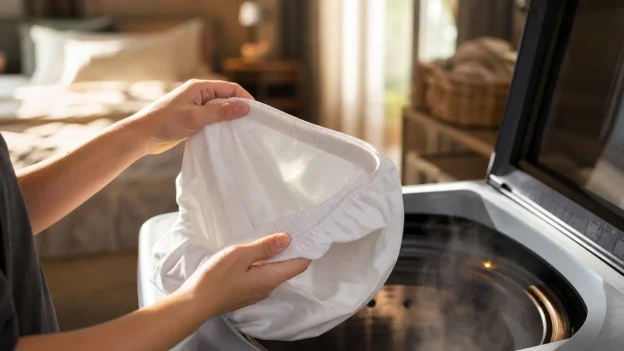
Knowing how to wash a mattress protector correctly is the difference between a barrier that lasts years and one that fails after a handful of cycles. Waterproof protectors have a membrane layer, usually thermoplastic polyurethane (TPU), that needs specific handling to stay intact. Get that part wrong and the protector still looks fine on the surface, but water passes straight through. This guide covers temperature, detergent, drying, and the habits that keep your protector working the way it should.
Before You Start: Check the Mattress Protector Cleaning Instructions
Why the care label matters for waterproof bedding
Not all mattress protectors are made the same way. A quilted cover with no backing cleans very differently from a waterproof-backed protector with a TPU membrane. The care label exists to account for those differences. Ignoring it is the most common reason protectors delaminate, that’s when the waterproof layer physically separates from the fabric, or shrink after a wash.
Understanding how waterproof mattress covers work helps explain why the care steps matter so much. The membrane is bonded to the fabric under precise conditions; the wrong wash undoes that bond.
What to look for on the tag
Check for these specifics before you load the machine:
- Maximum water temperature, usually 40°C (104°F) or 60°C (140°F). Stick to the lower end for waterproof-backed products.
- Tumble dry guidance, low heat only, or air dry only. This is critical.
- Bleach and softener restrictions, most waterproof protectors prohibit both.
- Machine type, some labels specify no agitator machines.
If the label is missing or unreadable, default to a cool gentle wash and low-heat dry. That approach is conservative enough to protect the membrane while still cleaning the fabric.
How to Machine Wash a Mattress Protector the Right Way
A machine wash routine doesn’t need to be complicated, but a few specific choices make a real difference in how long the waterproofing holds up.
Choosing the right water temperature
Warm water, around 40°C (104°F), is the right call for most waterproof mattress protectors. Hot water, even a single hot cycle, can begin to break down the TPU membrane bond. Cold water works too and is gentler still, though it’s less effective at lifting body oils and allergens from the fabric.
Front-loading washers or large-capacity top-loaders without a central agitator are ideal. The agitator in a standard top-loader pulls and twists fabric repeatedly, which stresses the seams and the membrane bond over time. If a front-loader isn’t available, use the gentlest cycle your machine offers and keep the load balanced.
Detergent dos and don’ts
Use a mild liquid detergent, the kind marketed for delicate fabrics works well. Liquid detergents rinse out more completely than powders, which can leave residue in the membrane pores.
Avoid these entirely:
- Fabric softener, coats and clogs the membrane, destroying waterproofing permanently
- Bleach, degrades both the fabric and the TPU layer
- Dryer sheets, the same clogging problem as fabric softener, applied at the drying stage
- Enzyme-based stain boosters, can weaken the membrane with repeated use
SureGuard’s GREENGUARD Gold certified mattress protectors carry that certification because the materials are tested for chemical emissions. Gentle washing preserves those material properties. Harsh detergents work against the same standards the certification is designed to uphold.
These mattress protector cleaning instructions apply broadly, but always defer to your specific care label if it differs.
Drying Your Mattress Protector Without Damaging the Waterproof Layer
Drying is where most people unknowingly ruin their protector. High heat is the primary cause of membrane delamination, not overwashing, not the wrong detergent, but a too-hot dryer cycle.
TPU membranes are heat-sensitive by nature. Once the membrane delaminates, it cannot be rebonded. The protector may still cover the mattress, but it no longer blocks liquid. To understand what makes a mattress protector truly waterproof, it helps to know that the membrane’s integrity depends on keeping that bond intact through every wash and dry cycle.
The right approach:
- Tumble dry on low heat, most protectors tolerate this well when kept at the low setting throughout
- Air dry flat if you have time, this is the gentlest option and eliminates heat risk entirely
- Remove promptly once dry, leaving a damp protector in the drum encourages mildew and sets in musty odors that are difficult to remove
Avoid high heat entirely, even to speed things up. One hot dry cycle can undo the waterproofing that a hundred careful washes maintained.
How Often Should You Wash Your Mattress Protector?
Under normal use, washing every one to two months is the right frequency for most households. That cadence keeps allergens, body oils, and dust mites from building up in the fabric without putting unnecessary stress on the membrane.
Some situations call for more frequent washing:
- Pets on the bed, pet dander and oils transfer to the protector quickly; monthly or bi-weekly washing is reasonable
- Young children, accidents and spills make more frequent washing necessary
- Allergy sufferers, a monthly wash helps keep dust mite allergens at a low level
- Incontinence needs, wash after every incident
One point that many people overlook: keeping your protector clean and functional also protects your mattress warranty. Most mattress manufacturers require evidence that the mattress was protected from stains and liquid damage to honor a claim. A damaged or non-functional protector leaves that warranty exposure open. SureGuard backs its protectors with a 10-year warranty, and following care instructions is part of maintaining that coverage, using harsh chemicals or high heat that damages the waterproof backing can void the protection.
Why using a mattress protector matters goes deeper into this, including the mattress warranty angle.
Caring for Your Mattress Cover: Habits That Extend Its Life
How you care for your mattress cover between washes matters just as much as the wash routine itself. Small habits add up.
Spot-cleaning between washes
Quick action on spills reduces how often a full wash is needed, and every avoided wash extends the membrane’s lifespan.
For most spills: blot immediately with a clean, dry cloth. Don’t rub, rubbing pushes liquid deeper into the fabric. Once the liquid is absorbed, clean the area with a damp cloth and a small amount of mild detergent. Rinse by blotting with plain water, then let the area air dry completely before putting bedding back on.
Avoid soaking the protector during spot cleaning. Saturating it outside of a controlled wash cycle can affect how the membrane dries and sits.
When to replace your protector
Even with careful washing and spot cleaning, protectors don’t last forever. These are the clear signs it’s time to replace:
- Visible cracking or peeling of the backing, the membrane has already delaminated
- Water no longer beads on the surface, the waterproofing has failed
- Persistent odors that washing doesn’t resolve, bacteria have embedded in the fabric or membrane
- Visible staining that has set through, the barrier has been compromised
If you’re seeing any of these, choosing the right mattress protector walks through what to look for in a replacement. Or if you already know what you need, a replacement mattress protector built to last is a straightforward next step.
SureGuard protectors have earned an average rating of 4.6 out of 5 stars across more than 45,000 reviews on Amazon, a volume of real-world feedback that reflects how long these protectors perform when cared for correctly.
Washing Waterproof Bedding: Common Mistakes and How to Avoid Them
These are the mistakes that damage waterproof bedding most often:
- Using fabric softener, strips the waterproof membrane in as few as one or two washes; there is no recovery from this
- Washing or drying on high heat, causes shrinkage and delamination; the membrane cannot be repaired
- Overloading the machine, the protector doesn’t agitate evenly, leading to patches of detergent residue and uneven mechanical stress on seams
- Ignoring fresh stains, letting stains set before washing makes them harder to remove and increases the risk of odors persisting
- Skipping the care label, different constructions have different limits; guessing costs you the protector
Washing waterproof bedding properly also supports your mattress warranty. Many mattress claims are denied because liquid reached the mattress, a functioning protector is the evidence that you took reasonable care. See how mattress protector warranties compare to understand what good warranty coverage looks like across the category.
Pet owners washing more frequently for dander and odor control are especially prone to these mistakes, not because of the washing frequency itself, but because of the instinct to reach for hot water and fabric softener. For waterproof solutions designed for pet owners that handle regular use, the right care routine makes all the difference. Warm water and a gentle detergent gets the job done without sacrificing the barrier.
Follow the steps in this guide and your protector stays functional, your mattress stays protected, and your warranty stays valid. Rest assured with SureGuard.

