
 (209) 878-7320
 info@sureguardmattress.com


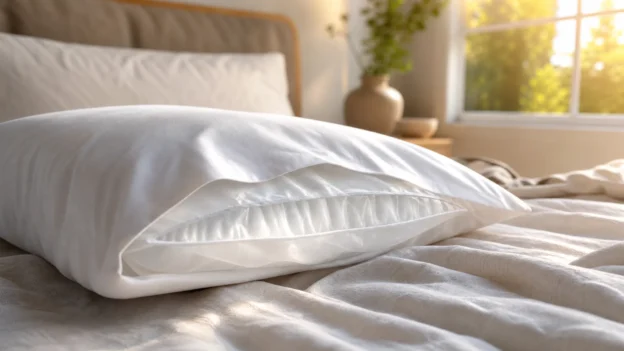
Pillow protectors are one of the most overlooked items in a healthy sleep setup, yet they do more functional work than almost anything else on your bed. A good protector guards your pillow against sweat, allergens, dust mites, bed bugs, and spills, all while staying invisible under your pillowcase. This guide covers what pillow protectors actually do, how to choose one, and why the right certification matters more than the price tag.
What Is a Pillow Protector, and Why Your Pillowcase Isn’t Enough
A pillow protector is a fitted barrier that sits directly over your pillow, between the pillow itself and your pillowcase. Its job is functional: it blocks liquids, allergens, and pests from penetrating the pillow fill. A pillowcase sits on top of the protector and handles aesthetics and surface comfort.
Pillow encasements are a close cousin, they fully enclose the pillow on all six sides with a zip closure, offering the most complete barrier. Standard protectors typically use a fitted or zippered design that covers the pillow fully but may use different closure styles. Both are distinct from pillowcases in one critical way: they use barrier materials rather than plain woven fabric.
Pillow Protector vs Pillowcase: Key Differences
| Feature | Pillowcase | Pillow Protector |
|---|---|---|
| Purpose | Decorative, surface comfort | Functional barrier |
| Material | Plain woven cotton or polyester | Membrane-backed or tightly woven barrier fabric |
| Blocks liquids | No | Yes (waterproof versions) |
| Blocks allergens | No | Yes (hypoallergenic versions) |
| Blocks dust mites | No | Yes (tightly woven or encasement) |
| Used together? | Yes, on top of protector | Yes, under pillowcase |
You need both. The protector does the protection work; the pillowcase provides the soft sleeping surface and can be swapped and washed frequently. Together, they form a complete hygiene system for your pillow.
For a deeper look at the benefits of pillow protectors and how to choose one, the full breakdown covers material and closure options in detail.
The Four Protection Benefits Every Pillow Protector Should Deliver
A quality protector doesn’t specialize in just one threat, it addresses all four of the main risks that shorten a pillow’s life and affect sleep health.
Waterproof Pillow Protection: Blocking Sweat, Oils & Spills
Every night, the average sleeper loses moisture through perspiration. Over months, sweat and body oils soak through a pillowcase and into the fill, creating the yellow staining most people associate with aging pillows. That discoloration isn’t cosmetic, it signals bacterial and moisture buildup inside the pillow itself.
Waterproof pillow protectors use a thin membrane layer (typically TPU, thermoplastic polyurethane) bonded to the fabric. This membrane blocks liquid at the surface without creating the stiff, crinkly feel associated with older vinyl-style covers. Modern cotton-top designs feel almost identical to a regular pillowcase from the sleeping side.
Spills, drool, and nighttime drinks are stopped before they reach the fill, a particularly relevant concern for kids’ beds and anyone prone to nighttime congestion. For a thorough waterproof pillow protector durability analysis, real-world wash testing data shows how membrane integrity holds up over repeated laundering.
Hypoallergenic Defense: Dust Mites, Pet Dander & Pillow Covers for Allergies
Dust mites thrive in bedding. They feed on shed skin cells, and pillows, warm, humid, and close to the body, are a near-ideal habitat. Pillows without a protective barrier accumulate allergen levels over time that can aggravate asthma and rhinitis, a finding consistent across indoor air quality and allergy research. Because pillows sit closest to the nose and mouth during sleep, allergists and sleep hygiene specialists consistently recommend encasing pillows, not just mattresses, as part of a complete allergen-reduction strategy.
Hypoallergenic pillow protectors that block dust mites and allergens work by using either a tightly woven fabric (pore size below 10 microns blocks mite passage) or a membrane-backed construction that provides a physical barrier regardless of weave density.
Pet dander is a related concern. A pillow left unprotected can absorb dander and hair within days of a pet sleeping on the bed. A sealed-surface protector stops these particles from penetrating the fill, where regular washing can’t reach. For households managing pet allergies, pillow covers for allergies are a first-line defense rather than an optional extra.
Bed bug protection is the fourth major benefit. Pillow encasements with fully zipped closures prevent bed bugs from establishing inside the pillow fill, and they trap any existing bugs inside if an infestation is discovered, making treatment more manageable. For complete peace of mind, pairing pillow-level protection with what to look for in bed bug mattress protection covers the whole sleep surface.
Mold and odor resistance follows naturally from waterproof protection. A pillow that never gets wet inside can’t develop the musty odor that signals mold growth in the fill, which extends the usable life of the pillow significantly.
How to Choose a Pillow Protector: Materials, Certifications & Fit
Shopping for pillow protectors means evaluating four practical factors: material, waterproofing method, closure style, and size.
Material: Cotton-top protectors are the most comfortable choice for most sleepers, the surface breathes, doesn’t retain heat, and feels natural against skin. Fully synthetic protectors cost less but can feel warmer and less comfortable over long periods.
Waterproofing method: TPU membrane backing is the current standard for premium washable pillow protectors. It’s quieter and more durable through wash cycles than older PVC or vinyl coatings. Treated fabrics (DWR coating) offer some water resistance but degrade faster with washing.
Closure style: Zippered encasements offer the most complete protection, no gap for allergens or pests. Fitted styles (similar to a fitted sheet) are easier to put on but leave a small opening at one end.
Size fit: Pillow protectors queen size (typically 20″ × 28–30″) and pillow protectors king size (typically 20″ × 36–40″) differ meaningfully. A protector that’s too large won’t hold the pillow snugly, and a gap at the closure undermines allergen and bed bug protection. Always match the protector size to your actual pillow dimensions, not just your bed size, a queen bed often uses standard-size pillows.
What GREENGUARD Gold Certification Really Means for Your Family
GREENGUARD Gold is an independent certification from UL (Underwriters Laboratories) that tests products against strict chemical emission limits, covering over 360 volatile organic compounds (VOCs) and other chemicals. Products carrying this credential have been verified to emit low enough levels that they meet standards designed for sensitive environments, including schools and healthcare facilities.
For bedding, GREENGUARD Gold certification matters most in two scenarios: children’s bedrooms (where kids spend 10–12 hours in close contact with bedding) and households with allergy sensitivities (where chemical off-gassing can compound respiratory irritation). SureGuard pillow protectors carry GREENGUARD Gold certification, independently tested against these strict chemical emission standards, a credential that’s particularly relevant for children’s bedrooms and health-conscious households.
Wash durability is the other key value signal. A washable pillow protector that maintains its waterproof membrane and allergen barrier through dozens of wash cycles is worth paying more for upfront.
For households managing allergen exposure across the whole bed, choosing the best mattress protector for allergies follows the same certification and material logic at the mattress level.
Who Needs a Pillow Protector Most? Use Cases for Every Household
New parents and toddlers. Young children drool, sweat heavily during sleep, and go through potty training, all of which create liquid exposure risk for pillows. Pillow protectors for kids need to be waterproof, certified safe for close contact, and durable enough for frequent washing. GREENGUARD Gold certification is a non-negotiable in this category. For more on setting up a safe sleep environment, bedding protection essentials for new parents covers the full picture.
Allergy and asthma sufferers. Dust mite pillow protectors and allergen-blocking encasements are a clinical recommendation for anyone managing allergic rhinitis or asthma. Because the pillow is directly under the face during sleep, allergen exposure from an unprotected pillow is higher than from the mattress surface.
Pet owners. Pets on the bed deposit dander and hair faster than most owners expect. Pillow protectors for pets need a fully sealed surface, a fitted non-zippered style still allows particles to enter at the opening. A zippered waterproof encasement is the right choice here. Waterproof bedding solutions for pet owners covers the mattress side of this problem.
Renters and Airbnb hosts. Protecting pillows from guest use preserves them far longer, reduces replacement costs, and provides a clear hygiene standard. Waterproof, washable protectors make turnover cleaning straightforward.
Value vs. Premium Pillow Protectors: What You Actually Get for the Price
Budget pillow protectors, typically thin polyester with no certification and a basic water-resistant coating, cost less upfront but carry hidden costs. The waterproofing degrades after a limited number of washes, the barrier against allergens is inconsistent, and the pillow underneath still needs replacing on roughly the same schedule as an unprotected one.
Premium options, cotton-top, TPU membrane, GREENGUARD Gold certified, with a substantial warranty, cost more per unit but extend pillow life meaningfully. A quality pillow that costs $60–$100 and lasts 5+ years behind a good protector is cheaper than replacing a $40 pillow every 18 months because it’s absorbed enough sweat and oils to degrade. The protector effectively amortizes its cost across the pillow’s extended lifespan.
With over 45,000 customer reviews across SureGuard products on Amazon and an average rating of 4.6 out of 5 stars, the real-world performance track record is documented at scale, not just in lab conditions. That volume of verified experience is a more reliable signal than any single review or marketing claim.
The best pillow protectors for long-term household value combine: GREENGUARD Gold certification, a cotton top layer, TPU waterproof membrane, zippered closure, and a manufacturer warranty of at least 10 years.
Caring for Your Pillow Protectors: Washing, Drying & Replacing
Washable pillow protectors should be laundered every 1–2 months under normal use, more frequently if you’re managing allergies, have pets on the bed, or a child is using the pillow. Wash in cool or warm water (not hot) on a gentle cycle; high heat can degrade the TPU membrane over time.
Tumble dry on low heat. High dryer heat is the most common cause of early membrane failure. If the protector comes out of the dryer still slightly damp, air-dry it flat rather than running another high-heat cycle.
Signs it’s time to replace: visible cracking or peeling on the membrane side, any liquid passing through to the pillow during normal use, or persistent odor after washing. A quality protector with proper care should remain fully functional for several years, a 10-year warranty on a premium product is realistic precisely because the materials support it.
Rest Assured with SureGuard
A quality pillow protector is the single most cost-effective step you can take to protect both your pillow investment and your family’s sleep health. Whether you’re managing allergies, protecting a child’s bed, or simply extending the life of good pillows, the right barrier makes a measurable difference.
SureGuard Pillow Protectors combine a soft cotton top surface, a quiet TPU waterproof membrane, GREENGUARD Gold certification, and a 10-year warranty, available in toddler, standard, queen, king, euro and body sizes to fit just about any bed pillow. Rest assured with SureGuard.

