Bed Bug Mattress Cover Encasements: Complete Buying Guide

Bed Bug Mattress Cover Encasements: Complete Buying Guide

A quality bed bug mattress cover is one of the most practical investments you can make for your sleep environment, whether you’re guarding a clean mattress against future infestation or dealing with an active one right now. Not all covers are equal, though. The difference between a basic protector and a certified encasement can mean the difference between genuine protection and a false sense of security. This guide breaks down exactly what to look for so you can choose with confidence.


What a Bed Bug Mattress Cover Actually Does

A bed bug mattress cover, specifically a full encasement, works in two directions at once. It blocks new bugs from getting in, and it traps any bugs already living inside your mattress.

That dual role is what sets a real encasement apart from most bedding accessories.

Prevention vs. Containment: Two Jobs, One Cover

Prevention is straightforward: a sealed encasement creates a physical barrier that bed bugs cannot penetrate. If your mattress is currently clean, the cover keeps it that way.

Containment is equally important. Bed bugs often establish themselves deep inside mattress seams and padding, areas you can’t easily treat. A full six-sided encasement seals those bugs inside, cutting off their access to a blood meal. Without feeding, they eventually die off. Pest control professionals consistently recommend full six-sided encasements as part of an integrated bed bug management plan because they eliminate the mattress as both a harborage site and a feeding ground.

One critical detail: bed bugs can survive for several months to over a year without a blood meal, depending on temperature and life stage. That’s why pest control guidelines specify that encasements must remain sealed and intact for at least a year after an infestation to ensure trapped bugs die off. Encasements don’t replace professional treatment, but they significantly reduce reinfestation risk.

A standard top-only mattress protector does neither job completely. It covers the sleeping surface but leaves the sides, corners, and base of the mattress exposed, exactly where bed bugs travel and hide.


Key Features of a Bed Bug Proof Mattress Cover

Not every product marketed as a bed bug proof mattress cover actually delivers that protection. These are the features that separate genuine encasements from marketing claims.

Zipper Design and Bite-Guard Seals

The zipper is the most vulnerable point of any encasement. Look for:

  • Micro-zipper teeth, tight enough that even bed bug nymphs (which are very small) cannot squeeze through
  • End-stop flaps or Velcro bite-guard seals, these cover the zipper pull and prevent bugs from exploiting the small gap where the zipper ends
  • Full perimeter closure, the zipper should run around the entire mattress, not just one side

A zipper without an end-stop is a known weak point. High-quality encasements address this with a sewn-down flap that covers the zipper tail completely.

Fabric Weave and Bug-Proof Barrier

The fabric itself must meet a specific standard. Pore size matters, the weave must be tight enough that bed bugs and their eggs cannot pass through in either direction.

Look for fabric described as tear-resistant and bite-proof. Some lower-cost encasements use thin, loose-weave materials that bugs can puncture or that degrade quickly with washing. More advanced encasements, like those made by SureGuard, feature a non-woven durable TPU backing that holds up over multiple years.


Certifications and Quality Standards to Look For

Third-party certifications are the most reliable shortcut when evaluating mattress encasement bed bug products. A certification means an independent lab has tested the product, not the manufacturer’s quality control team.

GREENGUARD Gold is the benchmark to prioritize for chemical safety. It verifies that a product meets strict limits on volatile organic compound (VOC) emissions and chemical off-gassing. This matters especially for children’s rooms and for adults who are sensitive to synthetic materials. A GREENGUARD Gold certified encasement confirms the cover won’t introduce new chemical risks while protecting against biological ones.

SureGuard mattress encasements carry GREENGUARD Gold certification, independently verifying that the materials meet strict chemical emission standards, an important assurance for families with children or anyone sensitive to off-gassing. That certification can be verified through the UL GREENGUARD certification database.

Without third-party certification, you’re relying entirely on the brand’s own claims. That’s a meaningful gap in accountability, especially for a product meant to protect your family’s health long-term.


Bed Bug Mattress Encasement vs. Basic Mattress Protector

This is the most common point of confusion for shoppers, and the distinction is practical, not just technical.

Feature Basic Mattress Protector Bed Bug Mattress Encasement
Coverage Top surface only All six sides
Bed bug protection None (sides exposed) Full perimeter seal
Waterproofing Usually yes Yes (with non-woven backing)
Zipper closure No Yes, with end-stop seal
Allergen barrier Partial (top side only) Yes (tight weave/non-woven backing)

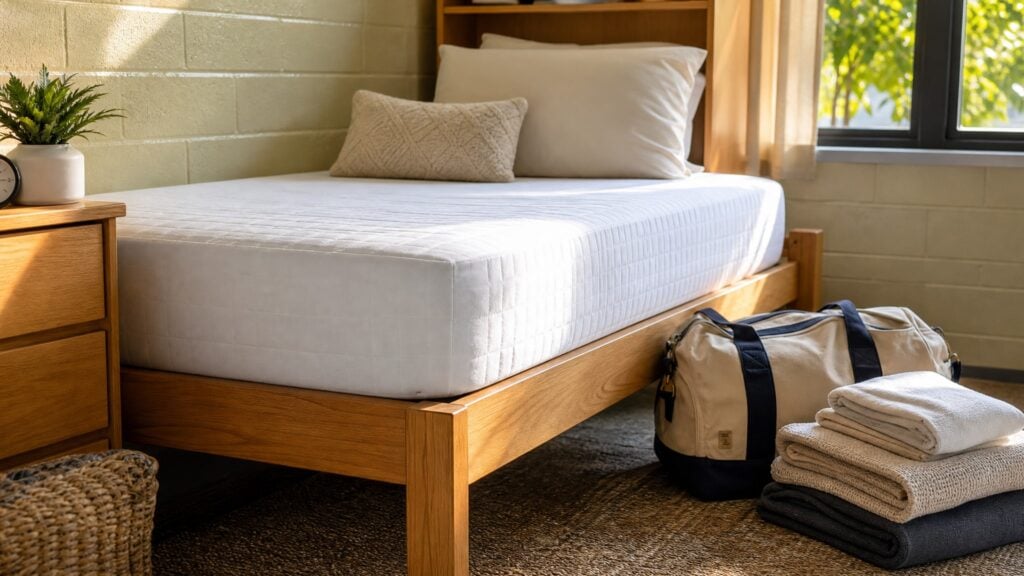
A basic waterproof protector is useful against spills and surface allergens. For bed bug mattress encasement protection, whether you’re preventing an infestation or containing one, only a full encasement works. This is especially relevant in high-risk environments: rentals, hotels, shared housing, college dormitories, or any space with high mattress turnover.

Don’t forget the box spring. Bed bugs harborage heavily in box springs, so pairing your mattress encasement with a box spring encasement closes that gap in your protection.


Dust Mite and Bed Bug Mattress Cover: Double Duty Defense

A dust mite and bed bug mattress cover solves two problems with one product, and for many households that’s the deciding factor.

The same tight-weave fabric or non-woven backing that blocks bed bugs also blocks dust mite allergens, particles that are comparable in size. A quality encasement creates an allergen barrier between you and the accumulated dust mites, dead skin cells, and pet dander inside the mattress. For allergy sufferers, this means cleaner air at nose level during sleep.

This double-duty protection is especially relevant for families with young children, adults with asthma or rhinitis, and anyone managing a household with pets. You’re not choosing between pest protection and allergen control, a well-made encasement delivers both.


How to Choose the Best Mattress Cover for Bed Bugs: Practical Checklist

Knowing what features matter is useful. Knowing how to apply them when shopping is what leads to the right purchase. Here’s a concrete framework.

Sizing and Depth Fit

An encasement that doesn’t fit correctly leaves gaps, defeating the entire purpose.

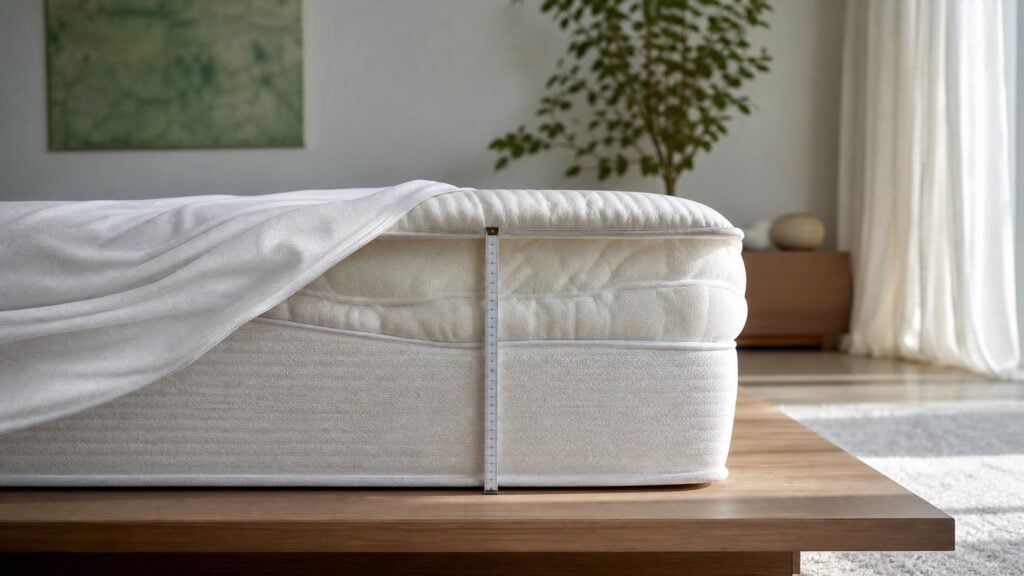
  • Measure your mattress depth before buying. Standard mattresses run 8–12 inches deep; pillow-top and hybrid models often reach 14–16 inches or more.
  • Choose an encasement rated for your exact depth range. Too loose means bunching and potential zipper stress; too tight means the fabric may tear or the zipper may not close fully.
  • Check that sizing applies to the full mattress, not just the footprint, depth is the dimension most buyers overlook.

The SureGuard mattress encasement is available in depth-specific sizing options to ensure a proper seal regardless of mattress thickness.

Durability, Washability, and Warranty

A mattress encasement needs to last, and it needs to be easy to maintain.

  • Machine washability is a practical requirement. An encasement you can’t conveniently wash won’t get washed, which undermines hygiene over time. Check that the product tolerates regular machine washing without delaminating or shrinking.
  • Warranty length is one of the clearest signals of build quality. A 10-year warranty means the manufacturer stands behind the product for long-term use. Many budget encasements carry no warranty or only 1-year coverage, a meaningful difference when you’re buying something you’ll rely on for years.

SureGuard products are backed by a 10-year warranty and have earned an average rating of 4.6 out of 5 stars across more than 45,000 customer reviews on Amazon, real-world evidence of consistent durability and protection.

If you want to compare top-rated waterproof mattress protectors before deciding, that’s a useful next step. But if your priority is certified, full-perimeter bed bug defense with a proven track record, a SureGuard encasement is built for exactly that job.

Rest assured with SureGuard, explore the full range of certified mattress encasements and find the right fit for your bed size and depth today.

Best Waterproof Mattress Protector Comparisons and Ratings

Best Waterproof Mattress Protector Comparisons and Ratings

Choosing the best waterproof mattress protector is both a health decision and a financial one. A single spill on an unprotected mattress can void your warranty, trigger mold growth, and give dust mites exactly the damp, warm environment they need to multiply. The right waterproof mattress protector blocks all of that, quietly, every night.

Why Waterproof Mattress Protection Actually Matters

Most people buy a mattress and consider the job done. But without a waterproof barrier, your mattress absorbs sweat, spills, and skin cells night after night. Dust mites thrive in bedding that retains warmth and moisture; an unprotected mattress can harbor millions of mites over time. A breathable, waterproof barrier disrupts both the moisture and the food source, shed skin cells, that sustain them.

The financial stakes are just as real. Mattress warranties are generous on paper but narrow in practice. Stains and soiling are among the most common grounds for claim denial. That $1,500 mattress you bought last year may already be unprotected. A quality waterproof mattress protector is the practical fix, a low-cost safeguard on a high-value asset.

Allergists and sleep health organizations consistently recommend encasing mattresses and pillows in allergen-barrier covers as a first-line, non-pharmaceutical intervention for dust mite allergy. That makes certification and barrier integrity core selection criteria, not optional extras.

What to Look for in a Top-Rated Mattress Protector

Four criteria separate a good buy from a regret: waterproof barrier type, surface material, certifications, and warranty length. Prioritizing all four, not just price, is what the best waterproof mattress protector reviews consistently recommend.

Waterproofing Technology: Membrane vs. Laminate

Membrane (TPU) barriers are thin, flexible, and breathable. They block liquids without trapping heat, making them the preferred choice for adults who sleep warm. Laminate barriers are more rigid and typically less breathable, they work, but comfort suffers over time.

Surface material matters too. Cotton feels softer, absorbs surface moisture quickly, and wicks heat away. Polyester is more durable and easier to care for, but can feel warmer. Premium protectors layer cotton terry over a TPU membrane for comfort and protection together.

Certifications That Signal Safety: GREENGUARD Gold Explained

A GREENGUARD certified mattress protector has been independently tested for chemical emissions. GREENGUARD Gold, the higher tier, requires testing against more than 360 chemical emissions and VOC thresholds, making it one of the most rigorous indoor air quality standards available for consumer bedding products. For parents putting a protector on a child’s mattress, that certification is meaningful assurance, not just a badge.

Look for it on the product page. If a protector doesn’t list it, assume it hasn’t been tested.

Best Waterproof Mattress Protectors: Side-by-Side Comparison

The table below covers four common market tiers. This is the comparison most waterproof mattress protector reviews skip, warranty length and certification status together.

Tier Waterproof Barrier Top Surface GREENGUARD Gold Warranty
Budget Laminate Polyester No 1 year
Mid-Range TPU membrane Polyester blend No 2 years
Mid-Premium TPU membrane Cotton-poly Sometimes 2–3 years
Premium (SureGuard) TPU membrane 100% Cotton Yes 10 years

Warranty Comparison: 1-Year vs. 10-Year Coverage

SureGuard’s flagship mattress protector carries a 10-year warranty, roughly five to ten times longer than most budget and mid-range competitors, which typically offer one to two years. That gap matters when you consider that a quality mattress lasts eight to ten years. A protector warranty that expires in year two leaves your mattress unprotected for the rest of its life.

A 10-year warranty also signals manufacturing confidence. Brands offering one-year coverage have less skin in the game.

Warranty nuance worth knowing: most protector warranties cover manufacturing defects, not misuse. Read the terms for waterproofing degradation clauses, a good warranty explicitly covers loss of waterproof function over time.

Value vs. Premium Protectors: Where the Real Difference Lies

Budget protectors cost less upfront but typically use laminate barriers that crack over time, losing waterproof integrity after repeated washing. The feel is often plasticky, and certifications are absent.

Mid-range options improve the surface feel and switch to TPU membranes, but most still lack GREENGUARD Gold certification and cap warranties at two years. For a child’s room or an allergy household, that’s a meaningful gap.

Premium protectors, particularly those with cotton surfaces, GREENGUARD Gold certification, and long warranties, cost more per unit but protect the mattress for its full lifespan. When you factor in mattress warranty protection and family health, the price gap closes quickly.

How a Mattress Protector Protects Your Mattress Warranty

Most major mattress brands, including Saatva, Purple, and Tempur-Pedic, explicitly state in their warranty documentation that stains or soiling can void the warranty, regardless of cause. An unprotected spill can turn a multi-year guarantee into nothing.

This is not fine print buried at the back. It is a standard clause, and claims are denied on this basis regularly.

The logic is straightforward: a stain is evidence that liquid reached the mattress. Once that happens, manufacturers have no way to assess whether the stain caused structural damage, and most don’t try. They deny the claim.

Using a certified, fully waterproof protector from day one means your mattress stays in warranty-eligible condition for its full term. No spill reaches the foam. No claim gets denied on a technicality.

Who Needs a Waterproof Mattress Protector Most

Parents with young children. Potty training is unpredictable. A single night-time accident on an unprotected mattress can leave stains and odors that are nearly impossible to fully remove, and that immediately void the mattress warranty. A waterproof protector is non-negotiable during this stage.

Allergy and asthma sufferers. Dust mite allergens are a leading trigger for both conditions. A waterproof, allergen-barrier protector physically blocks mites from colonizing the mattress and reduces exposure every night. GREENGUARD Gold certification adds the assurance that the protector itself isn’t contributing chemical emissions to the sleep environment.

Pet owners. Pets on beds bring dander, moisture, and the occasional accident. A waterproof barrier handles all three and washes clean without degrading.

Rental and Airbnb property owners. Protecting mattresses across multiple guests extends mattress life and keeps the asset in warranty condition. A long-warranty protector also reduces replacement frequency, a direct operational saving.

Our Pick: Why SureGuard Tops the List in 2026

After comparing barrier types, surface materials, certification status, and warranty terms, SureGuard’s flagship protector leads on every criterion that matters.

It’s 100% waterproof with a TPU membrane. The top surface is 100% cotton, soft, quiet, and breathable. It holds GREENGUARD Gold certification, meaning it’s been independently tested against more than 360 chemical emissions. And it carries a 10-year warranty, the longest in the category.

For parents, allergy sufferers, pet owners, and anyone protecting a significant mattress investment, those four features together make SureGuard the straightforward answer. The pricing is accessible relative to what it protects, a mattress that likely cost ten to twenty times as much.

Rest Assured with SureGuard.

Find your mattress protector size and complete your order today.