
 (209) 878-7320
 info@sureguardmattress.com


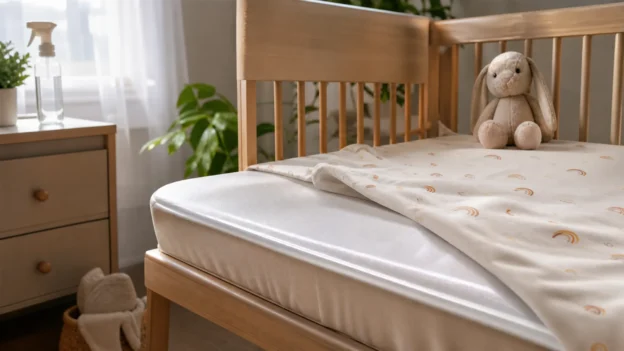
Every parent researching crib bedding eventually runs into the same question: is a fitted sheet enough, or do you actually need a crib mattress cover underneath it? The short answer is that a good cover does a job a sheet was never designed to do, it seals out moisture, allergens, and everyday mess while keeping the sleep surface firm and safe. Here’s how to tell the two apart, what “waterproof” should actually mean for a nursery, and what to look for before you buy.
What Is a Crib Mattress Cover (and How It Differs From a Crib Sheet)
A crib mattress cover, sometimes called a crib mattress protector or crib mattress encasement, is a functional layer that fits directly over the mattress itself. Its job is protection: it blocks liquid, allergens, and dust mites from reaching the mattress core. A crib sheet, by contrast, is the decorative top layer your baby actually touches, chosen for pattern, softness, and coordinating nursery style rather than for barrier performance.
Most crib sheets have little to no waterproofing built in. A few sheets are marketed with a light absorbent backing, but they’re designed to look good in a crib, not to stop a leak from soaking through to the mattress. That’s the gap a dedicated protector fills.
Crib Mattress Protector vs Sheet: Key Differences
- Purpose: a protector guards the mattress; a sheet dresses the bed.
- Materials: protectors use waterproof, hypoallergenic barrier layers; sheets use printed cotton, jersey, or muslin for comfort and looks.
- Fit style: protectors come as fitted covers or full encasements that zip around the entire mattress; sheets are almost always fitted-only.
- Where they sit: the protector goes directly against the mattress; the sheet goes over the protector, closest to your baby.
In practice, these two layers work together. The protector does the defending. The sheet does the decorating.
Why Waterproofing Matters for a Crib Mattress
Crib mattresses are expensive, hard to clean deeply, and used every single night for years. Without a barrier, any liquid that gets past the sheet soaks straight into the foam or coils and stays there.
Protecting Against Leaks and Diaper Blowouts
A newborn can go through several diaper blowouts a week in the early months. Each one that soaks through an unprotected crib mattress can trap moisture and lead to odor or mold inside the mattress core over time. Night sweats, spit-up, and bottle leaks add to the wear. A waterproof crib mattress cover intercepts all of that before it reaches the mattress, so a middle-of-the-night mess means changing a sheet and a cover, not replacing a mattress.
Waterproof Crib Sheet Alternative: When You Need Both Layers
Some parents look for a waterproof crib sheet alternative, hoping one product can do both jobs at once. In reality, a fitted protector paired with a regular sheet almost always outperforms a single “waterproof sheet.” The protector handles the barrier function reliably, while the sheet stays soft and breathable against your baby’s skin. If you want a deeper look at how waterproof barrier layers are built, a waterproof mattress cover guide explains the technology used across sizes, from crib to adult mattresses.
Breathability and SIDS-Safety Considerations
The word “waterproof” makes some parents nervous, understandably. A cover that traps heat or feels soft and padded could work against the safe, firm surface pediatric guidance calls for. The good news: waterproofing and breathability aren’t opposites when a cover is designed correctly.
A well-made crib mattress cover uses a thin, breathable waterproof membrane bonded to a cotton top layer. It stays flat, fitted, and firm, not spongy or padded like a mattress topper. That firmness matters as much as the waterproofing itself.
What Pediatric Sleep Guidance Says About Crib Surfaces
Safe-sleep guidance consistently calls for a firm, flat, fitted crib mattress surface free of soft bedding. That principle should guide how a mattress cover fits and feels, not just whether it’s waterproof. The American Academy of Pediatrics recommends a firm sleep surface with a fitted sheet and nothing else loose in the crib. A properly fitted protector supports that guidance because it hugs the mattress tightly instead of adding loose or plush material. If you want to understand why softer, plastic-feeling covers fall short of this standard, the drawbacks of plastic mattress covers are worth reviewing before you buy.
Hypoallergenic and GREENGUARD Gold Certified Protection for Sensitive Skin
Newborn skin is thinner and more reactive than adult skin, so what touches it night after night matters. A hypoallergenic crib mattress protector creates a sealed barrier against dust mites, pet dander, and other allergens that would otherwise build up inside the mattress over months of use. That’s especially relevant in a nursery, where the mattress rarely gets aired out or replaced.
Why GREENGUARD Gold Certification Matters for Nurseries
GREENGUARD Gold certification screens products against strict chemical emissions limits. It’s one of the most trusted third-party benchmarks for nursery items that sit close to a baby’s skin and airway for hours each night. Unlike vague “eco-friendly” or “natural” claims, GREENGUARD Gold is independently tested, which makes it a far more reliable signal than trend-driven marketing language. For parents comparing options, it’s one of the clearest ways to tell a genuinely low-emission product from one that simply looks appealing in photos. For a broader look at how allergen barriers work across a household, dust mite defense for sensitive sleepers covers the same principles that apply in a nursery.
Choosing the Best Crib Mattress Cover for Your Baby
With so many nursery products marketed on cuteness alone, it helps to judge a crib mattress cover the way you’d judge any safety product: by fit, materials, and the guarantee behind it.
Fit, Material, and Warranty Checklist
- Fit style: a fitted cover with deep pockets stays snug on standard crib mattresses; a full encasement zips around all six sides for maximum coverage.
- Top surface: look for 100% cotton against the skin rather than synthetic or vinyl-feeling fabric.
- Waterproofing: confirm the barrier is fully waterproof, not just water-resistant.
- Certifications: GREENGUARD Gold and hypoallergenic construction are the two credentials worth prioritizing.
- Warranty: a long warranty period signals a manufacturer’s confidence in durability through repeated washing.
SureGuard’s crib-size mattress protector uses the same 100% waterproof, hypoallergenic construction with a pure cotton top surface as its adult mattress protector line, backed by a 10-year warranty. SureGuard has been protecting mattresses since 2013 and is trusted by millions of customers, with an average 4.6-out-of-5-star rating across more than 45,000 reviews on Amazon.
Best Crib Mattress Cover for Potty Training Toddlers
A crib mattress cover for potty training is one of the most practical extensions of this purchase. The same waterproof barrier that handles diaper blowouts as a newborn also handles overnight accidents during toddler potty training, so there’s no need to buy a separate product just for that stage. Once your child moves from a crib to a twin bed, a twin-size protector for potty training carries the same protection forward without interrupting the routine you’ve already built.
For parents stocking a full nursery, it’s also worth thinking beyond the mattress itself. A look at new parent bedding essentials covers the other layers worth protecting early on.
How to Clean and Care for a Crib Mattress Cover
Because a crib mattress cover takes on the mess a mattress otherwise would, cleaning it properly keeps it effective and hygienic. Most waterproof crib covers are machine washable on a cold or warm gentle cycle, using a mild detergent without bleach or fabric softener, both of which can break down the waterproof membrane over time.
Wash the cover after any leak or blowout, and aim for a routine wash every one to two weeks even without an obvious spill, since sweat and skin oils build up over time. Tumble dry on low heat, or air dry, high heat can damage the waterproof layer the same way harsh detergents do. Avoid ironing directly over the protector for the same reason.
Between washes, wipe any surface spills promptly with a damp cloth so liquid doesn’t sit near the seams. For step-by-step washing instructions that apply across protector sizes, how to wash a mattress protector correctly walks through the full process in more detail.
A crib mattress cover isn’t a decorative choice. It’s the layer that determines whether a mattress lasts through blowouts, night sweats, and eventually potty training, or needs replacing within the first year. GREENGUARD Gold certification, genuine waterproofing, and a warranty that reflects real confidence give parents a straightforward way to separate a dependable protector from one that’s just marketed well.

