
 (209) 878-7320
 info@sureguardmattress.com


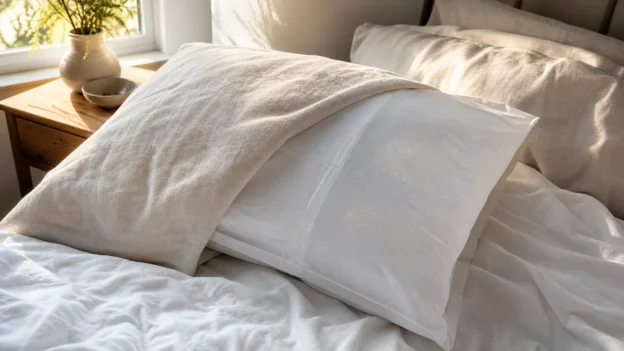
A pillow protector is one of the simplest upgrades you can make to your sleep environment, yet it’s routinely overlooked. It sits between your pillow and your pillowcase, forming a barrier against sweat, allergens, spills, and the slow buildup of dust mites that turns an expensive pillow into a health liability. If you’ve ever wondered whether you actually need one, this guide covers what a pillow protector does, what types exist, and how to pick the right one for your household.
What Is a Pillow Protector?
A pillow protector is a fitted cover that encases your pillow before the decorative pillowcase goes on. Its job is protective, not decorative, it shields the pillow fill from moisture, body oils, allergens, and contaminants that pass straight through a standard pillowcase.
Pillow Protector vs. Pillowcase
A pillowcase is designed for comfort and aesthetics. It sits against your skin, comes in coordinating colors and fabrics, and gets washed frequently. What it doesn’t do is stop liquids or fine particles from reaching the pillow itself. A pillow protector fills that gap. It goes on first, stays on through multiple pillowcase washes, and handles the actual barrier work.
Pillow Encasement vs. Protector
These two terms are sometimes used interchangeably, but they describe different products. A standard pillow protector typically uses an open-end or envelope closure, it slips over the pillow like a fitted sheet. A pillow encasement zips completely shut around all six sides of the pillow, sealing every edge. For dust mite control and allergy management, the encasement-style zipper design offers more complete coverage. For general moisture and hygiene protection, an open-end protector is often sufficient. You can read more about how mattress encasements differ from standard protectors to see how this distinction plays out at the mattress level, too.
Pillow Protector Benefits: Health, Hygiene, and Longevity
The case for using a pillow protector comes down to three practical areas: blocking allergens, preventing moisture damage, and making your pillows last longer.
Allergen and Dust Mite Defense
Pillows are a primary habitat for dust mites. They accumulate the warmth and moisture a sleeper produces every night, creating exactly the humid microclimate dust mites need to thrive. A pillow that has been in use for two or more years without a protective cover can harbor a substantial population of dust mites and their waste particles, and it’s those waste particles that trigger allergic reactions, not the mites themselves.
Allergists broadly recommend encasing pillows in allergen-barrier covers as one of the most effective environmental controls for reducing dust mite exposure. A hypoallergenic pillow protector with a tight weave or membrane layer stops those particles from accumulating inside the fill in the first place. For households managing asthma or year-round allergies, this is one of the most direct interventions available. Pairing pillow protection with a dust mite proof mattress protector gives you comprehensive, bed-wide allergen control.
Waterproof Protection for Spills and Moisture
Every night, the average sleeper loses a meaningful amount of moisture through sweat and respiration, and most of it reaches the pillow. Over time, that moisture breaks down pillow fill, encourages mold and mildew growth, and leaves staining that voids manufacturer warranties. A waterproof pillow protector uses a thin, breathable membrane (typically TPU-based) to block liquid from penetrating the fill while still allowing air to pass through. It protects against spills, night sweats, drool, and incontinence, keeping the pillow structurally sound and hygienically clean far longer than an unprotected one would last. For a closer look at how waterproof barriers perform over time, the waterproof pillow protector durability analysis covers real-world performance in detail.
Types of Pillow Protectors: Materials and Features to Know
Pillow protectors aren’t a single product. The material and closure style you choose affects both comfort and protection level.
Fabric and Material Options
Cotton is the most common material. It’s soft, breathable, and machine-washable, with a slightly textured surface that pairs well with a waterproof membrane backing. It feels familiar against the pillowcase and holds up well through repeated washing.
Polyester microfiber is lighter and often quieter, no crinkling, making it a good fit for light sleepers who want a waterproof layer without the noise some older vinyl-backed protectors produced.
Bamboo-blend fabrics are increasingly common in 2026. They offer natural temperature regulation and moisture-wicking properties, which can benefit hot sleepers. Look for OEKO-TEX or similar certifications to verify that the bamboo processing used safe chemistry.
Each material can be made with or without a waterproof backing, so check the product specs carefully. “Breathable” and “waterproof” are not mutually exclusive, but not all breathable protectors are waterproof.
Pillow Protector with Zipper vs. Open-End Styles
An open-end protector slips on quickly and stays in place with a tucked flap, similar to a pillowcase. It’s convenient for frequent washing and works well for general hygiene protection.
A pillow protector with zipper wraps completely around the pillow and closes along one of the shorter edges. This style leaves no gap for allergens, fluids, or pest access, making it the better choice for allergy sufferers and pet owners. The zipper closure is what distinguishes a true encasement-style protector from a basic fitted cover. If allergen defense is your primary goal, the zipper version is worth the modest extra cost.
How to Choose a Pillow Protector for Your Household
The right protector depends on what you’re protecting against. Here’s how to match the type to your situation.
Choosing for Allergies or Asthma
If anyone in your household has allergies, asthma, or sensitivity to dust mites, start with a zippered encasement-style protector rated for allergen blocking. The weave or membrane should be fine enough to stop dust mite allergen particles (typically measured in microns). Third-party certification matters here, look for products carrying GREENGUARD Gold certification, which means they’ve been independently tested and verified to meet strict chemical emission standards. That’s particularly relevant for children’s bedrooms, where both allergen exposure and material safety are concerns.
SureGuard pillow protectors carry GREENGUARD Gold certification, with tens of thousands of Amazon ratings averaging 4.6 out of 5 stars, a consistent performance record across a wide range of households. Understanding what GREENGUARD Gold certification means for bedding helps you evaluate any product’s certification claims with confidence.
Pillow Protector for Pets and Active Households
A pillow protector for pets needs to do more than block dust. Pet dander, saliva, and moisture from animals on the bed all penetrate unprotected pillows quickly, degrading the fill and adding allergens to the sleep environment. A waterproof, zippered protector stops all three: dander can’t work through a sealed membrane, and saliva or moisture wipes clean from the surface rather than soaking into the fill. For broader waterproof bedding solutions for pet owners, extending the same protection to your mattress makes sense alongside pillow protection.
For households with young children, incontinence needs, or anyone who frequently eats or drinks in bed, the waterproof layer is equally important. Choose a cotton or bamboo-blend surface for comfort, and confirm the waterproof membrane is heat-resistant enough to survive tumble drying without delaminating.
For general use with no specific allergy or moisture concern, a standard cotton terry protector without a waterproof backing is a solid, affordable choice that keeps the pillow clean and extends its useful life.
Caring for Your Pillow Protector
A pillow protector only works if it’s kept clean. Wash it monthly as a baseline, more frequently if you sweat heavily, have pets on the bed, or are managing active allergies. Most quality protectors are machine washable with regular detergent. Avoid fabric softener, which can clog the waterproof membrane and reduce its effectiveness over time.
When drying, use a low heat setting. High heat can degrade the TPU waterproof layer in membrane-backed protectors, causing it to crack or peel. A properly cared-for waterproof protector should maintain its barrier integrity through many wash cycles, check the manufacturer’s care label for the specific temperature limits of the product you own.
Before buying, confirm that the protector is machine wash and tumble dry compatible. Hand-wash-only products are impractical at the washing frequency a protective cover requires, and protectors that can’t be fully dried carry a mold risk of their own.
Is a Pillow Protector Worth the Cost?
A quality pillow typically costs between $30 and $100 or more. An affordable pillow protector costs a fraction of that, and it’s what keeps the pillow in usable condition for years rather than months.
Without protection, sweat and oils gradually yellow the fill, staining voids warranties and forces earlier replacement. Allergen buildup is invisible but cumulative, by the time symptoms point to the pillow, the damage is already done. A protector prevents both problems from starting.
For households managing allergies, the value is even clearer. Environmental allergen control, including encasing pillows, is a recommended, low-cost intervention that reduces exposure every single night. Spending a small amount on the right protector now costs far less than the cycle of pillow replacement, laundry heroics, or worsening allergy symptoms that come without one.
If you’re ready to protect your pillows properly, SureGuard pillow protectors combine GREENGUARD Gold certification, waterproof protection, and a track record built across tens of thousands of verified customer reviews. It’s a straightforward investment in cleaner, healthier sleep.

