
 (209) 878-7320
 info@sureguardmattress.com


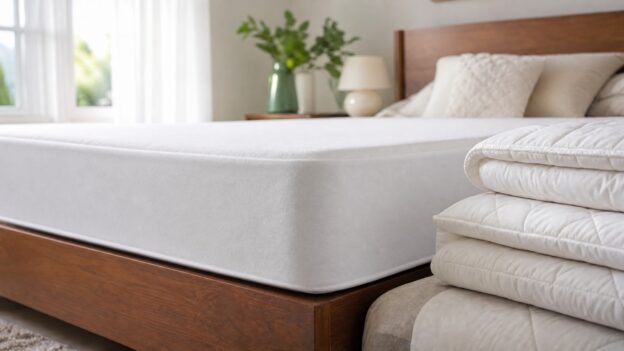
Shopping for bedding protection online is convenient, but the sheer volume of listings buries the differences that actually matter. You need to tell apart products that merely cover a bed from those that actively protect your health and your investment. A low price often signals compromised materials or safety claims nobody verified. Finding a reliable mattress cover on Amazon means looking past generic titles to check certifications, construction, and warranty terms. Get this wrong, and your sleep environment stays exposed to allergens, spills, and premature wear.
Understanding Amazon Mattress Cover Categories
The marketplace groups many distinct products under the same broad search terms. What actually determines whether a purchase solves your problem is the format: surface-level accident protection, or a full seal against microscopic threats.
Fitted Protectors vs. Zippered Encasements
A fitted protector works like a regular sheet with elasticized corners. It shields only the top sleeping surface from liquid and stains, comes off fast for laundering, and suits households dealing with occasional spills or incontinence. A zippered encasement seals the entire mattress inside a barrier that blocks allergens and pests from getting in or out. If your concern is dust mites, bed bugs, or pet dander working into the bedding itself, you need the encasement. A fitted protector leaves the sides and bottom exposed, so it can’t isolate the mattress the way an encasement does.
Material Differences: Cotton Terry vs. Smooth Surfaces
Surface texture affects both comfort and how much moisture the cover absorbs overnight. Cotton terry absorbs moisture and breathes better than the synthetic smooth surfaces that trap heat against the body. Many shoppers only discover the drawbacks of plastic mattress covers after a few nights of crinkling noise and sweating. Pure cotton tops wick moisture away and keep a quiet, fabric-like feel, so the mattress underneath still feels like itself. The benefits of cotton terry protectors are worth understanding before you trade comfort for protection.
Critical Safety Certifications for Bedding
Third-party testing is what separates a verified safety standard from marketing language nobody checked. You deserve proof that whatever touches your skin for eight hours a night meets a real chemical emission limit.
Why GREENGUARD Gold Matters for Indoor Air Quality
GREENGUARD Gold certification requires products to meet strict limits on volatile organic compound emissions, which means safer indoor air for sensitive people. That matters most for children, elderly family members, and anyone with respiratory conditions who spends hours in that bedroom. An uncertified waterproof barrier can off-gas chemicals that build up in a poorly ventilated room. When you’re looking at a certified queen size mattress protector, this credential tells you the product passed scientific testing rather than a manufacturer’s own say-so. It’s an objective check that the safety claims go beyond simple waterproofing.
Verifying Hypoallergenic and Waterproof Claims
“Hypoallergenic” has no legal definition unless a manufacturer backs it with documented testing and material specs. Real hypoallergenic construction uses tightly woven fabric or membrane backing that physically blocks allergens, rather than a chemical treatment that washes out after a few cycles. Waterproof integrity needs the same scrutiny: standardized hydrostatic pressure testing, not just a claim on the packaging. SureGuard mattress protectors carry a 10-year warranty and an average 4.6-star rating across more than 45,000 customer reviews. That kind of independent, aggregated feedback turns a subjective promise into something you can actually compare against other products.
Evaluating Durability and Warranty Protection
First impressions rarely predict how bedding protection holds up after dozens of wash cycles and years of nightly use. You have to look at the pattern across many reviews, not one glowing testimonial.
Reading Review Patterns for Long-Term Performance
Review volume paired with a sustained high rating points to manufacturing quality that holds across production batches. A product with thousands of reviews and a strong average has proven something a newer listing simply hasn’t had time to prove. Look for comments about performance after six months or more; that’s where durability problems show up, past the honeymoon period. SureGuard has served millions of customers since 2013, with products built around pure cotton top surfaces and certified hypoallergenic construction. A track record spanning more than a decade counts for more than a recent spike in five-star reviews.
How Protectors Preserve Your Mattress Warranty
Most mattress manufacturers will void your warranty if liquid damage or staining occurs, which is exactly why waterproof protection matters. Even a minor spill can soak into an unprotected mattress and leave a permanent mark, invalidating coverage worth thousands of dollars in replacement value. That protection alone is often worth many times the cost of the protector. Keep proof that you’ve used continuous protection; it strengthens any warranty claim if a structural defect shows up later. Think of the protector as insurance paperwork, not an optional accessory.
Sizing and Fit for Complete Coverage
Fit compromises protection no matter how good the material or the certification is. Modern mattresses often run deeper than the standard charts assume.
Measuring Depth for Adjustable and Pillow-Top Beds
Measure your mattress’s actual depth, including any pillow top or padding layer, before you order. Adjustable beds need extra length so the corners don’t strain when the base moves. A generic size label ignores these differences, and that’s how a protector ends up shifting, bunching, or leaving an edge exposed. Deep-pocket designs exist specifically for the thicker profiles common on newer premium mattresses. Assume standard dimensions fit your bed, and you’ve built a gap where liquid and allergens get through.
Ensuring Secure Fit Across Standard and Specialty Sizes
The elasticized skirt has to hold tension at all four corners through movement and repeated washing. Split king and California king need exact matching; a standard king won’t approximate either one. A poorly fitted protector makes noise and bunches uncomfortably even when the material itself is fine. Check the exact product measurements against your mattress before you buy, and you’ll avoid the return-and-exchange cycle. A secure fit is what keeps the barrier in place all night.
Health Benefits of Quality Mattress Protection
A physical barrier cuts your exposure to common nighttime triggers without any chemical treatment to wear off. Knowing how the barrier actually works helps you pick the right product for your specific concern.
Dust Mite and Allergen Barrier Effectiveness
Microscopic allergens build up inside mattress filling, in places a vacuum can’t reach. Research on the effectiveness of dust mite covers confirms that a tightly woven fabric or membrane barrier, properly installed, cuts allergen exposure significantly. It’s a mechanical block, so nothing new gets added to the sleep environment. Keep using the barrier consistently, and you interrupt the buildup cycle that makes allergy symptoms worse year over year. Physical prevention beats reactive cleaning for chronic sensitivities.
Waterproof Defense Against Mold and Bacteria
Moisture trapped in mattress foam creates ideal conditions for mold, which then releases spores into the air you breathe while you sleep. A waterproof membrane blocks liquid while still letting vapor through, so the mattress stays dry. That combination stops mold before it starts, rather than trying to clean it up after the fact. Bacteria need the same moisture, so an effective barrier starves both problems at once. A dry sleep surface handles more than one health concern with a single product.
Care Instructions for Lasting Performance
Proper care keeps both the waterproof layer and the fabric intact for the life of the warranty. Following the manufacturer’s instructions protects the purchase and keeps the protector doing its job.
Wash it separately from heavy items with studs, zippers or buttons, since the friction can abrade the waterproof membrane. Use cool water, not hot; too much heat degrades the polyurethane layer. Skip bleach and fabric softener entirely. Both break down waterproof coatings and dull the fabric’s absorbency over repeated washes. Tumble dry on low until it’s completely dry, because leftover moisture invites mildew inside the fabric layers. Stick to these steps, and you’ll typically satisfy whatever maintenance conditions the warranty requires.
Value Assessment: Price vs. Certified Quality
The sticker price only tells part of the story. Work out the annual cost, and the comparison between certified and uncertified options looks different.
Divide the purchase price by how long the product is expected to last, and a warrantied protector often costs less per year than a cheaper one you’ll replace repeatedly. A protector backed by a 10-year warranty gives you a predictable annual cost, against replacing an inferior one every eighteen months. Certification isn’t free to earn, and a budget option that skips it is passing that risk back to you, whether that shows up as a health issue or a voided warranty. Paying for verified quality upfront means you’re not buying the same thing twice.
For deeper context on selecting the right level of protection, see the comprehensive guide to spill and allergen defense before you decide.

