
 (209) 878-7320
 info@sureguardmattress.com


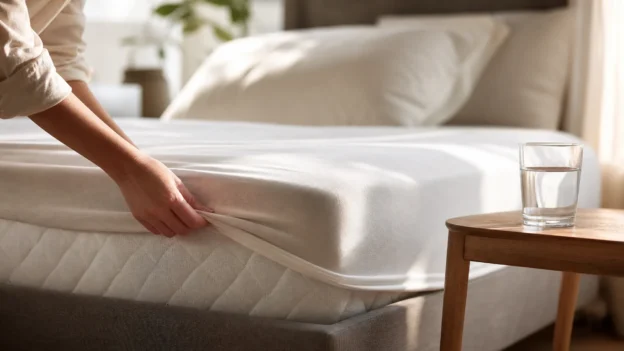
A quality mattress costs hundreds, often thousands, of dollars, and most people keep one for a decade or more. Mattress protectors are the single most cost-effective way to defend that investment, yet they’re frequently the last thing shoppers think about. This guide walks through every decision you’ll face: waterproofing, materials, allergen defense, certifications, fit types, and long-term value, so you can buy with confidence and sleep without worry.
Do You Really Need a Mattress Protector?
The short answer is yes, and not just because spills happen.
What a Mattress Protector Actually Does
A mattress protector sits between your fitted sheet and your mattress surface. It forms a barrier against liquids, allergens, skin cells, sweat, and dust mites. Without one, all of those things pass straight into the foam or springs below, and once they’re in, there’s no getting them out.
SureGuard has been manufacturing mattress protectors since 2013. Its products carry an average rating of 4.6 out of 5 stars across more than 45,000 Amazon reviews. That depth of real-world feedback gives a clear picture of what sleepers actually care about: reliable protection that doesn’t disrupt sleep.
Mattress Protector Benefits That Go Beyond Spills
The obvious benefit is waterproofing. The less obvious ones matter just as much:
- Allergen defense. A protector blocks dust mites, pet dander, and pollen from settling into the mattress.
- Warranty preservation. Most major mattress manufacturers, including Tempur-Pedic, Purple, and Saatva, include language in their warranty documentation that voids coverage if the mattress is stained. A waterproof protector is often a condition of keeping that warranty valid, not just a comfort upgrade.
- Hygiene. The average person loses significant moisture through sweat overnight. Over months, that accumulates deep in an unprotected mattress.
- Odor control. Organic material trapped in foam breaks down over time. A protector slows that process considerably.
If you’re asking whether you need a mattress protector, the practical answer is: you need one from the first night.
Waterproof Mattress Protectors: How Protection Actually Works
Not all waterproof mattress protectors work the same way. The construction underneath the surface fabric determines both the level of protection and how comfortable the protector is to sleep on.
Breathable vs. Plastic-Feel Barriers
Older or lower-quality waterproof protectors used a solid vinyl or PVC layer. It kept liquid out, but it also trapped heat, created a crinkling noise with every movement, and made the sleep surface noticeably warmer.
Modern protectors use a thin, breathable polyurethane membrane bonded to the underside of the fabric. This membrane is waterproof at the pore level, liquid molecules are too large to pass through, but it allows water vapor (body heat and moisture) to escape. The result is genuine waterproofing without the heat-trap or noise of a plastic sheet.
When comparing options, check whether the protector is described as “membrane-backed” or uses terms like “quiet” and “breathable.” Those signal the construction quality that separates a comfortable protector from one that disrupts sleep.
Cotton Top Surface and Sleep Comfort
The top surface is where you actually sleep, so material matters as much as the waterproof layer below. The benefits of a cotton terry mattress protector become clear quickly: cotton terry is soft, naturally breathable, and temperature-regulating. It draws moisture away from the body rather than holding it, and it doesn’t produce the rustling sound associated with synthetic tops.
SureGuard’s flagship uses a pure cotton terry surface over the breathable polyurethane membrane. That combination delivers real waterproofing without any trade-off in sleep feel. It washes and dries like a standard sheet, and the cotton holds up through repeated laundering without shrinking or stiffening.
Allergen and Dust Mite Defense: Choosing a Hypoallergenic Mattress Protector
For allergy sufferers, a hypoallergenic mattress protector isn’t optional, it’s one of the most effective tools available for reducing nighttime allergen exposure.
How Dust Mites and Allergens Accumulate in Mattresses
The mattress is one of the highest concentrations of dust mite allergens in the home. Mites feed on shed skin cells and thrive in the warm, humid microclimate of a bed. Over months and years, an unprotected mattress accumulates a significant colony of mites along with their waste, which is the actual allergen that triggers reactions.
A tightly woven, encasing barrier is one of the most effective non-pharmaceutical interventions for allergy sufferers. A fitted mattress protector with a membrane barrier blocks new allergens from entering the mattress and prevents existing mites from reaching the sleep surface. For readers whose primary concern is dust mites or pet dander, the best mattress protector for allergies covers the specific criteria to prioritize.
Mattress Protector for Bed Bugs: Encasement vs. Protector
This is where fit type becomes critical. A fitted protector covers the top and sides of the mattress, it protects against allergens, liquids, and dust mites effectively. But it leaves the bottom and edges of the mattress exposed.
A mattress encasement wraps all six sides of the mattress in a single zippered cover. That 360° barrier is what’s needed for bed bug protection, because it traps any existing bugs inside (where they eventually die) and prevents new ones from establishing inside the mattress.
If bed bugs are a concern, in a rental, a dorm, a hotel-adjacent property, or a previously infested home, a full encasement is the right choice. For general allergen and liquid protection, a fitted protector is sufficient. The what to look for in a bed bug mattress protector breaks down the specific features that matter for that use case, and the bed bug mattress encasement guide covers full 360° options in detail.
GREENGUARD Gold Certification and Why It Matters
GREENGUARD Gold certification is issued by UL (Underwriters Laboratories) and tests products for chemical emissions, specifically volatile organic compounds (VOCs) and other chemical off-gassing, against some of the most stringent standards in the industry. Products earning GREENGUARD Gold must meet criteria developed with schools and healthcare environments in mind.
For mattress protectors, this certification matters for a specific reason: a protector is in direct, prolonged contact with the sleep surface, and sleepers, especially children, spend many hours breathing air in close proximity to it. A protector that off-gasses chemicals, even at low levels, represents a real exposure risk over months and years.
SureGuard’s flagship mattress protector carries GREENGUARD Gold certification, meaning it has been independently tested to meet strict chemical emission standards. That’s a particularly important credential for children’s bedrooms, nurseries, and health-sensitive sleepers, it replaces guesswork with verified third-party testing.
When evaluating any mattress protector, treat GREENGUARD Gold as a baseline quality signal, not a premium add-on. It confirms the product has been tested, not just labeled as “safe” by the manufacturer.
How to Choose a Mattress Protector: Fit, Size, and Use Case
The step-by-step guide to choosing a mattress protector covers this in full depth, but here are the core decisions every buyer needs to make.
Fitted Mattress Protector vs. Full Encasement
A fitted mattress protector works like a fitted sheet, it has an elastic skirt that wraps around the mattress and holds in place. It protects the top only. This format suits the majority of use cases: waterproofing, allergen reduction, general hygiene, and preserving a mattress warranty.
A full encasement zips around the entire mattress. It’s the right choice when bed bug protection is needed, when the sleeper has severe allergies and wants total allergen isolation, or when the mattress itself needs to be fully sealed (for example, after remediation).
For most households, a quality fitted protector is the right answer. The encasement is the specialist tool.
Depth pockets: Check the mattress depth before buying. Most modern mattresses, especially those with pillow tops or memory foam layers, run 12 to 18 inches deep. A protector designed for a standard 10-inch mattress will pull off corners and won’t stay in place. Look for deep-pocket sizing options that match your mattress height.
Size: Protectors in North America come in various sizes, the popular sizes being Twin, Twin XL, Full, Queen, King, and California King. Measure the mattress rather than assuming standard sizing matches, especially with adjustable bases or custom mattresses.
Mattress Protectors for Kids, Pets, and Specific Needs
Different households have different priorities:
- Kids and potty training: Waterproofing is the primary need, but certification matters too, a GREENGUARD Gold certified protector removes any concern about chemical exposure in a child’s sleep environment. For bedding protection essentials for new parents, having a spare protector to swap during nighttime changes is a practical must.
- Pet owners: Pets on the bed bring dander, moisture, and occasional accidents. A waterproof protector with a durable cotton surface handles all three. Wash frequency increases with pets, confirm the protector is machine washable and holds up through regular laundering.
- Allergy sufferers: Prioritize a tightly woven or membrane-backed encasement. Hypoallergenic materials and GREENGUARD Gold certification are both meaningful differentiators.
- Incontinence: Full waterproofing on top is essential.
- College dorms: Twin XL sizing, durability, and easy laundering are the practical priorities. A certified, warrantied protector also protects a mattress the student doesn’t own, avoiding damage charges at move-out.
Mattress Protector Warranty and Long-Term Value
A mattress protector is not a consumable. A well-made one should last the life of the mattress it protects.
Most major mattress warranties include a stain-void clause. If a liquid reaches the mattress and leaves a stain, the manufacturer can, and typically does, deny warranty claims. A waterproof mattress protector is the practical guarantee that stain-void clauses never apply to you.
SureGuard backs its mattress protectors with a 10-year warranty. That’s uncommon at accessible price points in this category, and it reflects genuine durability confidence, the kind that only makes sense when the product is built to last.
To put the value plainly: a quality protector used over ten years costs only a few cents per night. That fraction protects a mattress warranty worth potentially thousands of dollars. For how mattress protector warranties compare across the category, the differences in coverage terms are worth understanding before you buy.
SureGuard’s waterproof mattress protector is available in every standard size, carries GREENGUARD Gold certification, and is backed by that 10-year warranty. If you need a pillow protector or a full encasement to complete your sleep setup, the full SureGuard range covers those too. Rest Assured with SureGuard.

