
 (209) 878-7320
 info@sureguardmattress.com


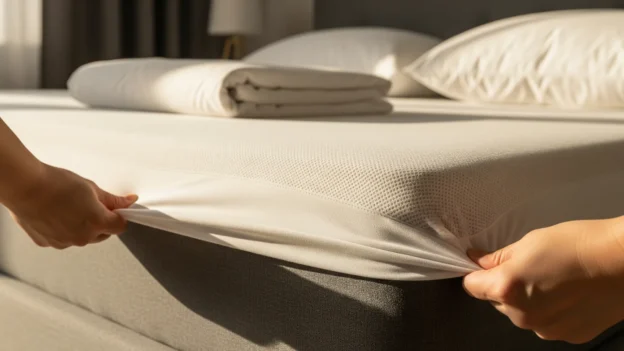
If you’ve ever wondered whether dust mite covers actually do anything, you’re asking the right question. The claim sounds like classic marketing: zip on a cover, and allergy symptoms disappear. But the science behind allergen barrier fabric is real, measurable, and testable. This guide skips the brand-list roundup. Instead, it walks through what actually makes a cover work, what certifications really mean, and why a mattress cover alone often isn’t enough.
Do Dust Mite Covers Work? What the Science Says
Yes, but only if the fabric itself is built to block allergens, not just labeled that way. Dust mite covers work by physically sealing off the mattress. Mite waste particles and body fragments can’t pass through the fabric and into the air you breathe while sleeping. The mechanism isn’t chemical or magical. It’s a straightforward matter of pore size versus particle size.
Dust mite allergens are among the most common year-round indoor triggers for asthma and allergic rhinitis. They thrive in the humidity and warmth trapped inside mattresses, pillows, and box springs, parts of a bed that traditional bedding never seals off. A regular fitted sheet does nothing to stop mites from living in the layers underneath it. A true barrier cover encases the entire mattress, cutting off their food source and habitat.
How Dust Mites Get Into Your Bed
Dust mites feed on shed human skin cells, which build up constantly in mattresses, pillows, and box springs. They need warmth and moisture to survive, and a slept-in bed provides both every night. Over months and years, mites and their waste settle deep inside the layers of foam, coils, and padding, well below where a top sheet ever reaches. That’s why the goal of a dust mite cover isn’t to clean the mattress. It’s to seal it, so nothing already inside can escape and nothing new can settle in.
Dust Mite Barrier Fabric: Pore Size, Weave, and Why It Matters
Not all fabric that touches your bed qualifies as a dust mite barrier. The difference comes down to how tightly the fibers are woven or whether the fabric has a protective membrane backing. Dust mite allergen particles are extremely small, so a fabric needs a correspondingly tight weave to block them. Loosely woven cotton, standard quilted mattress pads, and typical sheet fabric all have gaps far too large to stop these particles from passing through in both directions.
Hypoallergenic Labels vs. Real Barrier Performance
Here’s where skepticism is warranted. “Hypoallergenic” is not a regulated or tested term. Any manufacturer can print it on a package without proving the fabric blocks anything. It’s a marketing claim, not a performance measurement. A fabric’s actual barrier performance depends on its pore size and construction, not on a word printed on the tag. That’s why the fabric and its testing matter more than the label. Third-party certification, not adjectives, should guide a skeptical buyer’s decision.
GREENGUARD Gold Certified Mattress Covers vs. Vague Claims
This is the trust gap most dust mite cover shopping guides skip entirely. Vague claims cost nothing to make. Certification does not. A GREENGUARD Gold certified mattress cover has gone through independent, third-party testing rather than relying on the manufacturer’s own word.
SureGuard’s mattress and pillow protectors are GREENGUARD Gold certified. They’re built with a specialized membrane backing designed to block allergens like dust mite debris, and backed by a 10-year warranty. That combination of independent certification and a long warranty is the kind of evidence a skeptical buyer should look for, rather than a bag simply printed with the word “hypoallergenic.”
What GREENGUARD Gold Actually Tests For
GREENGUARD Gold certification evaluates products for chemical emissions, including volatile organic compounds, and sets stricter limits than standard GREENGUARD certification. It’s designed with sensitive populations in mind, including children and people with asthma or allergies. For dust mite allergy bedding, this matters for two reasons. First, it confirms the product has been independently tested rather than self-declared safe. Second, it means the barrier fabric protecting you from allergens isn’t itself introducing a different air-quality problem into your bedroom. You can read more about the certification program directly through UL’s GREENGUARD standards, which oversee the testing process.
Building a Full Dust Mite Allergy Bedding System
A single mattress cover is a good start. It is not a complete solution. Dust mites don’t only live in mattresses. They colonize pillows and box springs just as readily, since both offer the same warmth, moisture, and skin-cell food supply.
Mattress, Pillow, and Box Spring: Why All Three Matter
A parent dealing with a child’s dust mite allergy often assumes a single mattress cover solves the problem. Symptoms keep showing up anyway, because the pillow and box spring, both major mite reservoirs, remain unprotected. Mites in an uncovered pillow sit inches from the face all night. Mites in an uncovered box spring keep feeding the household’s overall allergen load, since box springs rarely get cleaned or replaced as often as mattresses. Sealing only one piece of the system leaves the other two working against you.
This is the core case for treating dust mite covers as a system rather than a single product. For readers building out full protection, a best mattress protector for allergy sufferers breaks down what to prioritize across an entire bed, and a box spring covers for full bedding protection resource covers the piece most people forget.
Dust Mite Covers for Pillows and Mattresses
Dust mite covers for pillows and mattresses should use the same barrier fabric standard: tight weave or membrane backing, GREENGUARD Gold certified, breathable construction, so there’s no weak link in the system. A complete guide to pillow protectors and a closer look at zippered pillow protectors for allergies and dust mites both go deeper on choosing pillow-specific protection that matches your mattress cover’s barrier performance.
How to Get Rid of Dust Mites in Bed (Beyond the Cover)
A certified barrier cover handles ongoing exposure. It won’t erase mites that are already established in fabric that isn’t encased, like sheets, blankets, and comforters. A few habits work alongside the cover to keep allergen levels down.
Wash sheets and pillowcases weekly in hot water, at least 130°F, since mites and their allergens don’t survive that heat. Keep bedroom humidity below 50 percent where possible, since mites need moisture to thrive. Vacuum mattresses and surrounding carpet regularly with a vacuum that has a sealed HEPA filter, so allergens don’t get redistributed into the air during cleaning.
Washing and Maintenance Routine
The cover itself needs regular care too, not just the sheets on top of it. Most barrier fabric covers can be machine washed, but the exact temperature and cycle depend on the specific product’s care instructions. A how to properly wash a mattress protector resource lays out a maintenance routine that keeps barrier fabric performing as designed, wash after wash, without breaking down the weave that makes it effective.
Choosing the Right Dust Mite Proof Mattress Cover
When you’re shopping for a dust mite proof mattress cover, a short checklist separates products that perform from products that just claim to.
Look for third-party certification, specifically GREENGUARD Gold, rather than an unverified “hypoallergenic” label. Check that the fabric is described as a tightly woven barrier material or membrane backing, not a generic quilted pad. Confirm the warranty length: a 10-year warranty signals a manufacturer that stands behind the product’s durability. Consider comfort features like a cotton top surface, since a cover you don’t like sleeping on is a cover you’ll eventually stop using.
Waterproof vs. Non-Waterproof Options
Waterproof covers add a layer that blocks liquids and spills in addition to allergens, which matters for kids’ beds, guest rooms, or anyone concerned about accidents and stains. Non-waterproof barrier covers focus purely on allergen defense and can feel slightly more breathable to some sleepers. Neither option is universally “better.” The right choice depends on what else the bed needs to guard against, alongside dust mite protection. For a wider view of how allergen and spill protection overlap, a guide to spill and allergen defense compares both categories side by side.
SureGuard has been trusted by millions of customers since 2013, with an average 4.6-star rating across more than 45,000 Amazon reviews. That track record, paired with GREENGUARD Gold certification and a 10-year warranty, is the kind of evidence a skeptical buyer can actually verify, not just take on faith. For a complete solution that covers the mattress, pillows, and box spring together, a certified mattress encasement system gives your whole bed the same tested barrier protection in one system, so no single piece is left exposed.

