
 (209) 878-7320
 info@sureguardmattress.com


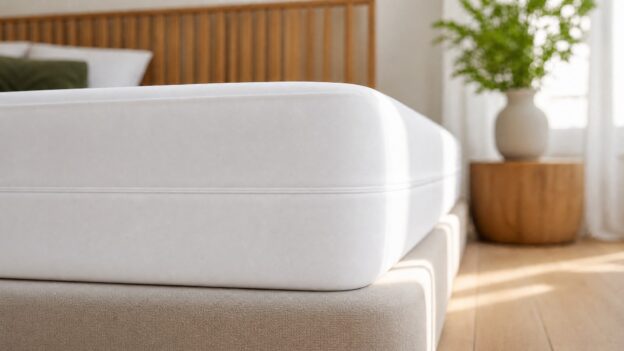
Your mattress is one of the more expensive things in your bedroom, and it’s exposed for years to things you can’t see: dust mites, spilled drinks, sweat, the occasional pet accident. Standard sheets do nothing about any of it. A mattress encasement is the barrier that actually stands between your mattress and the allergens, pests, and accidents that wear it down.
What Are Mattress Encasements and Why Do They Matter?
A mattress encasement is a six-sided, zippered cover that wraps the entire mattress. That’s different from a five-sided protector, which just drapes over the top like a fitted sheet. Because the encasement zips shut on every side, there’s no gap left for anything to get in or out.
Total isolation like this keeps the mattress clean inside and out, and it’s a big part of why encasements last.
Partial coverage is the problem with fitted-sheet-style protectors: the sides and bottom stay exposed, and dust and pests that collect there eventually work their way up into the mattress. A standard protector guards against spills on top. It does nothing for the sides or the mattress core underneath, which is exactly where mites and insects settle in. Zip an encasement shut and you lock out anything new, while whatever was already inside stays put instead of going airborne every time you move at night.
Key Benefits of Using a Zippered Mattress Encasement
An encasement isn’t just about stains. Because the zipper closes off every entry point, it deals with three separate categories of household hazard at once.
Allergen and Dust Mite Defense
Dust mites like it warm and humid, which is exactly the environment deep inside your mattress padding. They feed on shed skin and leave behind waste that’s a well-known trigger for asthma and allergies. A fully enclosed cover keeps them from colonizing the mattress in the first place, and keeps their waste from drifting into the air you breathe. Research on dust mite cover effectiveness backs this up: an impermeable barrier cuts exposure to these triggers substantially, which matters if you or someone in the house has asthma or chronic allergies. Once the constant release of allergens stops, you’ll likely notice the air in the bedroom is better.
Bed Bug Prevention and Containment
Bed bugs need access to mattress seams and crevices to set up near a host. A zippered encasement smooths over those seams and seals at the zipper, so there’s nowhere left for them to hide, get in, or get out. If you’re dealing with an active infestation, or just trying to avoid one, our bed bug covers guide explains how encasement fits into a broader pest-control plan. Contained this way, the mattress can’t turn into a reservoir that forces you into an expensive replacement after treatment.
Waterproof Protection Against Spills
Most manufacturer warranties are void the moment liquid touches the mattress, accident or not. A waterproof backing stops urine, sweat, spilled drinks, and pet accidents before they reach the foam underneath. That matters for the warranty too: if you can show the mattress never took on liquid staining, you keep your claim intact. It also keeps resale value up and avoids the mold and odor that come with accidents nobody caught in time.
Choosing Safe Materials: Cotton Tops and Certified Barriers
What touches your skin matters as much as what’s blocking underneath, especially since the cover stays on the bed permanently. Manufacturing has moved well past the crinkly vinyl of a decade or two ago, so protection doesn’t have to mean sacrificing comfort.
Understanding Certifications and Material Safety
GREENGUARD Gold certification means a product meets strict limits on chemical emissions, so it isn’t off-gassing volatile organic compounds into your bedroom air. That’s worth paying attention to if you’re buying for a child, an elderly parent, or anyone chemically sensitive, given they’ll spend roughly eight hours a night in direct contact with the fabric. GREENGUARD Gold certified encasements meet limits strict enough for schools and healthcare facilities, which is a reasonable proxy for whether the product belongs in a bedroom. Pure cotton terry surfaces feel like ordinary bedding: breathable and quiet, without the heat retention or crinkle that plastic covers are known for.
Many shoppers look at alternatives to plastic covers for exactly this reason: waterproof protection without a synthetic feel against the skin.
Mattress Encasements vs. Standard Protectors
Not every household needs a full encasement, and not every household is fine with a basic protector. The right call depends on what’s actually going on in your home.
Coverage Differences
A standard protector is basically a reinforced fitted sheet: it covers the top and a little of the sides, held by elastic, and comes off easily for a wash. That convenience comes at a cost, because the bottom and lower sides stay open to floor-level dust, pet dander, and anything crawling. A full encasement seals the whole mattress and generally stays on for months or years at a stretch, coming off only for an occasional wash or when you rotate the mattress. It’s more effort to put on. In exchange, you get total isolation a partial cover can’t offer.
When to Choose Full Encasement
Some situations call for the full seal a zippered encasement provides, and a standard protector won’t cut it. Go with full encasement if anyone in the house has severe dust mite allergies, if bed bugs are a real risk where you live, or if you need documented stain prevention to keep a mattress warranty valid. Households with young kids, pets, or incontinence concerns benefit too, since the perimeter seal stops leaks from escaping out the sides during a bigger accident. SureGuard has been making bedding protection since 2013, with a focus on health safety and pricing people can actually afford, and has helped a lot of customers figure out which level of coverage fits their situation.
How to Select the Right Size and Fit
A poor fit undermines the whole point of an encasement and can tear during installation. Getting the measurements right means the zipper closes without straining the seams, which keeps the waterproof barrier intact over time.
Measuring Depth Accurately
Measure the mattress depth including any pillow top, euro top, or attached padding. These additions often push a mattress past what a “standard” size assumes. If you’re also encasing a separate topper, add its thickness to the measurement. Squeeze both into a cover that’s too small and you risk damaging the topper and the zipper. Check these numbers before you buy: a tight fit creates stress points, and stress points eventually fail, leaving gaps for pests or liquid to get through. A properly sized queen size mattress encasement handles deeper profiles without strain, keeping the zipper tracks aligned.
Box Spring Considerations
The box spring sits on the floor, which means it’s collecting dust, pet hair, and pests before your mattress ever sees them. Skip encasing it and those contaminants just bypass the mattress cover by coming up through the base. A full bed system needs separate encasements for both pieces. Our waterproof box spring protection covers the foundation against the same hazards threatening the mattress above it.
Installation and Care for Long-Term Performance
Whether an encasement lives up to its warranty comes down to how it’s installed and washed. Get the basics right and the waterproof layer and zipper hold up for years.
Install it with two people. That distributes the weight evenly and keeps you from yanking on the zipper teeth while positioning the cover. After zipping, check that the secure lock tab is fully engaged. It’s a small part, but it’s what stops the zipper from gradually sliding open and exposing the mattress. For washing, most encasements can go in the machine on warm with a gentle detergent. Skip bleach and fabric softener, since both break down the waterproof polyurethane layer. SureGuard products carry more than 45,000 customer reviews averaging 4.6 out of 5 stars, which lines up with what you’d expect when people follow care instructions like these. SureGuard mattress encasements also come with a 10-year warranty, which is the company’s way of standing behind long-term durability and waterproof performance when the cover is looked after properly.
Common Questions About Mattress Encasement Durability
The complaints people remember about protective bedding, noisy, stuffy, plasticky, mostly trace back to older vinyl products. Newer fabrics are built for daily use, not just as emergency coverage you tolerate.
Cotton-terry and polyester-blend fabrics move quietly against sheets and skin, unlike the old vinyl that used to crinkle with every turn. Heat retention was also a plastic problem: certified modern barriers let air move through while still blocking liquid and allergens. These covers are meant to stay on permanently, which means they’re built to survive repeated washing without losing their protection or turning uncomfortable. Between the fabric and the warranty behind it, the case for leaving the cover on full-time is pretty straightforward.

