
 (209) 878-7320
 info@sureguardmattress.com


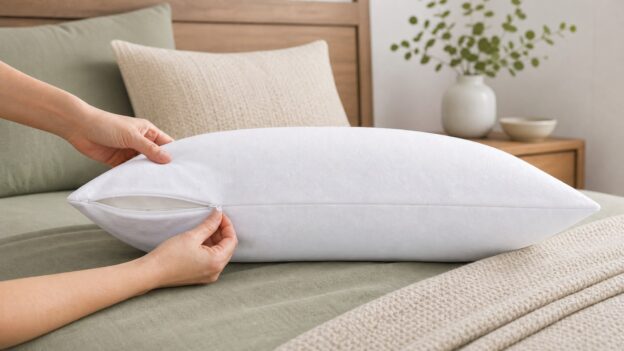
Your pillow is the most intimate surface in your bedroom, yet it often gets the least protection. You change sheets weekly, but the pillow itself builds up sweat, skin cells, and allergens deep in its fill over years of use. Pillow covers with zippers seal that fill off completely, something standard envelope-style cases can’t do. This guide covers how to select, fit, and maintain zippered protection that guards your health and your investment without giving up comfort.
Why Zippered Pillow Covers Matter for Bedding Health
A fully encased pillow keeps contaminants out of the fill, where surface cleaning alone can’t reach them. Open-ended cases leave real gaps, and those gaps let biological matter and environmental allergens build up night after night.
Sealing Out Allergens and Dust Mites
Dust mites thrive in the warm, humid environment of an unprotected pillow, feeding on shed skin cells that accumulate over months of sleep. An envelope closure leaves gaps at the corners and sides, so microscopic allergens get in and colonize the inner fill no matter how often you wash the outer case. If you’re managing sensitivities, zippered pillow protectors for allergies close off that entry point entirely. Research on dust mite cover effectiveness confirms that complete encasement is the only reliable way to cut allergen load in bedding you already own. The seal stops accumulation at the source instead of managing symptoms after the fact.
Extending Pillow Lifespan Against Spills and Stains
A premium pillow is a real investment, and it degrades fast once moisture and body oils reach the fill. Sweat, drool, and the odd spill break down down clusters and foam from the inside, causing permanent staining and lost support long before the pillow’s natural life is up. A waterproof zippered barrier stops liquid at the surface, where you can just wipe or launder it off, so the pillow keeps its loft and comfort far longer than it would unprotected.
Zippered Pillow Protectors vs. Decorative Pillow Cases with Zippers
Knowing the difference between a protective encasement and a decorative sham prevents a costly mistake. Think of these as two layers with different jobs, not interchangeable options.
Functional Differences in Fabric and Closure
A protective encasement uses specialized membranes and secure zipper tracks built to block liquids, allergens, and pests from reaching the fill. Decorative pillow cases with zippers are for looks. They use fashion fabrics and standard closures that offer no real barrier against moisture or microscopic contaminants. The protective layer needs to stay on underneath any decorative covering to keep defending against daily wear, because an impressive-looking outer case doesn’t mean adequate protection underneath.
When to Use Both Layers Together
Good bedding hygiene means a dedicated waterproof protector placed directly over the pillow, under your regular pillowcase. The inner layer does the protecting; the outer case adds style and softness against your skin. Washing frequency differs too: the protective encasement typically only needs laundering every few months unless it’s soiled, while the outer case wants a weekly wash. Run both together and neither one compromises the other.
Key Features to Evaluate in Quality Pillow Covers with Zippers
Not all zippered covers protect equally well, even when they look similar on a shelf or a product page. Check the construction details and certifications yourself, rather than trusting the marketing copy to tell you the truth.
Zipper Security and Bug-Proof Design
Bed bugs and dust mites exploit even tiny gaps in a zipper track to get into the pillow. Premium protectors use zipper designs with tight teeth spacing and secure end locks that keep pests out and allergens in. Standard garment zippers don’t have that precision, and they lose their seal against microscopic organisms after repeated use. SureGuard’s zippered encasements have been the standard for complete pillow defense against bed bugs and allergens since 2013, trusted by millions of customers, largely because they solve this exact vulnerability that lesser products don’t.
Breathable Waterproof Barriers and Certifications
Chemical safety matters as much as waterproof performance for something you press your face against for eight hours a night. GREENGUARD Gold certification means a zippered pillow cover meets strict chemical emissions limits, which matters if the cover will be used by children or anyone sensitive to synthetic off-gassing. According to the certification, it confirms the product releases no harmful volatile organic compounds during normal use indoors. A 10-year warranty on premium protectors is the manufacturer’s own signal of confidence that the zipper and waterproof barrier will hold up through years of washing without degrading or delaminating. That kind of backing gives you something more concrete than an unverified marketing claim.
Fabric Texture and Noise Reduction
Modern protective fabrics have gotten past the plastic-like crinkling and heat retention that plagued earlier waterproof bedding. A cotton-top surface stays soft and breathable while an advanced membrane underneath blocks liquid, quietly. SureGuard products carry an average 4.6-star rating across more than 45,000 customer reviews, which points to long-term trust in how these covers perform without wrecking sleep quality. Heat and noise aren’t optional extras here. They’re what separates a protector meant for nightly use from one meant for the occasional guest room.
Choosing the Right Size and Fit for Standard, Queen, and King Pillows
Correct sizing is what decides whether your zippered cover actually protects the pillow or just sits on top of it. Get the dimensions wrong and you risk seam failure and a compromised seal, which makes even the best materials useless against what they’re meant to block. Check a full pillow protector size and fabric guide before you buy, since size labels vary between manufacturers and generic labeling isn’t reliable enough on its own. An undersized cover strains the zipper track and seams during installation, creating weak points where allergens and liquid eventually get through. An oversized one bunches and shifts overnight, exposing part of the pillow and leaving uncomfortable lumps under your head. Get the fit right and the zipper closes without tension, keeping consistent contact across the whole pillow surface. If you want a straightforward option, standard size zippered pillow protectors are built to precise industry dimensions for guaranteed compatibility.
Care Instructions for Maintaining Zippered Pillow Protection
Proper laundering keeps both the waterproof membrane and the allergen-blocking seal working over years of use. Skip the care guidelines and the protector fails gradually, often with no obvious warning sign.
Washing Frequency and Temperature Guidelines
Most zippered protectors only need washing every second month under normal conditions, unlike an outer pillowcase that wants weekly laundering. Stick to the manufacturer’s temperature guidance, because too much heat damages the waterproof membrane. A mild detergent, no bleach or fabric softener, keeps fabric certifications intact and preserves the membrane’s breathability. Wash it too often and the cover wears out faster than it should; wash it too rarely and oil builds up until it starts breaking down the barrier from the inside.
Protecting the Zipper Mechanism During Laundry
Keep the cover unzipped before it goes in the machine, so the machine can wash the cover inside and out. Air drying, or a low-heat tumble cycle, extends zipper life far more than high heat, which warps the plastic components and shrinks fabric around the metal track. Check the zipper after every wash. Small problems are easy to catch early, before they turn into a failure that exposes the pillow to contamination.
Common Misconceptions About Zippered Bedding Protection
Old assumptions about zippered covers stick around despite real advances in textile engineering. These myths keep people from using something genuinely useful, based on problems that were solved decades ago.
A lot of people assume all waterproof covers sleep hot and noisy, and that reputation is fair when it comes from early vinyl and plastic-backed products. Contemporary cotton-top protectors with advanced membranes breathe and stay quiet, matching the feel of unprotected bedding while still blocking what needs blocking. Others figure frequent pillow washing makes an encasement unnecessary, but laundering the fill itself damages down and foam faster than surface soiling ever would; water penetration during a wash breaks down natural fibers and creates moisture pockets deep inside the pillow that never fully dry, which is exactly the kind of environment mold likes. Zippered protection isn’t redundant maintenance. It’s preventive care that cuts down how often you need to wash the pillow itself and extends its life. And some people skip protection on a new pillow, forgetting that contamination starts the first night it’s used and builds up invisibly from there.
Integrating Pillow Covers into a Complete Sleep Health System
Pillow protection works best as one piece of a coordinated bedding strategy, not a standalone upgrade. Cover every sleep surface at once and you get the full hygiene and investment benefit, rather than leaving gaps elsewhere in the bed. Mattress encasements and box spring covers work alongside zippered pillow protectors to build one barrier system against allergens, pests, and moisture across the whole bed. Protect only part of it and contamination still finds a path through the surfaces you left open, since they share air and contact points during sleep. Full coverage also simplifies maintenance: one washing schedule, one set of replacement timelines, across every layer. Rest Assured with SureGuard.

