
 (209) 878-7320
 info@sureguardmattress.com


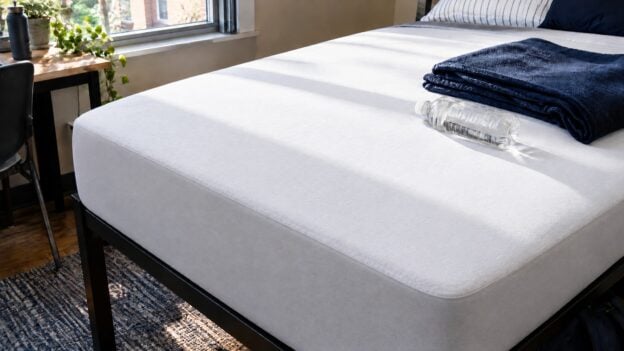
Twin beds do the hardest work in a house. Kids sleep on them through potty training, teens eat on them, and dorm students share a room with a mattress they did not choose. One spill or one bad night can leave a stain that never fully leaves.
A waterproof twin mattress protector is the plain, low-cost fix. This guide covers sizing, kids’ durability, dorm care, allergens and which SureGuard product fits which bed.
What Makes a Twin Mattress Protector Waterproof
A waterproof protector has two jobs, and two separate parts do them. The waterproof layer is the barrier that keeps liquid from reaching the mattress. The soft top is what the sleeper actually touches.
Twin Size SureGuard Mattress Protector
| Twin Size SureGuard Mattress Protector | |
|---|---|
| Price | around USD 33.97 |
| Bed size | 38 by 75 inches |
| Best for | Kids and pets |
| Protects against | Liquids, stains, allergens |

Keep those apart in your mind and the choice gets easier. A soft top alone feels nice but does not stop a spill. The barrier alone can feel stiff if the top is poorly made.
SureGuard’s flagship protector is fully waterproof and hypoallergenic, with a pure cotton top surface and GREENGUARD Gold certification. Across the range, SureGuard Mattress Protectors provide protection against liquids, stains and allergens.
Whether you need the waterproof layer depends on your main worry. If accidents are the concern, the barrier is the whole point. If allergens are the concern, the barrier also helps by keeping dust mites and dander out of the mattress. Many households want both.
A protector does not clean or repair a mattress that is already stained, and it is not a comfort topper. Fit it while the mattress is clean.
Twin or Twin XL: Matching the Protector to the Bed
The two sizes look alike but are not interchangeable. A standard twin is about 38 by 75 inches. A twin XL is the same width but about 80 inches long, so a standard twin protector will not reach the foot of a twin XL bed.
Measuring the Bed and Pocket Depth Before You Order
Measure the mattress length first, then the width. Then measure the depth: run a tape from the top surface to the bottom edge at the side, and include any topper that will stay on the bed.
Match those numbers to the listed size and pocket depth on the product page, and check them against the mattress label. A pocket that is too shallow pulls at the corners and slips off. If the bed has a thick topper, depth is the figure to check twice.
For more measuring detail, see these twin size fit tips.
Waterproof Twin XL Mattress Protector for Dorm Beds
Most dorm beds are twin XL, and that is the size to expect. Housing offices sometimes list the exact mattress dimensions, so confirm before you buy rather than assuming. Here is why size matters for dorm beds, if you want the longer reasoning.
Dorm students should look at the Twin XL SureGuard Mattress Protector for dorm beds, around USD 35.97, or the Smooth Twin XL SureGuard Mattress Protector at the same approximate price. Standard-length twin beds at home suit the Twin Size SureGuard Mattress Protector or the Smooth Twin Size SureGuard Mattress Protector, both around USD 33.97.
Potty Training Mattress Protectors: Durability That Holds Up
A child’s bed tests a protector in ways an adult’s bed never does. The protector gets washed often, tugged at in the night and lain on for ten hours.
The Twin Size SureGuard Mattress Protector speaks to exactly this. It is made for households with pets or children, and it reduces the risk around a single bedtime accident on an unprotected mattress. That one event is usually what sends parents shopping.
Waterproof Mattress Protector for Kids: What to Check
Durability on a kids’ bed comes down to three things:
- A waterproof layer that survives repeated washing. A protector that leaks after a month of laundry has not done its job.
- A fitted pocket that stays put. Children roll, kick and climb, so a protector that bunches or slides leaves gaps.
- A top that stays comfortable all night. If a child finds the surface noisy or hot, they will not settle.
For durability, SureGuard protectors come with a 10 year warranty, where each protector should provide the same level of protection, wash after wash. You can judge the fit and comfort by how the protector fits and feels on the first night. Look for a cotton top if your child runs warm.
Mattress Protector for Bed-Wetting Nights
For bed-wetting, the waterproof layer does the practical work. It has to stop liquid reaching the mattress and keep doing so after many washes.
The usual setup is simple. Keep a spare protector so you can swap one onto the bed while the other is in the wash. Some parents also add waterproof sheets for layering, so a night-time change means stripping one layer instead of remaking the whole bed.
A protector guards the mattress. It does not prevent accidents, and it will not shorten the stage your child is going through. What it does is turn a midnight emergency into a quick change of sheets.
Waterproof Dorm Mattress Protectors: Easy Care for Shared Rooms
Dorm life shapes what matters. Laundry access is often limited, and the bed is usually provided by the school. So you are protecting a mattress you do not own, and you may only reach a washing machine once a week.
That points to two priorities. Buy a spare so one protector is always clean and dry, and choose a fit that stays put on a bed that may be moved, stripped and remade at the start and end of each term. If the dorm mattress is already worn, a protector will not fix that, but it will keep the next spill from making it worse.
Washing a Waterproof Protector Without Losing the Barrier
Start with the care label, because it is the one source that applies to your exact protector. Follow its temperature and cycle instructions.
As a general rule, wash on a gentle cycle and dry on low heat. High heat is the most common way a waterproof layer wears out early, so if you are unsure, go cooler. Air drying works too if the dorm dryers run hot.
For longer guidance, here are some care tips for waterproof bedding.
Hypoallergenic Twin Mattress Protector: Cotton Top and Allergen Protection
The cotton top is the part the sleeper feels. Pure cotton is a familiar, breathable surface, and it is why a twin size mattress protector with a cotton top suits children who find synthetic fabrics clammy. Check each product page for the top fabric of the listing you choose.
The hypoallergenic construction is a barrier. It helps keep dust mites and pet dander out of the mattress, where they are hard to remove. SureGuard’s flagship protector carries GREENGUARD Gold certification, which is worth checking on the product page for your size.
This is where the limit matters. A protector keeps allergens out of the mattress. It does not treat allergies, and it is not a substitute for medical advice. If a child has symptoms, talk to a doctor.
For more background, read this guidance on dust mites and dander.
SureGuard Twin Options
Four options cover the Twin size range. Each product page states the details, so use it as the final check on size and features. Prices below are approximate and can change.
- Smooth Twin Size SureGuard Mattress Protector: around USD 33.97, for standard twin beds.
- Twin Size SureGuard Mattress Protector: around USD 33.97, for standard twin beds.
- Twin XL SureGuard Mattress Protector: around USD 35.97, for the longer twin XL bed.
- Smooth Twin XL SureGuard Mattress Protector: around USD 35.97, for the longer twin XL bed.
Choosing the Right Twin Protector for Your Bed
Work through the decision in order, and it rarely takes long.
- Bed size. Measure length, width and depth. Twin for standard length, twin XL for most dorm beds.
- Your main need. Bed-wetting or potty training calls for a spare to rotate. A dorm calls for a spare and a secure fit.
- Comfort and allergies. A cotton top suits warm sleepers. Hypoallergenic construction suits households worried about dust mites and dander.
Then think about value. A protector earns its price by lasting through many washes at an accessible cost, not by being the cheapest on the shelf. More than 59,000 reviews and ratings across SureGuard products on Amazon.com average 4.6 out of 5 stars, and millions of customers use them. If you are still comparing types, here is how to choose the right mattress protector.
When you are ready, open the Twin Size or Twin XL product page and check the listed dimensions against your mattress. You can also read up on SureGuard’s care tips and washing advice.
Rest Assured with SureGuard.
Frequently asked questions
What is the deepest mattress protector?
Pocket depth differs by product, so there is no single answer. Measure your mattress from the top surface to the bottom edge, including any topper, and compare that figure with the pocket depth on the product page. Choose a protector whose pocket is at least as deep as your measurement. SureGuard Twin and Twin XL mattress protectors can fit up to 18 inches deep.
Can I wash a waterproof mattress protector in the washing machine?
Yes, but follow the care label first. As a general habit, use a gentle cycle with a regular detergent (no bleaching agents) and dry on low heat, because high heat is the usual cause of a worn waterproof layer. Keeping a spare means you are never without a protector on wash day.
Is there a mattress protector that is not waterproof?
Yes. Some covers add only comfort or a fabric layer and do not stop liquid. If accidents are a concern, choose one described as protecting against liquids, stains and allergens, as the SureGuard listings are.
Should a dorm student buy a twin or twin XL protector?
Most dorm beds are twin XL, so a twin XL protector is the usual choice. Confirm the mattress size with your housing office or the mattress label before ordering, since a standard twin protector will not reach the foot of a longer bed.

