
 (209) 878-7320
 info@sureguardmattress.com


Most people cover the mattress and forget what sits under it. The box spring takes the same dust, skin flakes and spills, and it is much harder to clean.
A queen box spring cover is a simple fix, but the word “cover” means very different things. Some products only decorate. Others close the box spring in completely. This guide explains the difference, shows you how to measure, and walks through installation.
Do you need to cover a box spring?
For many beds, yes. A cover earns its place when any of these apply:
- Someone in the house has allergies or asthma.
- Pets sleep on the bed, or children eat and drink on it.
- You have had bed bugs, or you travel often and worry about bringing them home.
- You are moving, renting the bed out, or taking over a rented home.
A low-risk bed is different. If you live alone, have no allergies and no pets, and the bed stays in one room for years, a plain bed skirt may be all you need. A protective cover is not essential for every bed. It matters most where the risks above are real.
Bed bugs, dust mites, spills and wear
Each risk works differently, so it helps to see them one at a time.
Bed bugs. They hide in seams, folds and frame joints, and a box spring has plenty of all three. The fabric underside is a common hiding spot. A bed bug box spring cover that closes all the way around leaves them nowhere to settle and no way in from outside.
Dust mites and dander. Mites feed on the skin flakes that settle into fabric, and pet dander collects in the same places. If you are shopping for a box spring cover for allergies, the closed design is what counts, because a cover with open edges lets particles drift straight back in. For the mite side of this, see our guide to allergy mattress covers and dust mites.
Spills. Liquid that gets past the mattress soaks into the box spring’s thin fabric and wood frame. It dries slowly there, and mold and odor can follow. A waterproof layer stops that.
Everyday wear. Lifting, sliding and moving all fray the fabric over time. A cover takes the scuffs so the box spring itself stays intact.
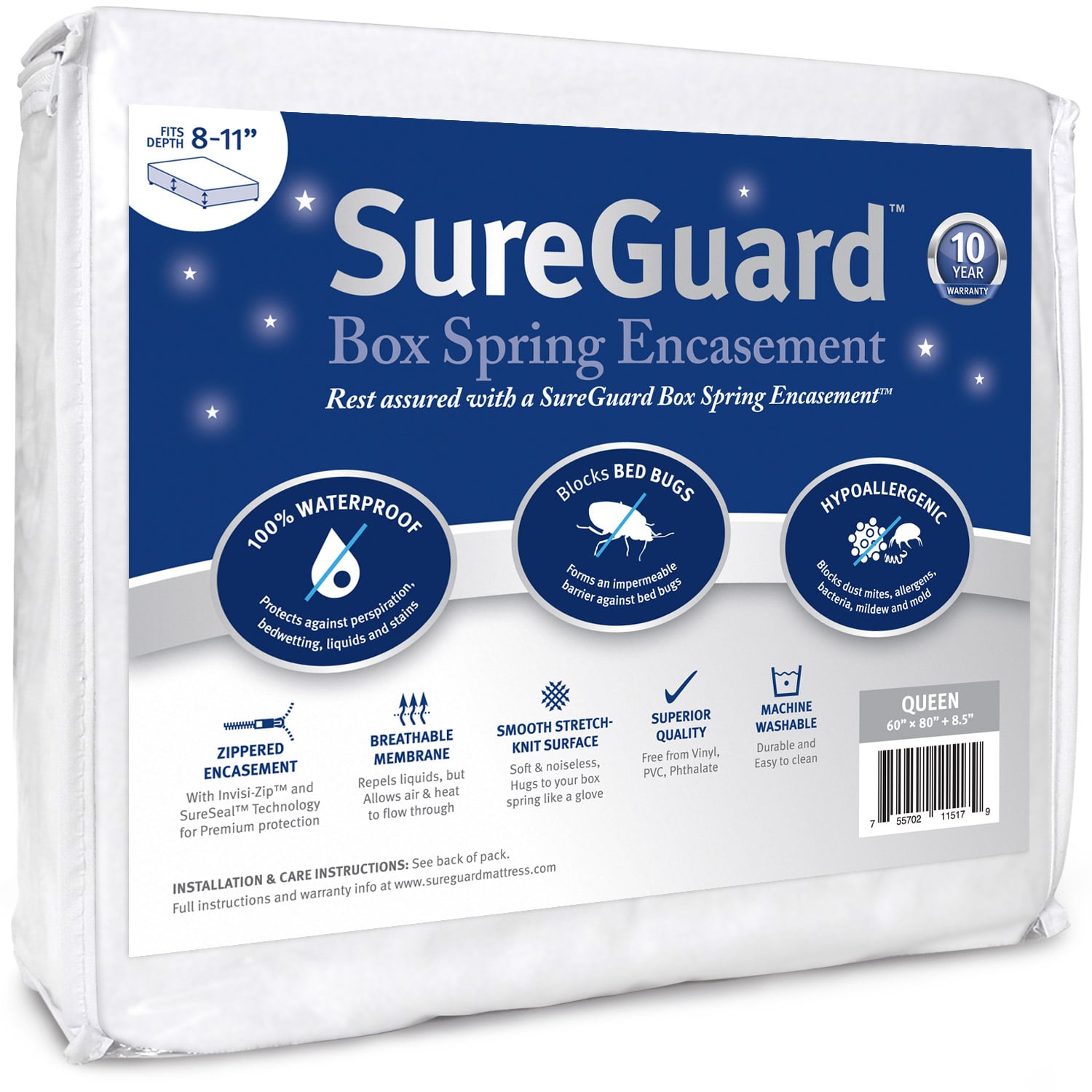
This is why SureGuard’s Queen Size Box Spring Encasement is listed with 360-degree protection against liquids, stains, allergens and bed bugs, and as ideal for households with pets or children.
Box spring cover vs. bed skirt vs. encasement
Shoppers often search for a box spring cover and land on bed skirts. The two do different jobs, and a few extra minutes sorting them out saves you buying the wrong one.
What a bed skirt does and does not cover
A bed skirt hangs from the edge of the bed base to hide what is underneath. It is a decorative panel. It does not enclose the box spring, so the top, the sides and the underside of the frame stay exposed. It also does nothing against bugs, mites or spills.
That is not a flaw if looks are the goal. It simply means a skirt is not protection.
What a zippered encasement closes off
A basic cover may fit only the top and sides. Bugs and dust can still reach the open underside and the corners. A zippered box spring cover, by contrast, wraps all six faces of the box spring and seals with a zipper.
That closed barrier is what bed bug and allergen protection depends on. The comparison in the box spring cover vs. bed skirt debate comes down to one thing: a skirt hides the base, and an encasement shuts it in. The full box spring encasement guide covers the construction in more detail.
You can use both. A bed skirt hangs over an encasement without any trouble if you like the look.
How to pick a queen box spring cover: measure first
Do not rely on a standard size from memory. Box springs vary, and a cover that is too small will strain at the zipper, while one that is too loose leaves gaps.
Queen box spring dimensions to record
A standard queen box spring has a footprint of about 60 by 80 inches. Height is where beds differ, so measure your own with a tape and write the numbers down:
- Length: head to foot, at the longest point.
- Width: side to side, at the widest point.
- Height: floor-facing base to the top surface, at the tallest point.
Include any pillow top or extra padding in the height. Measure twice. If the sides bow outward, use the larger reading.
Low-profile box springs and standard ones can differ by several inches, and that difference decides whether an encasement fits properly.
Depth, corners and features to check
Once you have your numbers, compare them with the product details. For a queen bed, the Queen Size SureGuard Box Spring Encasement is the queen box spring encasement to check first. It is priced at around USD 64.97, though the price may change, so confirm it on the product page. Check the depth listed there against your full measured height.
Then look at the details that affect daily use:
- The zipper. It should run smoothly and close the opening completely.
- The fabric. It should be waterproof, since that is what stops spills reaching the frame.
- Corners. Square corners that match your box spring’s shape sit flat and resist tearing.
- Certifications. If a third-party certification matters to you, look for it on the product page rather than assuming it.
A box spring protector in queen size will not correct a box spring that is already damaged or badly warped. It protects the box spring you have. It will not repair it.
How to put a cover on a box spring
The job takes about as long as making the bed. A second person makes it much easier, because a queen box spring is awkward to hold alone.
Clear the bed and check for pests first
Start by stripping the bed completely: sheets, mattress protector, mattress. Stand the mattress against a wall or set it on a clean floor.
Next, inspect the box spring. Look along the seams, the corners and the frame joints for dark spots, shed skins or live bugs. Check the underside fabric as well. If you find signs of bed bugs, treat the problem first or alongside the cover.
An encasement traps bed bugs already inside the box spring. It does not remove them. Trapped bugs cannot feed or escape, but they are still there, so a cover alone is not a treatment. Our piece on how encasements stop bed bug infestations explains what a cover can and cannot do. It is a barrier, and a good one, but it works as one part of a wider plan.
Zip the encasement on, step by step
Here is the order that works best.
First, with a second person, lift one end of the box spring and tilt it up so you can work the encasement over it.
Second, slide the open end of the encasement over the box spring, pulling it down.
Third, line up the corners so the seams sit on the edges rather than twisting across the top.
Fourth, zip it closed slowly. Hold the fabric flat near the zipper so nothing catches in the teeth.
Last, run your hand around the whole box spring and look for gaps near the zipper, the corners and the base. Close any you find before the mattress goes back on.
If the fabric resists, stop and check the fit rather than forcing the zipper. That is usually a sign the measurements were off.
Pairing a box spring cover with a mattress encasement
A box spring cover protects only the box spring. It does not shield the mattress above it, so a mattress left bare can still collect mites, spills and bugs, and those can reach the box spring through the contact surface.
Why the mattress needs its own barrier
Full bed bug and allergen defense means covering both pieces. Choose a queen mattress encasement for the same bed, so the two sealed layers meet with no exposed gap. Our guide to mattress encasements for bed bugs covers the mattress side in detail.
You may also want everyday protection on top. The Queen Size SureGuard Mattress Protector protects against liquids, stains and allergens, and is ideal for those with pets or children. It is priced at around USD 47.97, and that figure may change. It deals with the top surface, where night-to-night spills and stains land.
Keep the roles clear. The mattress protector handles liquids, stains and allergens on top, while bed bug protection belongs with the encasements.
Moving, storage and rental-property use
A box spring is bulky, and it picks up scuffs, dust and moisture whenever it is carried or stored. Covering it before a move or before it goes into storage keeps all three off the frame. It also keeps the fabric clean until you set the bed up again.
If you own rental property or host short stays, a sealed encasement is a practical way to protect each bed between guests. You can wipe it down quickly, and any spill stays on the cover instead of soaking the box spring. For a new tenant or guest, it also shows the bed has been looked after.
This does not replace regular inspection. A cover reduces what can get in, but you still check beds between stays.
Durability, care and warranty
How long a cover lasts depends on how it is made. Before you buy, look at four things: the fabric, the zipper, the seams and the corners. Corners and zippers take the most strain when you fit the cover, so weak ones show up first.
Follow the care label. Washing and drying instructions differ between products, and ignoring them shortens a cover’s life. Our notes on materials and care tips for bed covers give more background on how fabrics hold up.
Warranty terms belong on the product page. Read them there, and compare what is covered before you decide. SureGuard products carry customer reviews on Amazon.com, with an average rating of 4.6 out of 5 across more than 59,000 reviews and ratings for all products. That is a useful sign of how households find them in daily use.
Once you have measured your box spring, the next step is simple. Check your numbers against the product page for the Queen Size SureGuard Box Spring Encasement. Rest assured, a correct fit makes the rest easy.
Frequently asked questions
Will a box spring encasement get rid of bed bugs?
No. An encasement traps bed bugs already inside and blocks new ones from getting in. It does not kill them or remove them, so an existing infestation still needs treatment alongside the cover.
Do I still need a mattress cover if my box spring is encased?
Yes. A box spring cover protects only the box spring. For full bed bug and allergen defense, cover the mattress with its own encasement. For everyday liquids and stains on the top surface, add a mattress protector.
Can I still use a bed skirt over a box spring encasement?
Yes. A bed skirt hangs from the edge of the base for looks, and it sits over an encasement without any trouble. The encasement does the protecting, and the skirt does the decorating.
How much does a queen box spring encasement cost?
The Queen Size SureGuard Box Spring Encasement is priced at around USD 64.97. That price may change, so check the product page for the current figure.
How do I know a queen box spring encasement will fit?
Measure the length, width and full height of your box spring, including any pillow top or padding. A standard queen footprint is about 60 by 80 inches, but height varies. Compare your height with the depth listed on the product page before you order.

