
 (209) 878-7320
 info@sureguardmattress.com


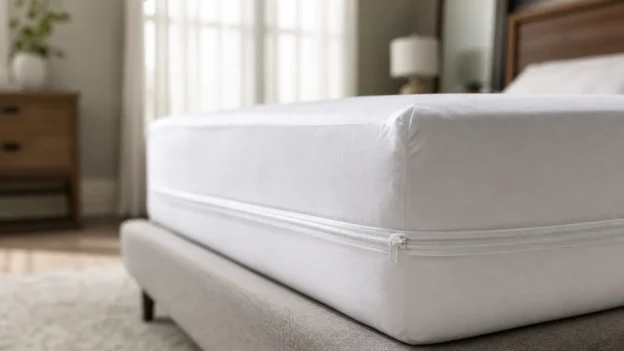
A bed bug mattress encasement is one of the most effective physical tools for long-term bed bug control, yet it’s often confused with a standard mattress protector. The difference matters. A true encasement seals your mattress on all six sides, denying bed bugs any route in or out. That single design distinction makes it the foundation of any serious bed bug defense plan, whether you’re dealing with an active infestation or protecting a clean mattress from future risk.
What a Bed Bug Mattress Encasement Actually Does
How full encasement containment works
A bed bug mattress encasement wraps the entire mattress, top, bottom, and all four sides, and closes with a zipper that leaves no gap. This full 360° seal creates two simultaneous barriers: bugs already living inside the mattress cannot get out to feed, and bugs from outside cannot get in to establish a new colony. The mattress becomes a sealed unit rather than an open harborage site.
Standard fitted mattress covers protect only the sleeping surface. They leave the sides and underside exposed, exactly where bed bugs hide and travel. An encasement eliminates that vulnerability entirely.
Why bed bugs can’t escape a properly sealed encasement
Bed bugs are flat and fast, but they cannot chew through a tightly woven, durable encasement fabric. The critical point is the zipper end. Low-quality encasements leave a small gap where the zipper tab rests, wide enough for a bed bug to pass through. Quality encasements solve this with a fold-over zipper flap or a patented closure system that covers the zipper terminus completely. With no gap and no penetrable fabric, there is no exit.
Mattress Encasement vs. Mattress Protector: Understanding the Difference
Coverage and closure design
A mattress protector is designed to guard the top sleeping surface from spills, sweat, and allergens. It typically fits like a fitted sheet, secure at the top but open on the sides and bottom. That’s perfectly adequate for its intended purpose.
A mattress encasement for bed bugs serves a different function. It encloses the entire mattress and fastens shut with a zipper. No surface is left exposed. The closure design is what separates the two products, an encasement without a full seal is just an expensive fitted sheet.
When each product is the right choice
If your goal is spill protection and allergen reduction on a bed-bug-free mattress, a quality protector is sufficient. If you have a confirmed infestation, suspect exposure, or want long-term peace of mind, a full encasement is the only appropriate choice. For households managing an active infestation, using only a top-surface protector leaves most of the mattress completely unprotected, and bed bugs will exploit that immediately.
The two products are not mutually exclusive. Many households use a bed bug encasement as the base layer and add a washable top-surface protector over it for everyday comfort and easy laundering.
Key Features to Look for in a Bed Bug Proof Mattress Cover
Zipper quality and the bite-proof closure zone
The zipper is the weakest point of any encasement, and the feature most worth scrutinizing. Look for a micro-zipper with teeth small enough that bed bugs cannot pass through, combined with a secondary closure that covers the pull tab end. SureGuard’s encasements use a patented Secure Zip system with a fold-over flap at the closure point, eliminating the gap that undermines cheaper alternatives.
A stuck or broken zipper during installation can compromise the seal. Pull the zipper smoothly and evenly; forcing it damages the teeth and creates micro-gaps.
Fabric durability and breathability
The encasement stays on your mattress for months or years, so fabric quality directly affects long-term performance. Look for materials that are tear-resistant during installation (a common failure point on low-thread-count encasements) and hold up through repeated machine washing without degrading the weave.
Breathability matters too. A mattress sealed in a non-breathable material traps heat and moisture, uncomfortable to sleep on and potentially damaging to the mattress over time. Quality encasements use fabrics that are both impermeable to bed bugs and breathable enough for comfortable, long-term use.
Certifications and warranty backing
Third-party certifications cut through marketing noise. GREENGUARD Gold certification, issued by UL, means the product has been independently tested and meets strict chemical emission standards, relevant when a product sits directly under your sleeping surface for years at a time. This matters especially for households with children, pregnant women, or chemically sensitive individuals.
Warranty length signals durability confidence. SureGuard mattress encasements carry a 10-year warranty, a practical indicator that the product is built to stay on your mattress long-term without failure. A short warranty on an encasement that needs to remain sealed for 12–18 months minimum is a red flag.
SureGuard has been trusted by millions of customers since 2013, with an average rating of 4.6 out of 5 stars and over 45,000 reviews and ratings across all products on Amazon, a useful benchmark when comparing bed bug mattress cover reviews.
How to Use a Mattress Encasement for Bed Bugs: Step-by-Step
Correct installation is as important as choosing the right product. Follow these steps:
- Inspect the mattress first. Before encasing, examine seams, tufts, and edges for signs of bed bugs, dark spots, shed skins, or live insects. Document what you find; this information is useful for your pest professional.
- Fit the encasement over all four corners. Work one corner at a time, pulling the fabric smoothly. Avoid dragging the encasement across rough surfaces, which can cause micro-tears.
- Close the zipper in a single smooth pass. Don’t stop partway and restart, this can cause the zipper to skip teeth. Zip all the way to the end.
- Fold over and secure the zipper guard. This step is non-negotiable. The fold-over flap covers the zipper terminus and eliminates the gap that would otherwise allow bed bugs to escape.
- Leave it on. Once sealed, the encasement should not be removed mid-treatment. Removing it prematurely releases any trapped bugs and undoes containment.
Bed bugs trapped inside a properly sealed encasement will die within 12 to 18 months without access to a blood meal, a timeframe widely cited in pest control literature as the basis for long-term encasement use during active infestations. The encasement must stay on and remain intact for the full duration.
Integrating Your Encasement into a Holistic Bed Bug Management Strategy
Pairing encasements with box spring covers and pillow protectors
The mattress is only part of the bed unit. Box springs are a primary harborage site, dark, undisturbed, and close to a sleeping host. Encasing the mattress without encasing the box spring leaves a major infestation point unaddressed. A zippered mattress encasement on the mattress and a matching box spring encasement together seal the entire bed unit.
Pillow protectors complete the picture. Bed bugs have been documented in pillows, and a zippered pillow encasement extends the same containment logic to the sleeping surface closest to your face. It’s a small addition with meaningful impact.
Working alongside professional pest treatment
Pest management professionals consistently classify physical barriers, including mattress and box spring encasements, as a core component of an integrated bed bug management plan, alongside heat treatment and insecticide application. The EPA’s bed bug guidance positions encasements as a standard non-chemical control measure within a broader Integrated Pest Management (IPM) approach.
Encasements don’t replace extermination, they eliminate the mattress as a harborage site and reduce re-infestation risk between and after treatments. A household with a confirmed infestation can encase the mattress and box spring on day one, before the pest professional arrives, to immediately limit the bugs’ ability to spread to adjacent rooms. That early containment step doesn’t require waiting for an appointment.
How Long Should You Keep a Mattress Encasement On?
For active infestations, pest management literature recommends keeping the encasement on for a minimum of 12 to 18 months. That period ensures any trapped bed bugs, including newly hatched nymphs, complete their lifecycle without a blood meal and die. Removing an encasement before that window closes risks releasing surviving bugs into the mattress and the room.
For prevention, the answer is simpler: keep it on indefinitely. A durable, washable encasement designed for long-term use adds no meaningful discomfort and provides continuous protection. Bed bug infestations can arrive through travel, secondhand furniture, or visiting guests, so there’s no point at which a mattress is permanently risk-free.
Durability and washability are directly relevant here. An encasement that degrades after a few washes, losing its weave integrity or zipper function, fails before the protection window closes. Fabric quality, construction, and warranty length are worth prioritizing when choosing the best mattress encasement for bed bug protection. A product rated for ten years of use, washable at home, and certified for safe long-term contact is the right tool for a job that, by definition, requires staying in place.

