
 (209) 878-7320
 info@sureguardmattress.com


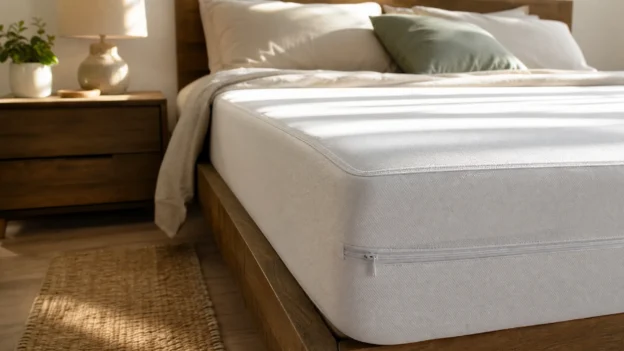
A bed bug mattress protector is one of the simplest, most cost-effective steps you can take to defend your sleep environment, whether you’ve never seen a bed bug or you’re worried about bringing one home from your next trip. Bed bugs most commonly enter homes through travel, second-hand furniture, and overnight guests, which makes prevention important to virtually any household. The right protector keeps bugs out of your mattress, makes any infestation easier to detect, and helps preserve your mattress warranty.
Why a Mattress Protector Matters for Bed Bug Defense
An unprotected mattress is a bed bug’s ideal habitat. The seams, tufts, label tags, and woven fabric surface give bugs dozens of narrow gaps to hide in, feed from, and lay eggs in. Once they’re inside the mattress core, treatment becomes far more difficult and expensive, pesticide sprays can’t reach deep harborage sites, and heat treatments require professional equipment.
Mattress protector bed bug prevention works on a simple principle: eliminate the places bed bugs can hide, before bugs ever arrive. Acting before an infestation is far cheaper than responding after one. A protector that costs under $100 is a fraction of the cost of professional extermination, mattress replacement, or both.
How Bed Bugs Exploit an Unprotected Mattress
Bed bugs are flat, roughly the size of an apple seed, and they move quickly along fabric surfaces. On a bare mattress, they can:
- Burrow into seams and piping along the mattress edge, where fabric folds create a protected channel
- Hide in tufts and quilted layers, especially in pillow-top designs
- Lay eggs in woven fabric fibers, where eggs adhere and are nearly impossible to remove without replacing the material
The result is a self-sustaining population inside the mattress, one that feeds on you at night and retreats into the mattress during the day. A tight-fitting, well-sealed protector closes off these entry points entirely.
Protector vs. Encasement: Understanding the Difference
These two products are often confused, but they serve different purposes.
A mattress protector fits like a fitted sheet, it covers the top surface and the sides down to the base, but is open underneath. It makes your sleeping surface easy to inspect and clean, but it does not block bugs from getting into the mattress.
A mattress encasement zips shut around the the mattress, creating a sealed envelope. No bug can enter or exit. This is the right tool when bed bugs are already suspected or confirmed, or in high-risk environments like short-term rentals and college dormitories, where it guards against transfer between guests and keeps the mattress surface clean enough to remain under warranty.
When You Need a Bed Bug Mattress Protector
If you’ve seen signs of bed bugs, small reddish-brown stains, shed skins, or the bugs themselves, or if you’re sleeping in a high-turnover environment, you need an encasement mattress protector for bed bugs. The zipper seal traps any existing bugs inside (where they eventually die) and blocks infestation from outside. Pest management professionals, following guidance aligned with the EPA’s bed bug management framework, consistently recommend encasing both the mattress and box spring as the foundation of any control plan, not because encasements kill bugs, but because they eliminate harborage sites and make monitoring far easier.
What to Look For in a Bed Bug Mattress Protector
Not all protectors block bed bugs equally. Three criteria separate a genuinely bed bug resistant product from a standard moisture barrier.
Waterproof Backing and Sealed Seams
A waterproof mattress protector for bed bugs does more than repel moisture. The continuous membrane beneath the fabric surface also prevents bugs from working through the material over time. The key word is continuous: the membrane must cover all six sides with no gaps, patches, or exposed seams where bugs could find a path through.
Fit, Depth, and Full Coverage
A full coverage mattress protector that slides around, bunches up, or is too tight that it leaves the seams exposed, defeats its own purpose. Look for designs that accommodate your mattress depth. SureGuard Mattress Encasements come in various sizes and 4 depth options to ensure a snug fit on almost any mattress.
Proper fit also matters for inspection: a well-fitted protector keeps the sleeping surface smooth and light-colored, making it far easier to spot the early signs of an infestation, dark fecal spots, shed skins, or the bugs themselves.
Third-party certification is the final quality signal worth checking. All SureGuard products carry GREENGUARD Gold certification, meaning the materials have been independently tested against strict chemical emission standards, a meaningful signal for households concerned about what their family sleeps on. With an average rating of 4.6 out of 5 stars across more than 45,000 reviews, SureGuard’s protector reflects consistent real-world performance.
Building a Holistic Bed Bug Defense Strategy
A mattress protector for bed bugs is a critical layer, but it works best as part of a broader routine.
- Inspect regularly. Check the protector surface, the bed frame joints, and the headboard monthly, especially after travel or having overnight guests.
- Reduce clutter around the bed. Clothing piles, storage boxes, and anything that touches the bed frame give bugs alternative places to hide, close to their food source. Keep the floor around the bed clear.
- Use bed bug interceptor traps under each bed leg to catch bugs traveling up from the floor and provide an early warning system.
Protecting the Box Spring Too
The box spring is one of the most overlooked entry points in any bed bug defense plan. Its open fabric underside and internal wood frame create a vast area for bed bugs to multiply. In many infestations, the box spring harbors a larger population than the mattress itself.
A box spring cover works on the same principle as a mattress encasement: it seals off the structure completely, preventing bugs from moving between the box spring and the mattress above. If you’re protecting your mattress, protect the box spring at the same time. The two work together as a system.
Mattress Protectors and Your Mattress Warranty
Most mattress warranties are voided by stains. Bed bug evidence, fecal spots, shed skins, and blood spots from feeding, can qualify as stain-related damage under most warranty terms, leaving you without coverage on a mattress that may cost $1,000 or more.
A protector maintains your mattress warranty, by keeping the mattress clean and free from stains and contaminants.
Choosing the Best Mattress Protector for Bed Bugs: Final Checklist
When evaluating any product, run through these six criteria:
- Tight stitching and micro zipper teeth, leaving no gaps for bed bugs to penetrate
- Continuous waterproof membrane, that bed bugs cannot bite through
- All-round, full-perimeter fit, secure on all sides for your mattress size and depth
- Machine washable, essential for regular cleaning as part of your routine
- Long warranty, a manufacturer willing to back the product for 10 years or more signals confidence in durability
- Tried and Tested, look for products that have been successfully used by millions of households, with thousands of real-world reviews, year after year. Consistent positive results means a quality protector that works as expected.
The best mattress protector for bed bugs isn’t necessarily the most expensive option, it’s the one that meets all six criteria and fits your specific mattress. SureGuard’s protector range is built to satisfy each point, backed by GREENGUARD Gold certification, a 10-year warranty, and a track record built over more than a decade in the market. Explore the full range to find the right fit for your bed size and mattress depth, and rest assured your mattress is protected.

