
 (209) 878-7320
 info@sureguardmattress.com


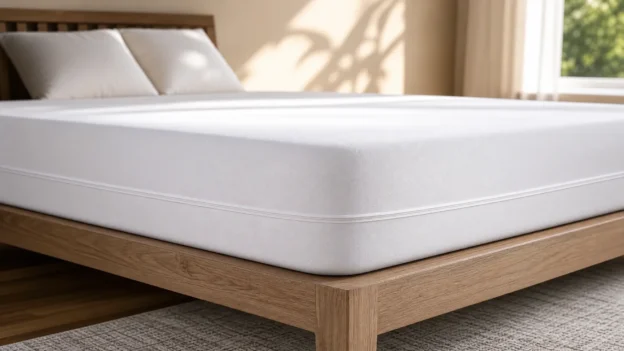
A bed bug infestation is stressful enough without wondering if your mattress cover is actually doing its job. Not all covers are built the same. The difference matters if you’re trying to stop bugs from spreading, or trap ones that are already there. This article walks through how mattress covers for bed bugs actually work, how to pick the right one for your exact mattress, and how long to leave it sealed before you can trust the job is done.
How Mattress Covers for Bed Bugs Actually Work
A mattress cover for bed bugs isn’t just a barrier against spills and dust. It’s a physical seal built to block insects less than a quarter-inch long, including their eggs and nymphs. That only works if the fabric, seams, and zipper are made specifically for this purpose.
Encasement vs. Cover: Why the Distinction Matters
A mattress encasement wraps all six sides of the mattress and zips shut completely. A basic mattress cover usually only fits over the top and sides, like a fitted sheet.
That distinction matters a lot for bed bugs. Bugs hide in seams, tufts, and the underside of a mattress, not just the top surface. A cover that leaves the bottom exposed leaves an entry and exit point wide open.
A true bed bug mattress encasement seals the entire mattress into one unit. Bugs already inside get trapped. Bugs outside can’t get in to feed or lay eggs.
Zipper Barriers and Pore Size Explained
The zipper is often the weakest point on a cheap encasement. Bed bugs can squeeze through gaps as small as the width of a credit card. So a zipper needs a secured closure, like a flap or a locking pull, to stop bugs from finding the one seam that isn’t fully sealed.
Pore size in the fabric matters just as much. A basic cover might have a weave loose enough for a nymph to pass through. For true bed bug protection, the fabric needs a tight enough weave or protective backing to block bed bugs at every life stage, not just cover the bed.
Mattress Encasement vs Mattress Cover: Which Protection Level Do You Need
Not every household needs the same level of protection. The right choice depends on whether you’re preventing bed bugs or already dealing with them.
When a Waterproof Mattress Cover Alone Falls Short
A fitted waterproof mattress cover is useful for everyday protection against spills, sweat, and allergens. It can also make a mattress less inviting to bugs by removing some hiding spots on the top surface.
But it works best as a supplement to, not a replacement for, a mattress cover for bed bugs. If it doesn’t seal the underside and edges of the mattress, it isn’t stopping bugs from moving in and out.
Signs You Need Full Bed Bug Encasement
Small reddish-brown insects, tiny bloodstains on sheets, or dark spotting along seams are all signs of an active infestation. Unexplained bites that appear in a line or cluster after sleeping are another common signal.
Once bed bugs are suspected or confirmed, it’s time to move from a basic cover to a full six-sided encasement. That’s the only setup that traps bugs inside and cuts off their food source. For a closer look at what actually works in a bed bug proof mattress cover, it helps to understand the specific features that separate real barriers from cosmetic ones.
Choosing the Right Bed Bug Proof Mattress Cover for Your Mattress
A great encasement design still fails if it’s the wrong size for your mattress. Fit and fabric quality both determine whether the barrier actually holds.
Matching Size and Depth to Your Mattress
Measure your mattress depth before buying anything. Mattresses now commonly range from around 9 inches to 18 inches or deeper. An encasement needs enough stretch and depth to fit snugly without gaps at the corners.
A cover that’s too shallow will strain at the seams and zipper, or may tear over time. That creates exactly the kind of opening bed bugs need. Always check the depth range listed on the product before ordering, and match it to the width and length of your specific mattress size. If you’re shopping for a queen mattress, you can shop the queen size mattress encasement sized for common depth ranges.
Fabric, Zipper Quality, and Hypoallergenic Considerations
Look closely at the zipper. It should have a reinforced flap covering the teeth, a secure closure that resists being pulled open, and it should leave no gaps for bed bugs to crawl through. Cheap zippers are the most common failure point in bed bug encasements.
For allergy-prone households, fabric matters too. A hypoallergenic bed bug cover made from tightly woven cotton keeps out dust mites and allergens while still blocking bed bugs. For more detail on features to check before buying, this advice on what to look for in a bed bug mattress protector covers the specifics room by room.
Don’t forget the box spring. Bed bugs hide inside box spring frames and fabric just as readily as they hide in a mattress. A box spring cover for bed bugs closes off that hiding spot, and you can pair it with a box spring encasement to cover both pieces of your bed. For more on why this matters, the waterproof box spring cover protection guide explains the risks of leaving a box spring unprotected.
How Long to Leave a Mattress Encased to Eliminate Bed Bugs
One of the most common mattress encasement questions is how long to leave a mattress encased for bed bugs before it’s safe to remove. The answer comes down to biology, not guesswork.
Bed bugs don’t need to feed often to survive. They can go many months without a blood meal, especially in cooler temperatures. That means a bug trapped inside an encasement doesn’t necessarily starve quickly.
Entomologists generally recommend leaving a mattress fully encased for at least a year, since bed bugs can survive many months without feeding. Removing the encasement earlier risks releasing bugs that are still alive and simply dormant.
During that full year, the encasement should stay zipped at all times. Check the seams and zipper periodically to make sure nothing has torn or come loose. If the barrier fails partway through the year, the timeline effectively resets.
Combining Covers With a Complete Bed Bug Protocol
A mattress cover to trap bed bugs is one part of a larger plan, not a standalone fix. Bed bugs live in more than just the mattress, so full elimination usually takes several coordinated steps.
Vacuuming, Heat Treatment, and Monitoring
Vacuum the mattress, box spring, and surrounding carpet or baseboards regularly during an active infestation. This physically removes bugs and eggs before they get trapped or spread further.
Wash and dry bedding, curtains, and clothing on the highest heat setting the fabric allows. Bed bugs and their eggs die at temperatures most home dryers can reach. That’s why heat treatment is a reliable, low-cost step alongside encasement.
Decluttering the bedroom also reduces hiding spots. Fewer piles of clothes or boxes near the bed means fewer places for bugs to shelter between feedings. Sticky monitor traps placed under bed legs can help confirm whether bugs are still active while the mattress stays encased.
Caring for Your Encasement Long-Term
An encasement only works if it stays intact. Follow the manufacturer’s washing instructions, typically a gentle machine wash and low-heat tumble dry, to preserve the waterproof and bug-proof barrier layer over years of use.
Avoid ironing or high-heat drying. Excess heat can damage the barrier membrane. Inspect the zipper and seams every few months even after the initial year of encasement, since ongoing protection depends on those points staying sealed.
Why SureGuard’s GREENGUARD Gold Certified Encasement Is the Trustworthy Choice
SureGuard has protected mattresses since 2013 and is trusted by millions of customers, with an average 4.6-star rating across more than 45,000 Amazon reviews. That track record reflects a design built around the details that actually stop bed bugs: a bite-proof membrane on all six sides, a secured zipper barrier, and strong tight seams.
A six-sided zippered encasement seals the entire mattress, denying bed bugs the mattress seams and tufts where they typically hide and breed. SureGuard mattress encasements are GREENGUARD Gold certified, meaning independent testing confirms low chemical emissions and safety for bedrooms. That certification, paired with a soft hypoallergenic cotton surface, makes SureGuard encasements a sound choice for allergy sufferers too, an angle covered further in the best mattress protector for allergy sufferers.
SureGuard backs its encasements with a 10-year warranty, reflecting confidence in the durability of the seams and zipper barrier that keep bed bugs contained. For households weighing allergen protection alongside bed bug defense, the dust mite mattress cover buying guide outlines how the same protective fabric handles both concerns at once.
Choosing a fully encasing, zippered, GREENGUARD Gold certified protector means one less thing to worry about while you work through the rest of a bed bug protocol. Rest assured with SureGuard: a mattress cover built on real barrier science, backed by a decade-long warranty, and trusted across tens of thousands of verified reviews.

