
 (209) 878-7320
 info@sureguardmattress.com


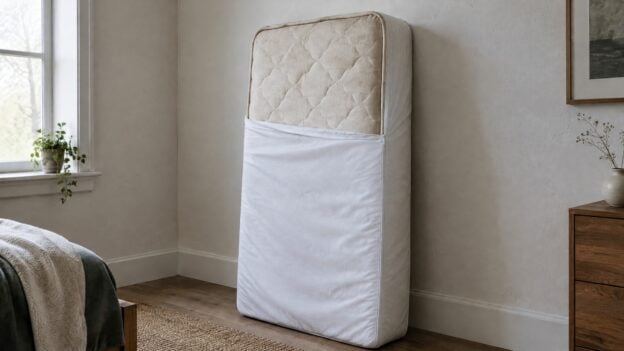
A zippered mattress protector wraps the whole mattress. A fitted protector covers the top and sides like a sheet. Both guard against spills, but they solve different problems, and the zipped version asks more of you at setup.
This guide explains when the extra effort pays off, what to look for in a zipper, and how to fit the cover without a fight. It also covers the trade-offs in heat and feel, because a sealed cover is not right for every bed.
Fitted vs Zippered Mattress Protector: How to Choose
Think of it as mattress encasement vs protector. A zippered encasement is a fully enclosed mattress cover that seals the mattress on all six sides. A fitted protector is a sheet-style layer that holds on with elastic corners.
The rule is simple. Zip when you need containment: bed bugs, dust mites in the mattress interior, or fluid that must never reach the core. Go fitted for everyday spills, pets, children and general wear.
A sealed cover also stays put. A fitted protector relies on snug corners, so it can creep and bunch as you sleep and wash sheets, especially on a deep mattress. A zip has no corners to slip off.
You pay for that in setup time. If your main worry is a leaky diaper or a spilled drink, the effort is hard to justify. If you are dealing with a rental, a bed bug scare or a severe allergy, it often is.
SureGuard sells both formats. Its mattress protectors are the easier fitted option, and SureGuard’s mattress encasement options are the zippered line. If you have not settled on a format yet, how to choose the right mattress protector is a good place to start.
When a Fitted Protector Is Enough
Most households do not need a full seal. Pets, toddlers and the occasional glass of water are what wreck mattresses, and a fitted protector handles all three.
Background reading on whether you need a mattress protector at all starts with exactly these everyday risks. The encasement question comes second.
A fitted protector goes on in a minute. You lift the corners, pull it over, and make the bed. It also washes easily and swaps out quickly, which matters when accidents happen weekly.
It does not seal the mattress. It will not stop bed bugs from entering the seams, and it will not reach the mattress interior if dust mites are already there.
Who Benefits Most from a Zippered Mattress Encasement
A zippered encasement earns its place in a few specific situations. If one of them describes your home, you will notice the difference. If none does, a fitted protector will serve you well.
Bed Bugs and Dust Mite Allergies
A zipper mattress protector for bed bugs works as a barrier. With the zip fully closed, new bugs cannot get into the mattress, and bugs already inside cannot get out and bite. That makes inspection easier too, since bugs have fewer places to hide.
It is containment, not a cure. An active infestation also lives in the bed frame, headboard, carpet and furniture, and those need separate treatment. If you want more detail, read whether an encasement really works against bed bugs.
Allergies follow the same logic. Dust mites collect inside the mattress, where vacuuming and washing sheets never reach. A zippered mattress cover for allergies seals that interior in, which cuts your exposure while the seal stays intact.
Picture a sleeper with a dust mite allergy who already vacuums and washes bedding weekly. The mattress interior is still a reservoir. An encasement addresses that interior, which cleaning alone does not.
Published research on dust mites and bedding covers is the place to check any allergen-reduction claim, so read what a study actually measured before trusting a headline number. For more on blocking dust mites and dander, see our allergy guide.
An encasement is not a treatment. Keep washing bedding hot and cleaning the room, because mites live in carpets, pillows and upholstery too. If your allergies are severe, ask a clinician what else you need.
Incontinence and Rental Properties
For incontinence, a waterproof barrier has to protect the core and the sides, not just the top. Fluid that reaches the sides of a mattress is hard to remove and easy to smell. A sealed, waterproof encasement leaves nowhere for it to go.
Property owners have a different reason. A short-stay rental that turns over between guests is a practical case for a sealed cover, because the host can open the zip and check the mattress at every changeover. Hotels and hosts also like a visible seal between guests.
Pet and child households sit in the middle. Accidents are frequent but usually land on the surface. A fitted protector is often enough, and it is far easier to strip and wash.
Zipper Quality and Security: What to Look For
If you are shopping for a zip-up mattress protector, the zipper decides whether the cover works at all. A weak one fails first and lets everything back in.
Check three things:
- A full run. The zip should close completely around the cover, with no gap at the corners where a bug or mite could pass.
- A guard over the teeth. A flap or seal covering the zip closes the last pathway into the mattress.
- A pull that glides. It should travel without catching the fabric, because snagged fabric tears and tears become openings.
Expect some wear. Every zip loosens a little with repeated opening, so open the cover only when you need to. A cover you unzip at every guest changeover will age faster than one that stays shut for years.
Our list of key considerations for a zipper cover goes deeper on what to inspect before you buy.
How to Install a Zippered Mattress Cover With Less Effort
Be ready for a real job. Fitting a zippered cover takes longer than pulling on a fitted sheet, and it goes much better with two people.
Preparing the Bed and the Cover
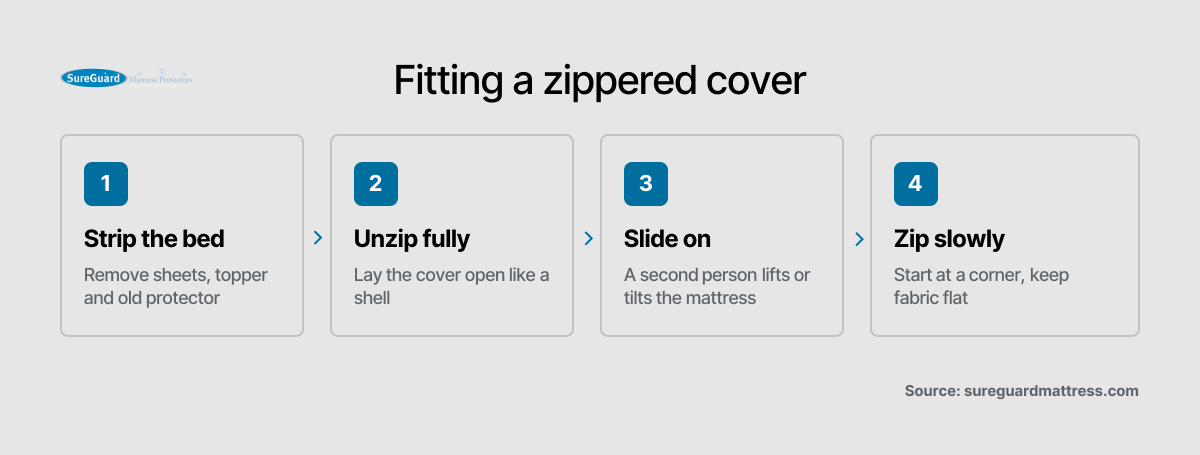
Strip the bed first. Take off all sheets, any topper and the old protector, then vacuum the mattress surface.
Unzip the cover fully before you start. Laying it open like a shell lets the mattress slide in without strain.
Because mattresses are heavy and awkward, ask a second person to lift or tilt one end while you guide the cover over it. You will save your back and avoid dragging the fabric across a rough surface. Work from the head of the bed down.
Closing the Zipper Without Snags
Start the zip at a corner. Work slowly, and keep the fabric flat on both sides of the teeth so nothing folds into the track.
Never force a catch. If the pull stops, back up, smooth the fabric and try again, because forcing it can strip the teeth or tear the cover.
Keep the fabric flat as you pass each corner. Bunched fabric at a turn is the usual reason a zip jams.
Once the zip is closed and the guard flap is in place, let the cover settle for a short while. Then make the bed.
Choosing the Right Depth and Bed Size
A zippered cover has to fit tightly, so size and depth matter more here than with a fitted sheet.
Matching Encasement Depth to Mattress Height
Measure your mattress height from the bed surface to the bottom edge, and include any topper that will sit inside the cover. Encasements typically come in depths from roughly 6-8 inches up to 17-20 inches, so match your measurement to the nearest depth range.
Go wrong in either direction and you will feel it. A cover that is too shallow strains the zip and seams, and the zip is the first thing to fail. A cover that is too deep bunches at the corners and looks untidy under sheets.
If you are on a queen bed, queen zippered cover sizing walks through a worked example.
Waterproofing, Breathability and Feel: The Trade-Offs
A zippered waterproof mattress cover blocks liquid very well, but the same seal holds in more heat than a fitted protector does. Some covers also crinkle when you move.
If you sleep hot, you may prefer a fitted protector. It covers less of the mattress, so heat has more ways to escape. A sealed cover is the better choice when containment matters more than temperature.
For more on fabrics and washing, read about waterproof bed cover materials and care.
Waterproof Is Not the Same as Breathable
Waterproof means liquid cannot pass through. Breathable means air and moisture vapor can. A cover can be strong on the first and weak on the second, and the label rarely says so.
Water-resistant is a different claim again. Judge it by construction and seams, not by the word on the box: a waterproof layer with leaky stitching is only water-resistant in practice.
SureGuard’s flagship mattress protector is a useful reference point. The brand describes it as 100% waterproof with a pure cotton top surface, so the layer you sleep on is cotton, not plastic.
Warranty and Certification: What to Check Before You Buy
Mattress warranties vary, but they often exclude stains and liquid damage. Some also expect a protector to be in use from day one. Read the terms for your mattress, because a sealed cover can be what keeps a claim valid.
SureGuard states that its flagship protector carries GREENGUARD Gold certification and a 10-year warranty. GREENGUARD Gold is a low-emissions certification. It tells you the product releases few chemicals into indoor air.
Start by measuring your mattress, including any topper. If containment matters, open SureGuard’s mattress encasement options and choose the depth that matches.
Frequently asked questions
How do I keep a mattress protector in place?
Pull a fitted protector snug over all four corners and tuck the edges under the mattress. Smooth out any bunching before you put the sheet on. If it still slides, a zippered encasement stays put because it seals around the whole mattress and has no corners to slip.
Is there a mattress protector that is actually waterproof?
Yes, but check how it is built rather than trusting the label. Waterproof means liquid cannot pass through the layer or the seams, while water-resistant only slows it. SureGuard’s flagship mattress protector is 100% waterproof, with a pure cotton top surface.
Are mattress covers worth it?
For most households, yes. A fitted protector costs far less than a ruined mattress and handles spills, stains and allergens. A zippered encasement is worth the extra setup if you need containment for bed bugs, dust mite allergies, incontinence or a rental.

