
 (209) 878-7320
 info@sureguardmattress.com


Finding the right queen size mattress cover with zipper takes more than confirming your bed is sixty inches wide. Length and width stay consistent across the industry, but mattress depth varies a lot between traditional innersprings and modern hybrid or pillow-top models. Accurate measurement is the single most important step in getting effective protection.
SureGuard has provided certified bedding protection since 2013. Millions of customers rely on our depth-specific sizing system for a secure fit, and that experience confirms something simple: guessing your size from generic labeling leads to zipper failure, fabric bunching, or gaps that let waterproof and allergen barriers fail.
Why Queen Mattress Depth Matters More Than Width
A standard queen mattress measures sixty inches by eighty inches, but total thickness can range from six inches on a low-profile platform bed to twenty inches on a luxury pillow-top model. Pick a zippered queen mattress cover without checking that vertical dimension, and you risk a product that won’t close fully, or one that leaves gaps where pests and liquids get through.
Standard vs. Pillow-Top Dimensions
Traditional innerspring mattresses typically run nine to twelve inches deep. Modern hybrids and pillow-tops often exceed fourteen. A pillow-top queen needs a different cover size than a standard queen simply because the added cushioning layer pushes the total height well past conventional dimensions.
The Risk of Guessing Your Size
An encasement that’s too small puts excessive tension on the zipper track during installation, and that tension leads to premature mechanical failure, which can void bed bug encasement protection. Go too big instead, and the loose fabric folds can harbor bed bugs and create uncomfortable ridges beneath your sheets.
Accurate depth measurement eliminates these risks entirely.
How to Measure Mattress Depth for a Zippered Cover
Grab a measuring tape. It takes about two minutes to find the exact queen mattress cover depth your bed needs, and that brief measurement saves you the hassle of returning an ill-fitting product later.
Step-by-Step Measuring Walkthrough
Place the tape at the bottom seam where the mattress meets the box spring or platform base, then extend it vertically to the highest point of the top surface, including any permanently attached padding. Record the number to the nearest half-inch. Even small discrepancies affect how securely the zipper closes around corners and edges.
Accounting for Toppers and Padding
Measure removable mattress toppers separately to figure out whether they need their own protection or whether the encasement has to cover the combined height. If the topper stays in place permanently, include its full thickness in your total measurement. If you remove it seasonally, size the queen mattress encasement to the base mattress alone and protect the topper on its own.
This distinction decides which product variant actually seals your sleep surface.
Matching Depth to SureGuard Queen Encasement Variants
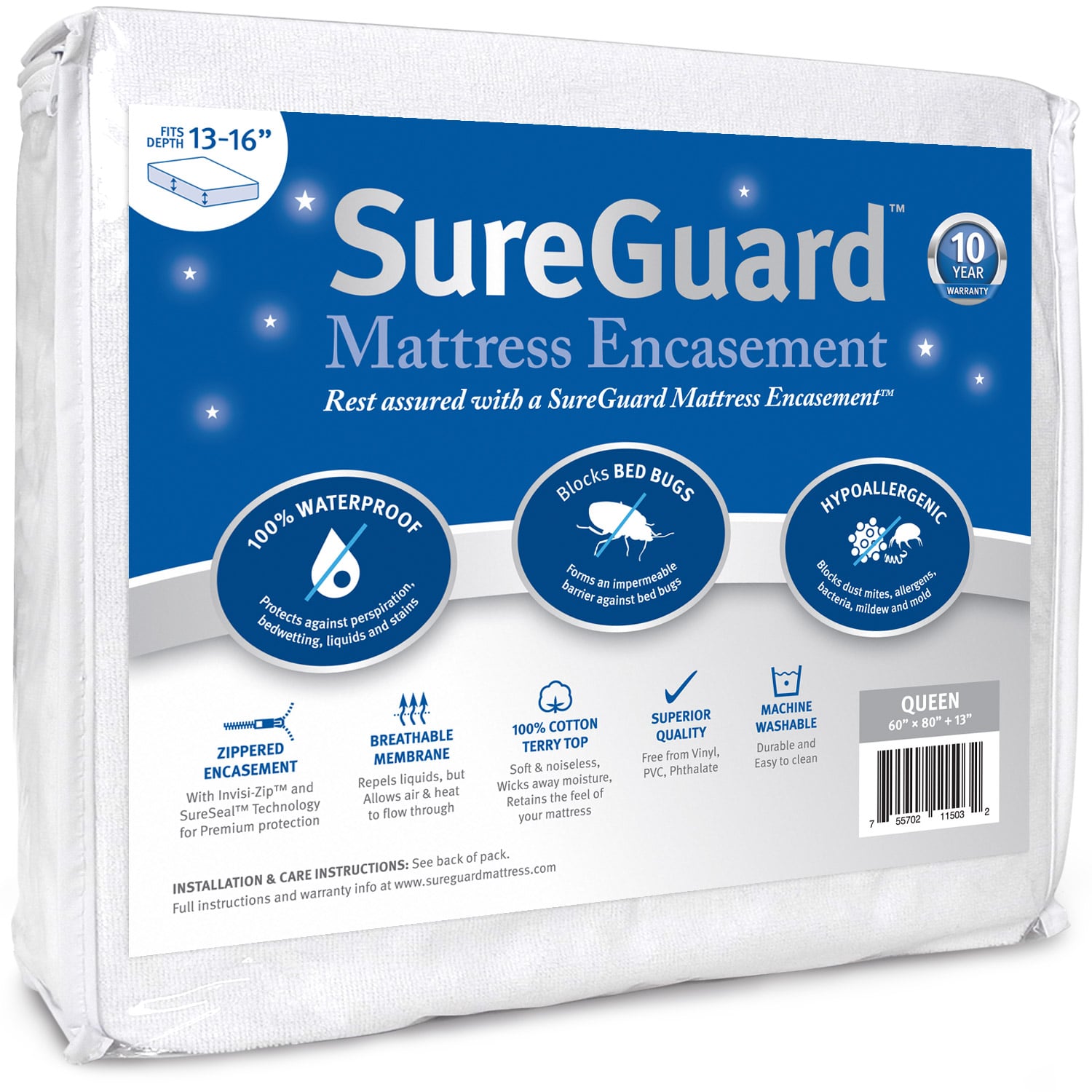
SureGuard offers four queen encasement depth ranges (6-8in, 9-12in, 13-16in, 17-20in) to cover the wide variance in modern mattress construction. Match the variant to your verified measurement and each one holds waterproof integrity and bed bug security without bunching or overstretching.
6-8 Inch Low Profile Options
Low-profile mattresses on platform beds need the 6-8 inch queen encasement to avoid loose material that ruins the fit. This sizing covers thinner foam and futon-style mattresses that standard covers can’t seal properly.
9-12 Inch Standard Fit
Most traditional innerspring and basic foam mattresses fall in this range, which is why the standard queen mattress encasement sizes suit most conventional bedroom setups. This depth fits the majority of queen beds built before thick pillow-top designs became common.
13-16 Inch and 17-20 Inch Deep Pocket Solutions
Modern hybrid mattresses and luxury pillow-tops typically need the deeper pocket variants to cover their thicker cushioning layers without straining the zipper. These deep-pocket options cover thicker profiles fully while keeping the same waterproof and hypoallergenic performance as the standard-depth models.
SureGuard’s sizing accuracy and build quality are backed by more than 45,000 Amazon reviews averaging 4.6 stars, across all depth variants.
Zippered Encasements vs. Standard Protectors
Five-sided protectors and six-sided zippered encasements do different jobs, and knowing the difference helps you pick the right level of defense for your household. Both offer waterproof protection, but only a fully zippered enclosure isolates the mattress completely from allergens and pests.
When Full Encasement Is Necessary
A zippered queen mattress protector earns its keep when bed bugs, dust mites, or full allergen control matter more than simple spill prevention. The six-sided design wraps the mattress completely, which a five-sided protector can’t do no matter the material quality.
For detailed information on how proper zipper closure prevents pest infiltration, review our bed bug encasement protection guide.
Protection Levels for Different Needs
If liquid defense is your main concern, the Queen Size SureGuard Mattress Protector, priced around $47.97, may be all you need for daily use without the extra installation effort of a full encasement. This option protects the top from spills and stains and comes off easily for washing, though it doesn’t seal the sides and bottom against pests or allergens working up from below.
The choice depends on whether convenience or full isolation matters more to you.
Key Features Beyond Sizing
A proper fit lets the technical features do their job, but certifications and warranties are what confirm those features meet independent safety and durability standards. SureGuard encasements carry GREENGUARD Gold certification, meeting strict chemical emissions standards for healthier indoor air.
Waterproof and Hypoallergenic Barriers
Every SureGuard encasement pairs a pure cotton top surface with a waterproof membrane that blocks liquids while staying breathable for comfortable sleep. That dual-layer build also keeps dust mites, pet dander, and mold spores from getting through, which matters for sensitive sleepers.
For additional context on how these barriers function specifically in queen dimensions, consult our queen size waterproof protection guide.
Certified Safety and Durability
The 10-year warranty backing each encasement reflects confidence in long-term performance under normal residential use. That coverage applies only when the product is sized and installed correctly, which is exactly why accurate depth measurement matters for protection and for your investment.
Certifications and warranties matter only when the product actually fits.
Common Sizing Mistakes to Avoid
Measuring only the mattress core and ignoring the quilted top is the most common error people make when choosing a queen size mattress cover with zipper. The quilting layer adds measurable height, so always measure from the bottom seam to the highest point of the finished surface.
Assuming every queen bed shares the same profile leads to costly returns and weak protection. Modern manufacturing produces queen mattresses anywhere from six to twenty inches deep, so eyeballing it is no substitute for an actual tape measure.
Two minutes spent verifying exact depth prevents returns and makes sure the zipper closes fully for complete protection.
Securing Your Sleep Environment Today
Accurate depth measurement is the foundation of effective mattress protection, whichever variant you pick. Without a verified measurement, even premium materials and certifications can’t deliver on their promise, because a bad fit undercuts every technical feature behind it.
Select the SureGuard encasement variant that matches your verified measurement to get the right fit and keep your warranty coverage intact. For broader context on zipper mechanics and material choices beyond sizing, review our zippered mattress cover considerations resource before you buy.
Frequently Asked Questions
What is the best zippered mattress protector for a queen size?
The best option depends on your mattress depth and protection priorities rather than a single universal recommendation. SureGuard offers four queen encasement depth variants (6-8in, 9-12in, 13-16in, 17-20in) with GREENGUARD Gold certification and a 10-year warranty, so matching your verified measurement to the correct variant determines effectiveness.
Is there a mattress topper cover with a zipper?
Removable mattress toppers should be measured separately to determine if they need individual protection or if the encasement must accommodate combined height. If you keep the topper permanently, include its thickness in your total measurement; if removed seasonally, size the encasement for the base mattress alone and protect the topper independently.
What is the difference between a mattress cover and a mattress protector?
A mattress protector shields the top from spills and stains but leaves the sides and bottom exposed, while a six-sided zippered encasement completely envelops the mattress for full allergen and bed bug isolation. Choose a protector for convenient liquid defense or an encasement when comprehensive health protection is the priority.
Does a pillow-top queen mattress require a different cover size than a standard queen?
Yes, pillow-top mattresses typically measure fourteen inches or deeper compared to nine-to-twelve inches for standard models, requiring deeper pocket encasement variants. Always measure from the bottom seam to the highest point of the pillow-top surface rather than assuming standard queen sizing will fit.

