
 (209) 878-7320
 info@sureguardmattress.com


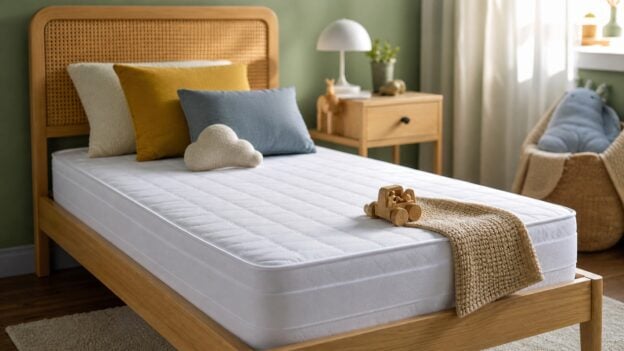
Smaller beds face bigger risks than full or queen mattresses, yet they usually get less thought when households shop for bedding protection. A twin mattress protector is the primary defense for children’s beds, college dorms, and guest rooms, where turnover is high and accidents are frequent. Picking the right waterproof twin mattress protector means understanding size variations, material performance, and certification standards that affect sleep health and mattress longevity.
Why Twin Size Protection Requires Specific Attention
Twin beds take on a mix of stresses that larger beds in master bedrooms usually avoid. A protector built for an adult’s stable sleep environment often fails under the active use of children or the constant turnover of a guest room. The smaller surface area concentrates wear too, so spills, allergens, and friction affect a bigger share of the sleeping zone than they would on a wider mattress.
Unique Risks for Kids and Dorm Beds
Children’s beds double as play surfaces, study areas, and snack zones. That mix of uses raises the odds of liquid damage and particulate buildup inside the mattress core. Potty training is the most critical window for mattress preservation – even a minor leak can void a manufacturer’s warranty and force an early replacement. A twin size mattress protector for potty training is essential insurance during this stage, creating a barrier against urine and other fluids.
Dorm rooms bring a different set of problems, centered on shared air quality and a mattress with an unknown history. Students moving into campus housing inherit mattresses that have already hosted other occupants, which makes allergen blocking a non-negotiable feature rather than an upgrade. Dorm rooms are also small, so dust and dander sit in the breathing zone longer than they would in a well-ventilated bedroom at home. Parents preparing students for university can check new parent bedding protection essentials to see how early habits carry over into healthier dorm living.
Bunk Bed and Daybed Fit Considerations
Bunk beds and daybeds often use thinner mattress profiles to meet safety rail height rules. A standard pocket depth, built for a plush residential mattress, will bunch dangerously on these low-profile surfaces and create ridges or slip hazards. Measuring mattress thickness before you buy keeps the protector anchored without excess fabric.
Daybeds add another layer of complexity: they work as seating by day and a bed by night. That constant switch between sitting and lying generates lateral friction that tests seams and elastic far harder than normal bed use does. A bunk bed mattress protector with reinforced corners and deep-pocket elastic stays in place during the day while keeping the sleep surface smooth at night. Twin mattress cover sizing and fit types is worth a look before buying, since not all twin dimensions are interchangeable across furniture styles.
Twin vs Twin XL Mattress Protector Size Differences
Confusing standard twin and twin XL sizes is the single most common reason for returns in this category. The mismatch matters because a protector that’s too short leaves the foot of the mattress exposed to damage and allergens, while one that’s too long bunches dangerously near the sleeper’s feet. Measuring the mattress before ordering removes the guesswork and guarantees full coverage corner to corner.
Standard Twin Dimensions
A standard twin mattress measures 38 inches wide by 75 inches long. It’s the traditional size for children’s rooms and compact guest spaces, and it covers everything from toddlers moving out of a crib to pre-teens who haven’t hit a growth spurt yet. Most twin beds bought for home use fall into this category, making it the default choice for family households.
When to Choose Twin XL for Dorms
College dormitories universally require twin XL bedding, so getting the size right matters for anyone moving into campus housing. The twin XL adds five inches of length, coming in at 38 inches wide by 80 inches long, to fit taller teens and young adults. A standard twin protector on a dorm mattress leaves the bottom five inches completely exposed to debris and potential liquid damage. Our twin XL mattress protector for college dorm beds is built to the institutional mattress spec, so it fits without the gap.
The mismatch runs the other way too: a twin XL protector on a standard twin leaves excess material that wrinkles and shifts. That slack undermines the waterproof barrier and creates uneven texture that disrupts sleep. Measure the actual mattress rather than guessing from age or room type when you’re deciding between standard twin and twin XL.
Waterproof Twin Mattress Protector Features for Potty Training
Good waterproofing has to protect against liquid without sacrificing comfort, or kids just won’t sleep under it. A protector that feels hot, noisy, or plasticky gets resisted at bedtime, or removed outright, which defeats the point. Modern textile construction gets around this by separating the moisture barrier from the layer that touches the skin.
Cotton Top Surface Comfort
A pure cotton terry top surface gives absorbency and breathability that synthetic tops can’t match for a child’s sleep comfort. The fiber wicks moisture away from skin on contact, avoiding the clammy feeling that causes waking in the night. Cotton also handles temperature better than polyester blends, which cuts down on the heat buildup that leads to restless sleep in warm months or under heavy blankets.
The terry weave adds a bit of texture too, which keeps fitted sheets from sliding during active sleep. Smooth synthetic tops let bedding shift with every movement, so sheets need constant readjusting. A cotton twin mattress protector keeps sheets in place while still feeling like the bedding kids already know.
Quiet Waterproof Barrier Technology
The waterproof membrane under the cotton surface blocks liquid completely, without the crinkling sound of older vinyl protectors. A silent barrier keeps sleep uninterrupted when kids shift positions at night. It also protects a child’s privacy during the potty training years – accidents stay undetectable to siblings sharing the room or friends at a sleepover.
Breathability in the barrier layer stops the greenhouse effect that makes some waterproof covers uncomfortably warm. The membrane lets water vapor escape while still blocking liquid, so the sleep surface stays at a steady temperature through the night. That combination protects the mattress warranty without giving up the comfort a child needs.
Hypoallergenic Twin Mattress Protector Benefits for Allergy Relief
Managing allergens in a child’s bed means building a barrier before the problem starts, not cleaning up after it. Dust mites colonize a mattress within months of purchase, feeding on shed skin cells in the warm, humid microclimate of an occupied bed. Encasing the mattress before that happens works far better than trying to fix an already-infested mattress later.
Dust Mite and Allergen Blocking
A tightly woven fabric or membrane barrier physically blocks dust mite allergens from migrating out of the mattress and into the air a child breathes. This works independently of any chemical treatment, so protection doesn’t fade with washing or time. Families managing asthma or eczema can check dust mite mattress cover buying criteria to see how pore size and weave density affect how well allergens get blocked.
Pet dander is another concern in households where animals share space with kids. Even pets that never touch the bed shed dander that drifts through the air and settles into unprotected mattress fibers. A hypoallergenic twin mattress protector seals the mattress against that airborne contamination, cutting the allergen load in a child’s immediate environment.
GREENGUARD Gold Certification Importance
GREENGUARD Gold certification confirms that a product meets strict chemical emissions limits for indoor air quality, the kind of standard used in schools and healthcare settings. For a child’s bedroom, that certification means the protector itself won’t add volatile organic compounds or off-gassing chemicals to the sleep space. Many waterproof products rely on adhesives and coatings that emit notable levels of VOCs, which is why third-party verification matters for a health-conscious purchase.
SureGuard twin mattress protectors have a 100% waterproof barrier, a 10-year warranty, and GREENGUARD Gold certification. That combination covers both immediate protection and long-term air quality, without asking families to trade one for the other. The certification applies to the finished product as sold, not just the raw materials, so it covers the whole manufacturing process.
Best Twin Mattress Protector Selection Criteria
Value isn’t just the sticker price – it’s the cost per year of effective protection. A cheap protector that fails in six months ends up costing more than a durable one that holds up for a decade. Factor in replacement frequency, warranty coverage, and the cost of a mattress replacement you’d otherwise avoid.
Warranty Length and Durability
A 10-year warranty signals that the manufacturer trusts its own materials and construction under real-world conditions. Shorter warranties often point to failure points that show up well before the mattress itself wears out. Over 45,000 customer reviews across all SureGuard products hold an average 4.6-star rating on Amazon.com, which is independent confirmation that the warranty claims match what people actually experience.
Durability isn’t only about staying waterproof. It also means the elastic holds and the fabric resists pilling after repeated washing. A protector that loses its fit or turns rough is functionally done, even if the barrier itself still works. Long-term performance data is what separates products built for years of use from ones built to survive the unboxing.
Value Versus Premium Feature Comparison
A higher price doesn’t automatically mean better protection for a twin-size bed. Plenty of premium features target adult comfort preferences that don’t matter on a child’s bed or in a dorm, where durability counts for more than a luxury hand-feel. Figuring out which features actually serve your situation keeps you from overspending on capability you won’t use.
The opposite mistake is just as costly: a budget option that skips certification or carries a thin warranty. Saving a little upfront means nothing if the protector fails during a critical potty training month, or triggers a reaction because the materials were never certified. The best twin mattress protector delivers verified performance at a price that doesn’t force a choice between health and cost.
Care and Maintenance for Long-Lasting Protection
Proper laundering keeps both the waterproof function and the cotton softness intact across hundreds of wash cycles. Following the manufacturer’s care instructions prevents the barrier membrane from breaking down early while keeping the feel that makes people actually use the protector. Skipping maintenance voids warranties and shortens the protector’s life, which undercuts the whole reason for buying a quality one in the first place.
Wash protectors in cool water with similar colors. Skip the bleach and fabric softener, since both break down waterproof membranes over time. Tumble dry on low heat to avoid damaging the membrane under high heat. These few steps extend the product’s life and keep it performing to spec through the whole warranty period.
Check the protector during sheet changes. Look at the seams, the elastic tension, the surface condition, and the protective backing, so you catch wear while it’s still covered under warranty rather than after the damage is done. A consistent care routine turns mattress protection from a one-time purchase into an ongoing part of keeping a household healthy.

