
 (209) 878-7320
 info@sureguardmattress.com


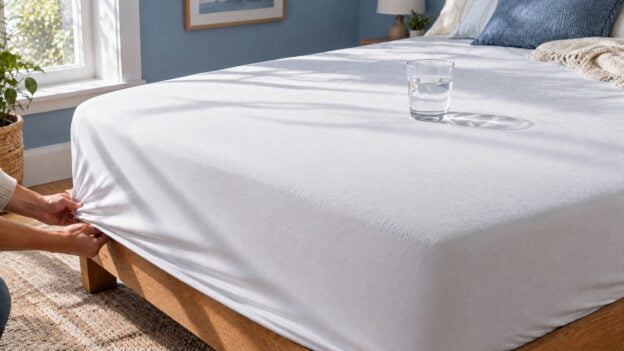
A mattress cover waterproof enough to handle a real accident is one of the cheapest ways to protect a bed that costs hundreds of dollars. Yet two covers that both say “waterproof” on the box can feel completely different. One crinkles and sleeps hot. The other disappears under the sheet.
This guide is the checklist most listings skip. It covers barrier material, breathability, certifications and warranty, so you can compare any protector, including ours, on facts rather than slogans.
Waterproof Mattress Protector Benefits: Spills, Stains and Accidents
A waterproof layer stops liquid before it reaches the foam or springs. That covers spilled drinks, night sweat, pet accidents, child accidents and urine. Once liquid soaks into a mattress, it is very hard to get out, and the stain and smell can stay for years.
Vinyl vs. membrane barriers
| Vinyl (PVC) | PU / TPU membrane | |
|---|---|---|
| Noise | Crinkles | Quiet |
| Heat | Holds warmth | Lets heat escape |
| Drape | Stiff | Flexible |
| Best for | Occasional spills | Nightly use |
“100% waterproof” describes the barrier, and the barrier only performs as designed while it stays intact and the fit stays snug. A cover with a tear, a worn patch or a loose corner that rides up gives liquid a way around it.
This is also not a cure-all. A protector shields the mattress, but it will not fix a mattress that is already stained or damaged. Put it on a new or clean bed, and you get the full benefit.
Waterproof Mattress Cover Materials: Vinyl vs. Membrane
The barrier material decides how the cover sounds, feels and lasts. The two families you will see most often are vinyl (PVC) sheeting and polyurethane or TPU membranes. They differ mainly in noise, heat and drape.
Vinyl Barriers: Low Cost, Often Loud and Warm
Vinyl is the budget option, and it does stop liquid. The trade-offs show up at night.
- Noise: vinyl sheeting tends to crinkle when you turn over.
- Heat: it holds warmth against your body, so hot sleepers notice it first.
- Drape: it can feel stiff, and it does not follow the contour of the mattress as well.
- Durability: sheeting that is stiff and thin can crack along folds after repeated washing.
For a guest room or an occasional spill, those compromises may be fine. For a bed you sleep on every night, they usually are not.
Breathable Waterproof Covers: What to Check
A thin polyurethane or TPU membrane is flexible and quiet, and it lets more heat and moisture vapor escape than vinyl does. That is why most breathable waterproof mattress covers use one. A membrane keeps liquid out while letting air move, so the bed sleeps cooler.
Before you pay, read the listing for three things:
- Barrier material. It should name the layer: PVC, polyurethane or TPU. “Waterproof backing” alone tells you nothing.
- Breathability. A credible claim names the membrane and describes the top fabric. “Breathable” with no detail is a slogan.
- Top fabric. The surface touches your skin, so it matters most for comfort.
SureGuard’s flagship protector is the comfort benchmark here. It is 100% waterproof and hypoallergenic, with a pure cotton top surface. Cotton feels familiar under a fitted sheet, and it is the kind of top layer you should expect a premium cover to match.
Our materials, safety and care basics goes deeper on barrier layers if you want to compare more closely.
GREENGUARD Certified Mattress Covers: What the Label Means
You spend about a third of your life in bed, so what the cover gives off matters as much as what it blocks. A healthy sleep environment starts with a cover that does not release much into the air. That is where a certification helps you more than a marketing word.
What GREENGUARD Gold Certification Tests For
GREENGUARD Gold is a third-party certification, run by UL, that tests finished products for low chemical emissions into indoor air. Because an outside lab does the testing, the mark means more than a maker saying its own product is “safe” or “non-toxic.” Those words have no shared definition, and nobody has to prove them.
SureGuard’s flagship protector carries GREENGUARD Gold certification. If you buy any GREENGUARD certified mattress cover, confirm the product is listed in UL’s SPOT database, not just named in a banner on the page.
Certification does not tell you how well the cover keeps liquid out. It speaks to emissions, so you still need to check the barrier and the fit.
Hypoallergenic Claims and Dust Mite Protection
“Hypoallergenic” is a marketing term. No single bedding test exists that every maker must pass to use it. Treat it as a starting point, and look for supporting detail: the fabric, the construction and any independent certification. Our list of features to look for in a hypoallergenic cover breaks that down.
The format matters too. A fitted protector covers the top and sides of the mattress, which limits how much dust mites, pet dander and mold spores reach the surface you sleep on. A zippered encasement encloses the whole mattress and gives a fuller seal.
If you have a diagnosed dust mite allergy, a full encasement is the stronger choice. If your main worries are spills, stains and everyday allergen contact, a protector is usually enough. Our guide on protector or full encasement: which fits your bed walks through the decision.
Warranty Length and What It Actually Covers
A warranty tells you how confident a maker is in its barrier. A long one suggests the waterproof layer is built to survive repeated washing. A short one often signals thin sheeting.
Length alone does not settle quality, though, so read the warranty alongside the barrier material and the certification. A ten-year promise on an uncertified vinyl sheet is worth less than it sounds.
Full vs. Prorated Coverage
Three details separate a useful warranty from a decorative one:
- Which defects are covered. Look for the waterproof layer failing, seams splitting or the fabric delaminating. Ordinary wear is often excluded.
- Full or prorated. Full coverage replaces the product at no cost. Prorated coverage reduces what the maker pays each year, so a claim in year eight may cover only a small share.
- What a claim requires. Some makers ask for proof of purchase, photos or the original packaging, so find out before you need it.
If the terms are not on the product page, treat that as a warning sign.
Using a 10-Year Warranty as Your Benchmark
SureGuard’s flagship protector comes with a 10-year warranty. That makes it a useful yardstick: when you compare another cover, ask whether it offers anything close, and whether the terms are as easy to read. Check the product page for the exact terms before you order.
Value vs. Premium Protectors: Where the Price Difference Goes
Judge value as cost per year of protection, not as the number on the tag. A protector at around $48 that comes with 10 years of coverage works out to under $5 a year. A cheaper cover that cracks after a year or two costs more over time.
A basic vinyl cover can suit a spare bed that sees an occasional spill. Everywhere else, the extra money buys things you will notice.
Choosing by Use Case and Budget
Pay more when the bed sees daily use or a high chance of accidents:
- Children and pets. Accidents are frequent, so the cover gets washed often. A durable barrier and a long warranty matter more.
- Incontinence and elderly care. The cover must hold up to repeated laundering, and it must stay quiet and comfortable, since a noisy sheet disturbs sleep. A snug fit is essential.
- Allergy-prone sleepers. A GREENGUARD Gold mark and a cotton top are worth paying for.
Our approximate prices run from around $27.97 for a crib size to around $57.97 for the largest sizes. Prices change, so check the product page for the current figure.
SureGuard’s pitch is certified quality at an accessible price, and the 4.6-out-of-5 average rating across more than 59,000 Amazon.com reviews and ratings backs up how customers feel. It is not the cheapest cover you can buy, and it is not meant to be. If you only need a spill guard for a guest room, a basic cover may be enough.
Caring for Your Waterproof Mattress Protector
Care decides how long the barrier lasts. Heat is the main enemy, because it can damage the waterproof layer.
Wash the protector according to its care label. Keep the dryer on a low setting, or air dry it if the label says so. High heat is the most common way people wear out a good cover.
When something spills, blot it rather than rubbing, so the liquid does not spread. Then dry the cover fully before you put it back on the bed. A damp cover left under sheets can hold moisture and odor.
If you are buying for a baby, the Crib Size SureGuard Mattress Protector should fit the crib mattress snugly. Parents should also follow the crib maker’s bedding instructions. A loose layer in a crib is not just untidy, it is a safety concern.
Buying Checklist: Choosing the Right Protector Size
Run through five points before you order:
- Barrier material: a named PU or TPU membrane for comfort, or vinyl if budget is the only goal.
- Breathability: a stated membrane and a described top fabric.
- Certification: GREENGUARD Gold, verified, not just “non-toxic.”
- Warranty: length, full or prorated, covered defects, and claim steps.
- Fit depth: the cover should be snug on your mattress, so measure its height.
Matching Protector Size to Your Bed
Each SureGuard protector is made for protecting against liquids, stains and allergens, and each suits households with pets or children. Pick by bed:
- Crib: the Crib Size SureGuard Mattress Protector, around $27.97.
- Twin: the Twin Size SureGuard Mattress Protector, around $33.97.
- Twin XL: the Twin XL SureGuard Mattress Protector, around $35.97. Our waterproof twin protector guide for kids and dorms helps if you are fitting out a child’s room or a dorm.
- Queen: the Queen Size SureGuard Mattress Protector, around $47.97, or the Smooth Queen Size SureGuard Mattress Protector, also around $47.97.
- King: the Smooth King Size SureGuard Mattress Protector, around $57.97.
- California King: the Smooth California King SureGuard Mattress Protector, around $57.97. The California King sizing guide helps you confirm fit first.
Prices are approximate and can change, so confirm on each product page. If you would rather compare everything side by side, browse the full SureGuard protector range.
Rest Assured with SureGuard.
Frequently asked questions
Do waterproof mattress covers really work?
Yes, as long as the barrier stays intact and the cover fits snugly. A tear, a worn patch or a corner that slips off the mattress lets liquid through. Wash it as the care label says, and avoid high heat, which can damage the waterproof layer.
How do you protect a mattress from urine?
Use a waterproof protector that fits snugly, and put it on before accidents happen. Blot any spill right away, wash the cover if needed, then dry the cover fully before you remake the bed. A protector will not rescue a mattress that is already soaked, so fitting it early matters.
What should I look for in a waterproof protector for an elderly person?
Look for a quiet, breathable membrane, a soft top fabric and a snug fit that stays put. The cover will be washed often, so check the care label and the warranty terms. Verified certification such as GREENGUARD Gold is a useful extra for a bed that is slept in every night.
Is a mattress protector enough for dust mites, or do I need an encasement?
A fitted protector covers the top and sides, which limits allergen contact on the sleeping surface. A zippered encasement encloses the whole mattress and gives a fuller seal. If you have a diagnosed dust mite allergy, choose the encasement.
Which is the best waterproof mattress cover?
The best one for you has a named breathable membrane, a soft top fabric, a verified certification, clear warranty terms, and positive independent reviews from real customers. SureGuard’s flagship protector is 100% waterproof and hypoallergenic, with a pure cotton top, GREENGUARD Gold certification, a 10-year warranty, and tens of thousands of positive reviews and ratings from Amazon.com customers. Use those points to compare any cover.

