
 (209) 878-7320
 info@sureguardmattress.com


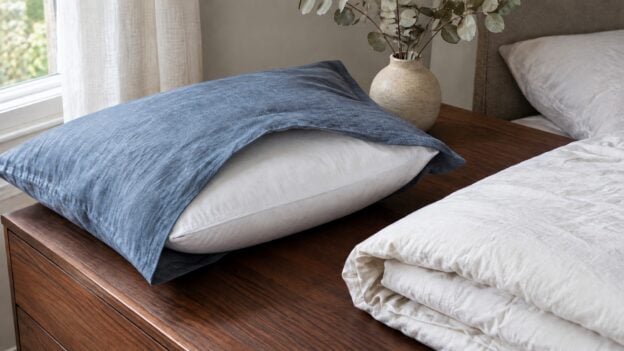
A pillowcase and a pillow protector look like they do the same job. They don’t. The pillowcase is the layer you see and touch, and the protector is the layer that keeps the pillow itself clean underneath.
First-time buyers often wonder whether one makes the other unnecessary. It doesn’t, because they are two layers with different work to do. This guide sets them side by side, shows when you can skip the protector, and helps you pick a size.
Pillow Protector vs Pillowcase: What Each One Does
Think of the pillowcase as the layer you choose and the protector as the layer you rarely see. One is for looks and comfort, and the other is for defence.
Pillowcase vs pillow protector
| Pillowcase | Pillow protector | |
|---|---|---|
| Role | Looks and everyday cleanliness | Barrier for the pillow |
| Liquid | Absorbs, passes toward fill | Stops it at the surface |
| Washing | Its own schedule | Follow the care label |
What a Pillowcase Is Built to Do
A pillowcase is the removable, washable outer layer. You pick it for the fabric, the color and how it feels against your face, and you wash it often to keep everyday sweat and oils in check.
It is a fabric sleeve, not a barrier. Woven cotton, linen and silk all let moisture through, and most cases close with an open flap at one end. If you want a closed end, zippered pillow cases are one option.
Store labels overlap, so here is how the terms usually line up:
- Pillow case or pillowcase: the outer fabric sleeve.
- Pillow cover: a loose term. Some brands use it for the case, others for a protector.
- Pillow protector: a thin, typically fitted barrier that stays on the pillow beneath the case.
- Encasement: a cover that seals the item in completely, usually with a zipper. Here is how a protector differs from a full encasement on the mattress side.
The name on the shelf matters less than what the product does. If it stays on the pillow and acts as a barrier, it is a protector. If you change it with the sheets, it is a case.
What a Pillow Protector Does Under the Pillowcase
A pillow protector fits snugly over the pillow and stays there when the case comes off. Its job is to keep liquids, stains, allergens and bed bugs away from the fill, which you can’t wash easily and shouldn’t have to replace often.
SureGuard pillow protectors offer all-round protection against liquids, stains, allergens and bed bugs, and are ideal for households with pets or children. Every size comes in a set of two, so one protector can be in the wash while the other is on the bed.
Do You Need a Pillow Protector Under Your Pillowcase?
Using both is layering, not duplication. The case handles looks and daily cleanliness, and the protector handles what the case can’t stop.
When a Pillowcase Alone Is Enough
You can skip the protector if nobody in your home has dust or pet allergies, nobody eats or drinks in bed, you have no pets on the bed, you don’t drool or sweat while sleeping, and bed bugs aren’t a worry. A case that you wash regularly will do the job in that bedroom.
A protector is also not a fix for a pillow that is already flat, stained or lumpy. It guards a pillow you want to keep, and it won’t restore one that has worn out.
Pillow Protector Benefits Beyond the Pillowcase
The two layers are complementary, not redundant. A protector earns its place when sweat, spills, dust mites, children, pets or bed bugs are in play, and it gives you these practical gains:
- Night sweat, drool and spilled drinks stop at the surface instead of reaching the fill.
- Dust mite and allergen exposure drops, because the barrier limits contact with the pillow’s core.
- The pillow looks and feels newer for longer, because stains stay off it.
- You can take the case off and wash it without leaving the pillow exposed.
Bed bugs deserve a measured word. A protector adds a barrier that lowers everyday exposure, but it does not cure an infestation. If you want the full picture, read about whether bed bug covers really work.
Allergen and Dust Mite Barrier: What a Protector Adds
Your pillow sits inches from your nose for hours. That makes it the place where allergens matter most, and the place where a case alone does the least.
How a Protector Limits Dust Mite Exposure
Dust mites feed on skin flakes and live in bedding, so a pillow is an ideal home for them. A fitted barrier helps keep mites and their waste out of the pillow’s core, which cuts the amount of allergen you breathe in at night.
It reduces contact. It does not kill mites, and it does not replace regular washing, which allergy guidance generally pairs with hot-water laundering of bedding and control of bedroom humidity. Treat the protector as one layer in that routine, and see this guide to blocking dust mites and dander for the wider picture.
Hypoallergenic Pillow Protectors Explained
“Hypoallergenic” has no single test behind it. One brand can use it for a tightly woven barrier and another for little more than a fabric choice, so the word alone tells you very little.
Judge a protector by its barrier design and by any independent certification the product page states. GREENGUARD Gold concerns chemical emissions, not allergens. It tells you about what the product gives off, not what it keeps out. This list of hypoallergenic features to look for is a useful checklist before you buy.
Waterproof Protection for Spills and Sweat
Liquid is the clearest reason to add a protector. A standard woven pillowcase absorbs liquid and passes it toward the fill, while a protector’s barrier layer stops it at the surface.
Waterproof Pillow Protector vs Regular Pillowcase
Picture a glass of water knocked over at night. It can soak through a standard pillowcase and reach the pillow’s core before morning, and a damp core is slow to dry and easy to ruin. With a protector in place, the water sits on the barrier and you wipe it off.
The same goes for sweat, drool and the occasional child’s cup. Over months, the barrier keeps small amounts of moisture from building up inside the pillow, which is where odors and stains start.
“Waterproof” describes a feature category, and the details differ from product to product. SureGuard pillow protectors offer protection against liquids and stains.
Layering a Protector Under a Decorative Pillowcase
An embroidered, silk or linen pillowcase is often the one you would rather not wash on the usual schedule. It may need gentler care, a cooler cycle or a lighter touch than everyday cotton.
That is where a protector helps. The pillow stays covered while the decorative case is cleaned on its own timetable, so you can keep the look you chose without leaving the pillow exposed in between.
It also means you can swap cases for guests or seasons freely. The protector stays put underneath.
When to Replace a Pillow Protector and When to Wash It
Treat washing as routine care. Follow the care label on your protector, because the right temperature and drying method depend on the product. For waterproof layers in particular, these waterproof bed cover care tips cover the common mistakes.
Keep the protector on the pillow when the case comes off. Protector and case are separate laundry decisions, so each follows its own schedule. This is where a set of two pays off, since you can rotate a clean protector onto the pillow while the other one is washing.
Signs It’s Time to Replace a Protector
Replace a protector when it shows wear, not on a fixed calendar. Check it when you change the bedding, and look for these signs:
- Seams that have split or started to fray.
- A barrier that no longer looks intact, such as thin, cracked or damaged patches.
- A malfunctioning zipper that does not fully close.
A protector with any of these problems no longer shields the pillow properly. It’s cheaper to replace the protector than the pillow.
Choosing a Size from the SureGuard Pillow Protector Range
SureGuard sells pillow protectors in seven sets, each with two protectors. The average customer rating on Amazon.com is 4.6 out of 5 across more than 59,000 reviews and ratings on all SureGuard products. Pricing sits on each product page, so check there for the current figure.
Matching Protector Size to Your Pillow Insert
Choose by the pillow insert, not the case. Slip the case off, check the size on the insert’s label, and match the protector name to it. A protector that fits the insert stays put and covers the whole pillow.
- Set of 2 Smooth Standard Size SureGuard Pillow Protectors
- Set of 2 Smooth Queen Size SureGuard Pillow Protectors
- Set of 2 Smooth King Size SureGuard Pillow Protectors
- Set of 2 Body Size SureGuard Pillow Protectors
- Set of 2 Euro Size SureGuard Pillow Protectors
Some sets carry “Smooth” in the name and some don’t. Each product page states what its set offers, so read the listing for the one you’re considering rather than assuming a difference.
When you’ve matched the size to your insert, you can view that set on its product page, or browse the full SureGuard range to compare sizes side by side.
Frequently asked questions
Why do I need a pillow protector?
A pillowcase is a fabric sleeve, so liquid and allergens pass through it toward the pillow’s fill. A protector adds a barrier that stops liquids at the surface and limits dust mite and allergen contact. It earns its place most when you have kids, pets, allergies or heavy night sweat.
Is it a pillow case or a pillow cover?
Both terms are used, and stores don’t apply them consistently. A pillowcase is the removable outer fabric sleeve. “Cover” is looser and can mean either a case or a protector, so go by what the product does and whether it stays on the pillow.
Should I buy a bigger pillow insert than cover?
For a protector, match the size to the pillow insert itself, not to the case. A protector sized for your insert stays snug and keeps the whole pillow covered. Check the size on the insert’s label and pick the set with the same size name.
Does a pillow protector kill dust mites?
No. It limits how much mites and their waste reach the pillow’s core, which reduces your exposure. You still need regular washing of your bedding and good control of bedroom humidity, as allergy guidance generally advises.

