
 (209) 878-7320
 info@sureguardmattress.com


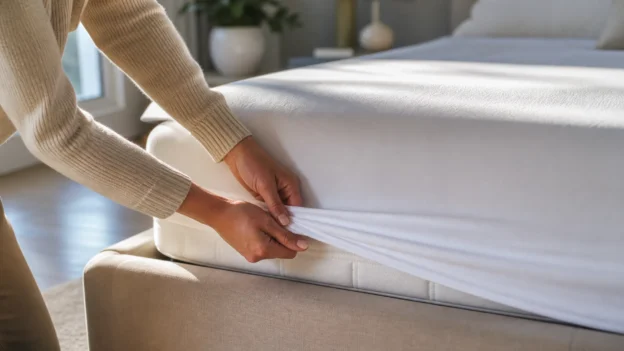
A queen mattress cover is one of those purchases that feels minor until the moment you need it, and by then, it’s too late. Whether you’re a parent mid-potty-training, a pet owner sharing your bed with a dog, or simply someone who wants to protect a significant investment, the right cover does real work every single night. SureGuard’s queen mattress protector holds a 4.6-out-of-5-star average across tens of thousands of reviews, built on over a decade of real-household use since the brand launched in 2013. That kind of track record doesn’t come from being a nice-to-have. It comes from solving genuine problems.
What a Queen Mattress Cover Actually Does (Beyond the Basics)
A queen mattress cover is a thin, fitted barrier that sits directly over your mattress. It shields against liquids, allergens, and everyday wear without meaningfully changing how the bed feels. That last part matters: a good protector is almost invisible in use.
Protector vs. pad vs. topper: clearing up the confusion
These three terms get used interchangeably, but they serve different purposes.
- A mattress protector (or cover) is purely defensive. It blocks moisture, allergens, and debris. It adds no appreciable comfort layer.
- A mattress pad adds a thin layer of cushioning, usually a few ounces of fill, while offering some light protection.
- A mattress topper is a comfort layer, typically 2–4 inches thick, designed to change the feel of the mattress entirely. It offers little to no protection against liquids or allergens.
If your goal is protection, a dedicated queen mattress cover is the right tool. Pads and toppers are comfort products; protectors are barrier products. Using a topper alone leaves your mattress fully exposed to moisture and allergens, and a queen mattress represents a purchase of several hundred to well over a thousand dollars. A protector costing a fraction of that is straightforward ROI.
The Real-Life Scenarios That Make a Waterproof Queen Mattress Cover Essential
Mattress foam and fiber absorb moisture permanently. Once liquid penetrates the surface, stains set, bacteria multiply, and odors become structural, no amount of surface cleaning reverses that. A waterproof queen mattress cover stops that process before it starts.
Parents, potty training, and nighttime accidents
Potty training typically spans several months, and nighttime dryness often takes longer to establish than daytime control. That means repeated overnight accidents, and without a waterproof queen mattress cover in place from the very first night, even a single accident can permanently stain and odourise the mattress. Many mattress manufacturers include hygiene clauses in their warranties: visible staining can void coverage entirely. A protector costs a small fraction of a new mattress and keeps that warranty intact.
Pet owners: dander, accidents, and odour
Pets allowed on the bed introduce dander, hair, tracked-in dirt, and the real possibility of accidents. Cat and dog urine is particularly difficult to neutralise once it reaches mattress foam, the ammonia compounds bind to material at a molecular level. A waterproof queen mattress cover acts as a complete barrier. Combined with allergen-blocking properties, it also reduces the dander load that builds up in the sleep surface over time.
Spills, sweat, and everyday moisture
You don’t need a dramatic event for moisture to damage a mattress. The average adult loses moisture through sweat every night, and over months and years that accumulates inside unprotected foam, creating conditions where mould and dust mites thrive. Coffee spills, water bottles, illness, these happen in every household. A washable queen mattress cover handles all of it, and the ability to simply remove and launder it keeps the sleep surface genuinely clean.
Queen Mattress Protector for Allergies: Blocking Dust Mites and Airborne Triggers
Dust mites are invisible and unavoidable. They thrive in mattresses because the average person sheds dead skin cells every night, providing a continuous food source. An unprotected queen mattress can accumulate millions of mites over time, along with their waste particles, a primary trigger for allergic rhinitis and asthma. Add mould spores, pet dander, and seasonal pollen that settles through bedding, and an unprotected mattress becomes a significant allergen reservoir.
A hypoallergenic queen mattress cover addresses this with physics, not chemistry. A tightly woven or laminated surface simply doesn’t allow mite-sized particles to pass through or accumulate in the sleep layer. No sprays, no treatments, the barrier does the work passively, every night.
For households where chemical sensitivity is a concern, children, allergy sufferers, people with asthma, certification matters. SureGuard’s flagship protector carries GREENGUARD Gold certification, meaning it has been independently tested and confirmed to meet strict chemical emission standards. That’s meaningful assurance that the cover itself isn’t introducing off-gassing into the sleep environment while protecting against external allergens.
If you or someone in your household manages allergies or asthma, a certified hypoallergenic queen mattress cover is one of the most practical, low-effort interventions available for the bedroom environment.
Queen Size Mattress Protector Buying Guide: Key Features to Compare
Not all protectors are equal. Here’s what to evaluate before buying.
Waterproofing method: membrane vs. treated fabric
There are two main approaches to waterproofing:
- Membrane-backed fabric bonds a thin polyurethane or similar layer to the underside of the top fabric. Done well, this is fully waterproof and quiet. Done cheaply, it produces a crinkle noise and traps heat.
- Chemically treated fabric uses surface coatings to repel liquid. It handles minor spills but isn’t fully waterproof against larger accidents or soaking, not suitable for households with children or pets.
For reliable protection, a membrane-backed cover is the right choice. Higher-quality options use a pure cotton top surface over the waterproof backing, which eliminates crinkle noise and wicks moisture away from the sleeper.
Fit, depth, and breathability
Queen mattresses range from roughly 8 inches to 16 inches or more in profile depth, and a protector that doesn’t fit securely will shift during sleep, defeating the purpose. Check the pocket depth rating before buying.
Breathability is a legitimate concern: a non-breathable cover traps body heat. Look for cotton or Tencel top layers rather than full polyester, which restricts airflow. Noise is a related signal, a quiet cover is almost always a higher-quality cover.
Certifications to look for: GREENGUARD Gold (chemical emissions), and a warranty of at least 10 years. SureGuard backs its queen mattress protectors with a 10-year warranty, which signals real confidence in the waterproof membrane’s performance under regular washing over time. Budget covers rarely offer more than a 1–2 year warranty, that gap tells you something about expected lifespan.
How to Care for a Washable Queen Mattress Cover
A washable queen mattress cover is only as effective as its maintenance. The waterproof membrane is durable but not indestructible, the right care routine preserves both the barrier and the cover’s lifespan.
Washing: Machine wash cool or warm. Hot water degrades the waterproof membrane over time and should be avoided. Use a standard detergent; no bleach or fabric softener, as both weaken the membrane and reduce performance.
Drying: Tumble dry on low heat. High heat is the most common cause of membrane failure, it causes the lamination to delaminate or crack. Air drying is also fine if you have time.
Frequency: Wash every 1–2 months as a baseline. Households with pets or young children should wash more frequently, monthly at minimum, or immediately after any accident. Regular washing keeps allergen load low and the cover performing as designed.
Consistent care means the cover protects your mattress for years rather than months. Given that the mattress underneath may last a decade or more, that maintenance routine is worth building into your regular laundry schedule.
Choosing the Best Queen Size Mattress Protector for Your Household
The right cover depends on your household’s actual risk profile, not just which product has the most features.
Health-focused adults and allergy sufferers should prioritise a hypoallergenic queen mattress cover with a tightly woven or laminated surface and GREENGUARD Gold certification. Chemical emissions matter as much as allergen blocking in sensitive households.
Families with young children need waterproofing as the first priority, full membrane coverage, not just treated fabric, combined with easy washability. The ability to strip the cover, wash it, and have it back on the bed quickly is practical currency during the potty-training months.
Pet owners benefit from both: waterproof protection against accidents and an allergen-blocking surface that limits dander accumulation in the sleep layer. Both features together make the cover earn its place every night.
On value: a quality queen mattress cover costs a fraction of a new mattress and a fraction of ongoing allergy medication. The protection it provides is active every single night. A premium cover with a 10-year warranty and GREENGUARD Gold certification isn’t an indulgence, it’s the lower-cost option when weighed against replacement or treatment costs.
SureGuard’s queen mattress protector combines all of these properties in a single product trusted by millions of households. If you’re ready to protect your mattress and your family’s sleep environment, explore SureGuard’s queen mattress protector and rest assured it will hold up for years.

