
 (209) 878-7320
 info@sureguardmattress.com


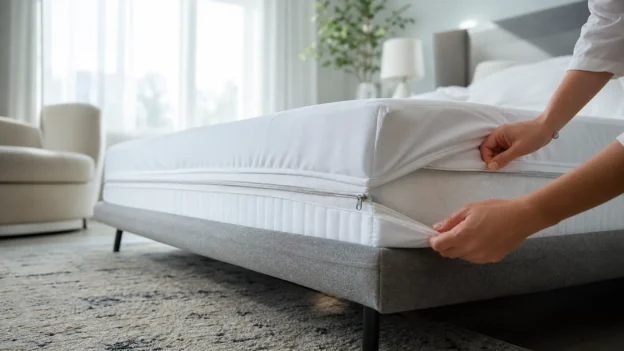
A mattress encasement is one of those products that quietly does serious work. Most people don’t think about it until they need it, and by then they wish they’d acted sooner. Whether you’re dealing with allergies, a bed bug scare, or just invested in a quality mattress you want to protect for the long haul, understanding what a mattress encasement actually does, and which type fits your situation, makes the decision straightforward.
What Is a Mattress Encasement?
A mattress encasement is a six-sided zippered cover that fully encloses your mattress: top, bottom, and all four sides. Once zipped closed, it creates a sealed barrier with no exposed surface. Nothing gets in, and nothing gets out.
That last point matters more than it sounds. Most mattress threats, dust mites, bed bugs, spills, don’t stay neatly on the sleep surface. They work their way into the interior of the mattress, where a top-only cover can’t reach them.
How an Encasement Differs from a Standard Protector
A standard mattress protector covers the top and sometimes the sides, secured with an elastic skirt. It’s designed to catch everyday spills and keep the sleep surface clean. That’s a useful job, but it leaves the bottom and lower sides exposed.
An encasement wraps the entire mattress in a continuous shell. The zipper typically runs along three sides and includes a zipper flap or seal to close off any gap at the pull end. The result is a fully enclosed environment, no open seams, no unprotected panels. That structural difference is what makes encasements the right tool for serious protection needs.
Mattress Encasement vs. Protector: Which Do You Actually Need?
The choice comes down to what you’re protecting against.
A protector is the right tool for routine use: the occasional spill, light sweat absorption, or basic hygiene maintenance. If you’re keeping a healthy mattress in good shape and don’t face any specific threats, a quality protector does the job.
An encasement makes sense when the stakes are higher. If someone in your household has asthma or severe allergies, dust mites living inside the mattress are a real, ongoing problem a protector can’t solve. If you’ve discovered bed bugs, or moved into a home where you can’t verify the history, only a fully sealed encasement provides mattress-level containment. If you’ve spent a significant amount on a new mattress, an encasement is the most complete protection for that investment.
A protector handles everyday wear; an encasement handles active threats. Neither is inferior, they serve different purposes.
The Three Main Types of Mattress Encasement
Encasements are not one-size-fits-all. The right type depends on the specific protection you need, and some products combine more than one function.
Waterproof Mattress Encasement
A waterproof mattress encasement uses a thin liquid-barrier membrane, usually laminated to a fabric layer, that stops spills, sweat, and moisture from reaching the mattress interior. The barrier is typically quiet and flexible enough not to disrupt sleep.
This type is especially important for households with young children, older adults managing incontinence, or anyone who regularly spills liquids in bed. Beyond hygiene, there’s a practical financial angle: most mattress warranties are voided by liquid stains, and a waterproof encasement is the strongest evidence that your mattress has been properly maintained.
Allergen-Proof Mattress Encasement
Dust mites thrive in the warm, humid environment inside a mattress, feeding on shed skin cells. They colonize throughout the mattress, not just at the sleep surface, which is why a top-only protector provides limited relief for allergy or asthma sufferers.
An allergen-proof mattress encasement uses a tightly woven or laminated fabric with a pore size small enough to block dust mite particles, pet dander, and mold spores. By fully enclosing the mattress, it cuts off both food supply and habitat. The Asthma and Allergy Foundation of America and allergists broadly recommend full mattress encasement, not just surface coverage, as an effective environmental control measure for people with allergic rhinitis or asthma.
Bed Bug-Proof Mattress Encasement
A bed bug-proof mattress encasement is the most specialized type. It serves two functions: trapping any existing bed bugs inside the mattress so they can’t reach the sleep surface to feed, and preventing new bugs from entering and establishing a colony.
To do this effectively, the encasement needs a bite-proof fabric weave, dense enough that bed bugs cannot chew through, and a zipper with a locking mechanism or a sealed flap that closes the gap at the zipper pull. This is the only certified method for mattress-level bed bug containment; sprays and other treatments don’t provide a reliable physical barrier. If you’re dealing with an active infestation or want preventive protection, look specifically for encasements that are independently tested and certified for bed bug protection.
Who Benefits Most from a Mattress Encasement?
Allergy and asthma sufferers are the clearest use case. Full enclosure is the most effective way to reduce dust mite allergen exposure because it addresses the whole mattress, not just the surface.
Families dealing with bed bugs, whether an active infestation or a precautionary measure after travel or moving, need the containment a fully sealed, bite-proof encasement provides.
Pet owners face a combination of dander, hair, and moisture. An encasement with allergen-blocking and waterproof properties handles both concerns at once.
Parents of young children deal with nighttime accidents, illness, and general unpredictability. A waterproof encasement protects the mattress and makes cleanup straightforward.
Anyone who recently bought an expensive mattress should consider an encasement from day one. Once a stain appears, it’s too late to protect your warranty claim, the encasement needs to be on before the mattress is used, not after damage occurs.
If any of these situations sound familiar, a mattress encasement is worth buying alongside the mattress itself.
How to Choose a Mattress Encasement: Key Features to Look For
Knowing how to choose a mattress encasement means looking past marketing language and checking a short list of practical factors.
Fit, Zipper Quality, and Mattress Depth
An encasement that doesn’t fit correctly can’t do its job. Measure your mattress depth before buying, most encasements list a compatible depth range (for example, 6–22 inches), and going outside that range means the fabric will pull, the zipper will gap, or the encasement won’t stay in place.
Zipper quality is worth paying attention to. Look for a zipper that runs smoothly along all three closing edges without skipping, and a flap or Velcro seal that covers the zipper pull end. That small gap is a known entry point for bed bugs and a source of zipper wear over time.
Fabric breathability also matters for sleep comfort. Encasements with a thin laminate backing or a fine-knit barrier fabric tend to sleep cooler than those with a heavy vinyl or PVC layer.
Certifications and Material Safety
For households with children, people with chemical sensitivities, or anyone who spends significant time in close contact with their bedding, chemical safety certification matters. GREENGUARD Gold certification, one of the more rigorous standards for indoor products, means the product has been tested for over 10,000 chemical emissions and VOCs.
SureGuard has manufactured mattress encasements and protectors since 2013, and its products carry GREENGUARD Gold certification. The brand’s encasements are backed by a 10-year warranty and have earned a 4.6-star average rating across more than 45,000 Amazon reviews, a body of real-world feedback that reflects consistent, long-term performance across a wide range of households.
Ease of washing is a practical factor that gets overlooked. Check the care label before buying: an encasement you can machine wash and tumble dry regularly is far more useful than one requiring hand washing or dry cleaning.
Protecting Your Mattress Warranty, and Your Investment
Most major mattress manufacturers include a clause in their warranties that voids coverage if the mattress shows visible stains, even a single liquid spill. Many buyers discover this only when they try to make a claim, sometimes years after purchase.
A mattress encasement is the most complete barrier available and provides the strongest evidence that you’ve maintained your mattress properly. A protector reduces risk on the top surface; an encasement eliminates it across the entire mattress. If your mattress carries a 10- or 15-year warranty, pairing it with an encasement from the start is the logical way to protect that investment.
Once you know what you’re protecting against, the right mattress encasement becomes an obvious choice. Browse SureGuard’s mattress encasement range to find the specific protection, waterproof, allergen-blocking, or bed bug-proof, that fits your household’s needs. Rest assured with SureGuard.

