
 (209) 878-7320
 info@sureguardmattress.com


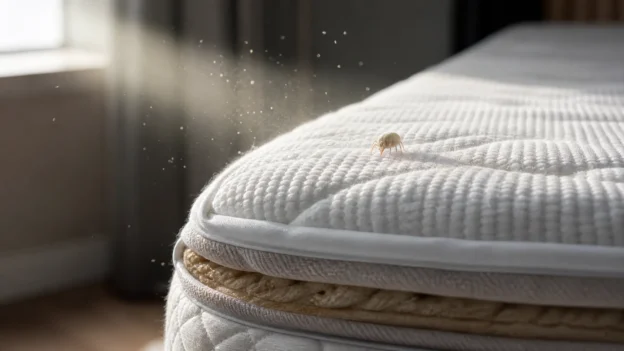
A dust mite proof mattress protector is one of the most searched bedding terms online, yet most product listings never explain what “dust mite proof” actually means. Is it a chemical spray? A special fabric? A marketing phrase? The answer matters, because a protector that only slows mite penetration offers very different protection than one that physically blocks allergens at the fabric level. House dust mites are among the most common triggers of year-round allergic rhinitis and asthma; the World Health Organization and major allergy bodies identify them as a primary indoor allergen source. Understanding the construction behind the claim helps you choose bedding that actually delivers.
What Does ‘Dust Mite Proof’ Actually Mean?
How dust mites get into your mattress
Dust mites are microscopic, typically 0.2–0.3 mm, and they thrive in the warm, humid environment inside a mattress. They feed on shed human skin cells, which accumulate in mattress foam and fibers over time. Mites don’t bite, but their fecal particles and shed skin fragments are potent allergens. Those particles are far smaller than the mites themselves, often under 10 microns in diameter, and they penetrate loosely constructed fabrics with ease.
Once mites establish inside a mattress, populations grow quickly. A used mattress can harbor large numbers without any visible sign. The allergen load builds over months and years, making early protection far more effective than trying to remediate an already-colonized mattress.
The difference between dust mite resistant and dust mite proof
This is where most shoppers get misled. “Dust mite resistant” typically describes a fabric with a tighter-than-average weave that slows mite entry, but the pore size is still large enough for allergen particles to pass through. “Dust mite proof,” when used accurately, describes a physical barrier whose effective pore size is small enough to block allergen particles, generally accepted as under 10 microns.
That barrier is created in one of two ways: an extremely tightly woven fabric, or a laminate membrane bonded to the fabric. Neither relies on any chemical repellent or treatment. There is nothing in the fabric that “repels” mites, the protection is entirely physical, like a filter. This means the barrier remains effective as long as the fabric structure stays intact, which is why construction quality and durability matter so much.
The Fabrics Behind an Effective Allergen Barrier Mattress Protector
Woven fabrics vs. laminate membranes
Two main constructions dominate the market for a genuine allergen barrier mattress protector.
Tightly woven cotton uses a high thread count and a close weave to reduce pore size. The cotton surface is soft and breathable, wicking moisture away from the body. A quality cotton protector pairs comfort with a physical dust mite barrier, though it typically does not block liquids on its own without an additional membrane layer.
TPU (thermoplastic polyurethane) laminate membranes are bonded beneath a fabric surface, usually cotton terry. The membrane is waterproof and has an effective pore size that blocks both liquid and allergen particles. This is the construction behind most medical-grade protectors. TPU is preferred over older PVC/vinyl laminates because it stays quiet and flexible and doesn’t off-gas the way vinyl can.
The best products combine both: a soft cotton terry top for comfort and moisture management, with a TPU membrane underneath for liquid and allergen blocking.
Why certifications matter more than marketing claims
Any manufacturer can print “hypoallergenic” on packaging. Independent certification is what separates a credible claim from a marketing phrase.
GREENGUARD Gold certification means a product has been independently tested and verified to meet strict chemical emission standards, particularly relevant for nurseries, children’s rooms, and anyone with chemical sensitivities. SureGuard’s hypoallergenic mattress protector carries GREENGUARD Gold certification, which signals that the materials won’t introduce new chemical allergens while blocking biological ones.
Allergen barrier test standards (such as those developed under ASTM and British Standards frameworks) assess whether a fabric’s effective pore size actually blocks allergen-sized particles under controlled conditions. When a brand cites these tests rather than just claiming “proof,” the claim is grounded in measurable performance. For broader waterproof mattress protector comparisons and ratings, look for products that specify test methodology alongside the certification name.
Protector vs. Encasement: Which Offers a Stronger Dust Mite Barrier?
A fitted mattress protector covers the top surface and sides, secured with an elastic skirt. The mattress bottom remains exposed. For a new mattress with no existing mite population, this is adequate, mites entering from above are blocked, and the protector can be removed and washed regularly.
A full mattress encasement wraps all six sides and closes with a zipper. This does two things: it traps any mites already inside the mattress (cutting off their access to you and to fresh skin cells), and it blocks new mites from entering from any direction. Allergy specialists broadly recommend encasing mattresses and pillows in allergen-impermeable covers as one of the most effective environmental control measures for dust mite–sensitive patients, alongside regular high-temperature washing of bedding.
The practical guide is straightforward:
- New mattress, no current allergy symptoms → a fitted protector is sufficient and easier to launder.
- Older mattress or existing allergy/asthma symptoms → a full encasement is the stronger choice.
Adding pillow protectors completes the picture, since pillows harbor the same mite populations as mattresses and sit closest to your face during sleep.
Key Features to Look for in Mite Proof Bedding
Waterproof layer
A waterproof TPU membrane doesn’t just protect against spills, it serves a second allergen-defense function. Moisture that penetrates a mattress creates the humid conditions that mites and mold both need to thrive. By blocking liquids entirely, a waterproof layer prevents mold and mildew from taking hold inside the mattress. Mold spores are themselves an allergen, so this extends the protector’s role well beyond the dust mite barrier.
Breathability and sleep temperature
Breathability is where many waterproof protectors fall short. Older vinyl covers trap heat and cause sweating, which increases mattress humidity over time. A cotton terry surface wicks moisture actively, and a thin TPU membrane (rather than thick vinyl) allows air exchange while maintaining the waterproof seal. If you sleep warm, prioritize protectors that specify a cotton terry or similar natural fiber top layer over any vinyl construction.
Fit and washability
A protector that shifts during the night eventually exposes parts of the mattress surface, compromising the barrier. Deep-pocket designs with a snug elastic skirt, sized correctly for your mattress depth, stay in place reliably. Check the manufacturer’s pocket depth specification against your actual mattress measurement before buying.
Washability is non-negotiable for long-term allergen control. Machine washing flushes out residual mites and removes allergen buildup from the fabric surface. Tumble drying thoroughly after washing is equally important, residual moisture creates the exact conditions mites prefer.
How to Use and Maintain a Hypoallergenic Mattress Cover for Long-Term Protection
Washing frequency is the most common maintenance gap. For most households, washing every one to two months is a reasonable baseline. Allergy and asthma sufferers should wash more frequently, monthly at minimum, and immediately after any illness or high-pollen period.
Always tumble dry until completely dry. A damp protector folded and stored, or replaced on a mattress before fully dry, will develop mildew on the membrane surface.
Line drying in direct sunlight for at least 4 hours is the best option, as the sun’s UV rays naturally sanitize the cover, killing dust mites and allergens that may have survived the wash cycle.
Inspect the waterproof membrane periodically. Signs of degradation include cracking, peeling, or areas that no longer repel water during the wash cycle. Once the membrane delaminates, the allergen barrier is compromised even if the outer fabric still looks intact. Warranty length is a practical durability proxy: a 10-year warranty signals that the manufacturer stands behind the membrane’s longevity at normal washing frequencies. A protector with over 45,000 ratings on Amazon averaging 4.6 out of 5 stars, earned over more than a decade on the market, reflects the kind of real-world durability that matters when barrier function depends on the product lasting.
Who Benefits Most from a Dust Mite Proof Mattress Protector?
Allergy and asthma sufferers are the most obvious group, but they’re not the only one. Anyone whose sleep is disrupted by nighttime congestion, sneezing, or itchy eyes that improve when away from home is likely reacting to indoor allergens, dust mites chief among them.
Parents buying for children and babies have additional reasons to prioritize GREENGUARD Gold certification. A nursery mattress protector needs to block allergens without introducing chemical off-gassing, making certified low-emission products the clear choice for this audience.
Pet owners face a compounding problem: pet dander is a direct food source for dust mites, accelerating population growth in any mattress pets have access to. Mite proof bedding addresses both the pet allergen layer and the secondary mite allergen it generates.
Anyone protecting a significant mattress investment benefits from a protector simply because it extends the usable life of the mattress, keeping it clean, dry, and free from the biological buildup that degrades foam and fibers over time.
Whatever your starting point, the path is the same: understand what “proof” actually requires at the fabric level, match the format (protector or encasement) to your situation, and choose a product whose certifications and warranty back up the claim. The right barrier makes a measurable difference.

