
 (209) 878-7320
 info@sureguardmattress.com


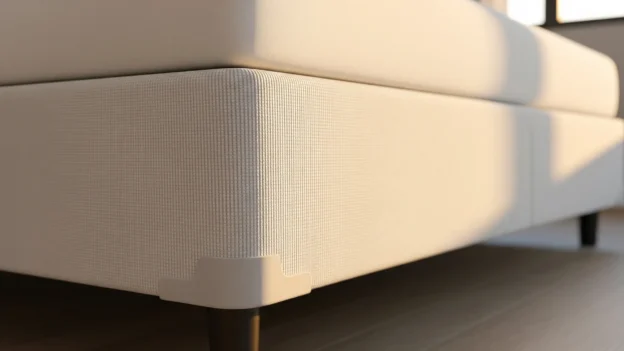
When most people search for a box spring cover, they picture a fabric skirt that hides the base of the bed. That’s understandable, but it’s also a missed opportunity. A purpose-built box spring cover does something decorative skirts can’t: it blocks allergens, repels moisture, and keeps the structure beneath your mattress clean for years. If you care about the difference between mattress protectors and decorative pads, the same logic applies one level down.
Why Your Box Spring Needs More Than a Decorative Cover
A decorative bed skirt looks tidy. It does nothing to stop what’s actually accumulating inside your box spring fabric, dust mites, pet dander, mold spores, and moisture.
Your box spring sits directly below your mattress. It shares the same warm, humid microclimate. It almost never gets laundered. That combination makes it one of the most overlooked allergen reservoirs in the bedroom.
A protective box spring cover changes that equation. It acts as a physical barrier between the spring frame and the biological material that builds up over time. For allergy sufferers, pet owners, and parents, that barrier is genuinely useful, not decorative.
What a Waterproof Box Spring Cover Actually Blocks
Dust mites and pet dander
Dust mites thrive in warm, humid fabric environments, feeding on shed skin cells. Box springs, rarely laundered and sitting directly beneath the mattress, are a prime habitat. A tightly woven or encasement-style box spring protector is one of the most effective physical barriers available, because it denies mites access to the fabric surface entirely.
Pet dander adds a second layer of risk. Dogs and cats shed microscopic dander particles that settle through the mattress and accumulate in the box spring below. Once embedded in the fabric, dander is nearly impossible to remove without a full encasement.
Learning how a dust mite proof mattress protector blocks allergens gives useful context here, the same barrier principles apply to the box spring level.
Moisture, spills, and pet accidents
Liquid wicks downward. A spill on the mattress surface that soaks through reaches the box spring frame, where it can sit undetected and promote mold and mildew growth inside the wooden or metal structure.
A waterproof box spring cover stops that process at the fabric level. The moisture never reaches the frame. That matters especially for pet owners: pet accidents are concentrated and acidic, and the odor compounds that develop inside a damp box spring are extremely difficult to eliminate after the fact.
An encasement-style cover, one that wraps all six sides, provides maximum blockage because there’s no open edge for liquid or airborne particles to enter.
Box Spring Cover vs. Box Spring Encasement: Which Do You Need?
The terminology is genuinely confusing, so here’s a clear distinction.
A box spring cover typically uses a fitted-sheet style design. It wraps the top and sides of the box spring but leaves the underside open. It offers basic protection and is easy to put on and remove.
A box spring encasement wraps all six sides, top, four sides, and the bottom, with a zipper closure that fully seals the interior. This design is significantly stronger for allergen and pest defense because there’s no gap for particles to enter.
Which do you need?
- If your main concern is aesthetics and light dust protection, a fitted cover may be enough.
- If you have allergies, asthma, or pets, choose an encasement. The sealed perimeter is the critical difference.
- If bed bugs are a concern in your area, an encasement is the only style that offers meaningful protection.
The SureGuard Box Spring Encasement is designed for households where allergen and moisture defense matter most, with a zipper closure that seals all six sides and a waterproof membrane throughout.
Key Features to Look for in a Hypoallergenic Box Spring Cover
Not all box spring protectors deliver the same level of defense. Here’s what to check before buying.
GREENGUARD Gold certification
GREENGUARD Gold certification means a product has been independently tested for chemical emissions, volatile organic compounds and other substances that off-gas into the room. For bedrooms, especially children’s rooms, this matters. You’re spending roughly eight hours a night in close contact with these materials.
SureGuard has been producing certified bedding protection products since 2013, and its mattress protectors carry GREENGUARD Gold certification. That same standard applies across SureGuard’s protection line, which makes it a meaningful credibility signal for parents and allergy-sensitive households.
Waterproof membrane and breathable surface
A waterproof backing is non-negotiable for full moisture defense, but waterproofing alone can trap heat. Look for a cover that pairs a waterproof membrane with a breathable surface fabric, typically a terry or microfiber weave that allows airflow while blocking liquid.
Other features worth checking:
- Pore size of the fabric weave, tighter weaves block smaller allergen particles
- Zipper quality, for encasements, a micro-zipper with a fabric flap over the teeth prevents particles from passing through the closure
- Washing instructions, the cover should survive regular machine washing without delaminating
- Depth options, box springs vary in height; confirm the cover’s pocket depth matches your unit before ordering
How a Box Spring Cover Fits Into a Complete Bedding Protection System
A box spring cover works best as one layer in a stacked protection system.
Think of it this way:
- Mattress protector, waterproof layer on top of the mattress, blocking spills and allergens from reaching the sleep surface
- Box spring cover, waterproof layer beneath the mattress, blocking allergens and moisture from accumulating in the base
- Pillow protectors, barriers at the head of the bed, closing the remaining exposure gap
Why every mattress needs a protector explains the mattress-level case in detail. The box spring layer reinforces that investment.
This stacking approach also matters for warranty purposes. Many mattress manufacturers specify in their warranty terms that the mattress must be adequately protected from stains and moisture damage. A documented layer of care, a mattress protector above and a box spring cover below, supports warranty claims if a defect arises. Without that evidence, manufacturers can decline claims on the basis of inadequate care.
For waterproof mattress protector comparisons and ratings, SureGuard’s own line integrates cleanly with its box spring encasements, so sizing and care instructions align across the system.
SureGuard products have earned an average rating of 4.6 out of 5 stars across more than 45,000 Amazon reviews. That volume of real-world feedback reflects consistent performance across diverse households, families, pet owners, allergy sufferers, and rental property managers.
Choosing the Right Box Spring Cover for Your Household
Different households have different priorities. Here’s a quick guide to matching the right cover to your situation.
Parents with young children
Prioritize waterproof protection and GREENGUARD Gold certification. Children move during sleep, spills happen, and chemical emissions from bedding materials are a legitimate concern for developing respiratory systems. An encasement with a certified waterproof membrane covers both angles.
Allergy and asthma households
A dust mite proof box spring cover, encasement style, is the right choice. The sealed six-sided perimeter is the feature that matters most. Pair it with a similarly rated mattress protector and pillow protectors to close all allergen entry points. A hypoallergenic box spring cover with a tight fabric weave provides the most complete barrier.
Pet owners
Dogs and cats create a compounded challenge: dander that settles into fabric and accident risk that can soak into the frame. A waterproof, encasement-style cover addresses both simultaneously, blocking biological material while keeping the spring frame dry and odor-free. Look for durable surface fabric that resists minor claw contact.
Rental and property owners
Durability and ease of laundering are the priority. A machine-washable encasement that holds up across multiple tenants and repeated washing cycles protects the box spring investment without constant replacement.
Before you buy, check these sizing details:
- Standard box spring heights run roughly 5–9 inches for low-profile and 9–12 inches for standard; measure yours before ordering
- Twin, Full, Queen, King, and California King encasements are all standard; split King box springs require two Twin XL encasements
- Confirm pocket depth on the product listing matches your measurement
The SureGuard Box Spring Encasement brings together waterproof protection, allergen blocking, and GREENGUARD Gold-certified materials in a single product, sized to fit your bed and built to last. Check sizing options, read verified customer reviews, and add it to your protection stack with confidence.

