
 (209) 878-7320
 info@sureguardmattress.com


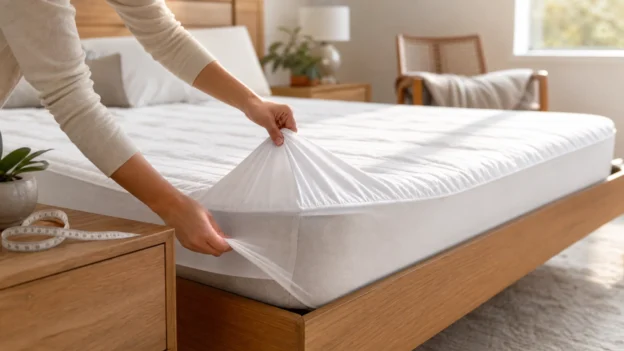
Choosing the right mattress protector queen size isn’t as simple as picking any cover labeled “queen.” Fit, protection level, and material quality all determine whether your protector actually does its job, or just sits there loosely while spills and allergens work their way through. Get it right, and you protect a mattress investment that likely cost several hundred to well over a thousand dollars. Get it wrong, and you’re back to square one faster than you’d expect.
Why Queen Is the Most Unforgiving Size to Get Wrong
Queen mattress dimensions and why they matter for fit
A standard queen mattress measures 60 inches wide by 80 inches long. That part is consistent. What varies significantly is the depth, or pocket height.
Modern mattresses commonly range from 8 inches deep on budget models to 14–16 inches on mid-range foam and hybrid designs. Pillow-top models can reach 18 inches or more. If your protector’s pocket depth falls short, it pulls off the corners under normal sleep movement, which defeats the purpose entirely.
Before you buy, measure your mattress depth and match it to the protector’s labeled pocket depth. Most quality queen protectors accommodate up to 18 inches; confirm that spec before you order.
Fitted vs. encasement style: which works for a queen bed?
A fitted (top/sided) protector covers the sleep surface and the sides of the mattress, securing with an elastic-edged pocket, like a fitted sheet. It’s the right choice for everyday spill protection and allergen defense on the sleep surface.
A full encasement wraps all six sides of the mattress and zips closed. It’s the better option when you need bed bug protection or severe allergy management, because there’s no exposed surface at all.
For most households, a quality fitted protector handles the day-to-day job well. The encasement becomes relevant in specific scenarios, covered later in this guide.
Waterproof Queen Mattress Protector: What ‘Waterproof’ Actually Means
Not every “waterproof” label means the same thing. Some protectors are water-resistant, they slow absorption but won’t stop a full spill from soaking through. A truly waterproof queen mattress protector uses a sealed barrier layer that liquid cannot penetrate, regardless of volume.
That distinction matters for spills, pet accidents, and incontinence situations, any scenario where liquid volume is significant or exposure is prolonged.
Membrane vs. laminate: understanding the backing
The two main waterproof constructions are a breathable membrane (typically a thin thermoplastic polyurethane layer bonded to the fabric) and a PVC or vinyl laminate. The membrane approach allows air and vapor to pass through while blocking liquid, that’s what makes it breathable. A vinyl laminate is fully impermeable but traps heat and tends to crinkle.
For a queen bed used nightly, breathable membrane backing is the practical choice. It maintains protection without creating a heat-retention or noise problem.
What a waterproof queen bed protector should feel like
The crinkle sound and sweaty feeling that some people associate with waterproof protectors come from low-cost vinyl or thin synthetic tops. A well-made queen bed protector waterproof design pairs the membrane backing with a soft cotton terry or jersey surface, the kind that feels like a normal fitted sheet, not a plastic sheet.
SureGuard’s queen protector uses this construction: 100% cotton terry on top, breathable waterproof backing underneath. With over 45,000 Amazon ratings averaging 4.6 out of 5 stars, real-world feedback consistently confirms it sleeps quietly and doesn’t trap heat.
Allergen & Dust Mite Defense for a Queen Bed
How a hypoallergenic queen mattress protector blocks dust mites
Dust mites are a leading trigger of indoor allergy symptoms. A queen mattress used nightly becomes a hospitable environment for them within months, they feed on dead skin cells and thrive in the warm, humid conditions inside a mattress. Without a barrier, regular washing of your sheets does nothing to address what’s building up inside the mattress itself.
A queen mattress protector hypoallergenic design works by creating a physical barrier so tightly woven that dust mites, their waste particles, pet dander, mold spores, and pollen cannot penetrate the mattress surface. Thread count and weave density determine how effective that barrier is, and when the claim is backed by a third-party certification, it’s not just marketing.
GREENGUARD Gold certification is the standard to look for. It confirms that the protector has been independently tested and meets strict chemical emission limits, important for households with children, asthma sufferers, or anyone sensitive to off-gassing from new bedding products. SureGuard’s queen protector carries GREENGUARD Gold certification.
Pet owners, parents, and allergy sufferers: who benefits most
The allergen proof queen mattress protector is most useful for three groups:
- Allergy and asthma sufferers, for whom reducing dust mite exposure during the eight hours they spend in bed is one of the most effective environmental interventions available.
- Parents with young children, who share beds, are prone to accidents, and benefit from both the waterproof and chemical-emission protections that GREENGUARD Gold covers.
- Pet owners, since pet dander is a potent allergen that works its way into mattress foam quickly and is nearly impossible to remove once it’s there.
For all three groups, a certified queen mattress protector dust mite barrier is a practical health measure, not an optional upgrade.
Protecting Your Mattress Warranty with a Queen Protector
Most mattress warranties include a stain clause: a visible stain, regardless of how it got there, can void the warranty entirely. That means a single coffee spill, an accidental leak, or a child’s nighttime accident can turn a multi-year warranty into worthless paperwork.
A queen mattress is a significant household investment. A waterproof protector priced at a fraction of the mattress cost eliminates that warranty risk. The math is straightforward: a $50–$80 protector backed by a 10-year warranty on a mattress that cost $800–$1,500 is one of the clearest value equations in home furnishing.
SureGuard’s queen mattress protector carries a 10-year warranty, longer than most competitors in the category. That warranty length is a credibility signal in itself: it reflects the brand’s confidence in the product’s durability under real daily use.
Queen Mattress Encasement vs. Queen Mattress Protector: Which Do You Need?
A queen mattress protector (fitted style) covers the top and sides of your mattress. A queen mattress encasement wraps all six sides and zips closed, sealing the mattress completely.
The practical difference comes down to your use case:
- Everyday spill and allergen protection: a quality fitted protector handles this well, is easier to remove and wash, and fits naturally under your fitted sheet.
- Bed bug prevention or severe allergy management: a full queen mattress encasement is the right tool, because it eliminates any surface entry point. Bed bugs cannot penetrate a properly fitted encasement, and for severe dust mite allergies, the complete seal provides a higher level of defense.
If you’re dealing with an active bed bug concern, check our bed bug prevention guide for a fuller picture of how encasements fit into a broader protection plan.
Most households buying a first protector for a new queen mattress will do well with the fitted style. The encasement is a targeted upgrade for specific situations.
How to Choose an Affordable Queen Mattress Protector Without Sacrificing Quality
Key features to check before you buy
Here’s the practical checklist for evaluating any affordable queen mattress protector:
- Pocket depth: confirm it matches or exceeds your mattress depth. 18-inch pockets accommodate most modern mattresses.
- Waterproof rating: look for a true membrane-backed waterproof barrier, not just a water-resistant treatment.
- Surface fabric: 100% cotton terry is the benchmark for breathability and feel. Synthetic surfaces vary widely in comfort.
- Certifications: GREENGUARD Gold is the key standard for chemical safety. OEKO-TEX Standard 100 is another respected textile safety certification.
- Washability: confirm the protector is machine washable and that the waterproof backing survives repeated wash cycles without delaminating.
Warranty and certifications: the real value signals
Price alone doesn’t separate a quality protector from a budget one. The real differentiators are warranty length and certification status, both require the manufacturer to back up their claims with accountability.
A protector with no warranty and no certifications is a gamble regardless of price. A protector with a 10-year warranty and GREENGUARD Gold certification has been independently verified and is guaranteed by the brand to perform over time. That’s a meaningfully different product, even at a similar price point.
SureGuard’s best queen mattress protector offering combines GREENGUARD Gold certification, a 100% cotton terry surface, breathable waterproof backing, and a 10-year warranty. It’s backed by over 45,000 verified customer ratings. For a household looking for durable, certified protection on a queen mattress, it’s a straightforward place to start, explore the SureGuard queen mattress protector and rest assured you’ve covered what matters.

