
 (209) 878-7320
 info@sureguardmattress.com


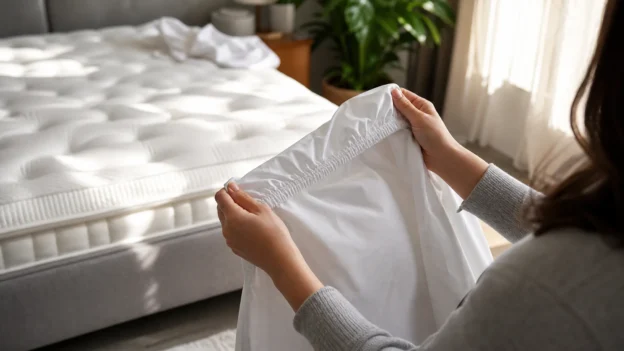
Buying a queen size mattress cover sounds straightforward, until you’re standing in front of a shelf of options with no clear idea whether the pocket depth will fit your mattress or whether the elastic will hold through the night. Most guides tell you why to protect your mattress. This one focuses on the practical details that actually determine whether a cover fits, stays put, and performs for years.
What Makes a Queen Size Mattress Cover Different from Other Sizes
Queen dimensions and why they matter for fit
A standard queen mattress measures 60 inches wide by 80 inches long. That’s the easy part. The variable that trips up most buyers is depth, queen mattresses range from around 8 inches for basic foam models to 16 inches or more for pillow-top and hybrid constructions. A cover sized only for a 10-inch mattress will pop off a 14-inch pillow-top overnight, no matter how tight the elastic looks in the packaging.
When shopping, check the cover’s maximum pocket depth, not just its surface dimensions. A label that reads “fits queen mattresses” without specifying depth is a red flag.
How queen sizing compares to full and king
A full mattress is 54 inches wide and 75 inches long, 6 inches narrower and 5 inches shorter than a queen. A king is 76 inches wide. Those differences matter because a cover cut for one size won’t anchor correctly on another. Elastic is tensioned for a specific surface area, so a full-size protector stretched onto a queen won’t grip the corners evenly, and a king cover will bunch and slide. Always confirm you’re buying a cover built specifically for queen dimensions.
Types of Queen Mattress Covers: Protector, Pad, or Encasement?
Not all queen mattress covers do the same job. The three main product types serve different use cases, and choosing the wrong one means paying for protection you don’t need, or missing the protection you do.
Fitted queen mattress protector
A fitted queen mattress protector works like a fitted sheet: it slips over the top and sides of the mattress and anchors with an elastic skirt. It covers the top and four sides, leaving the bottom open. This design is the right choice for everyday households, it blocks spills, sweat, dust mites, and dander on the top side, while staying thin enough that you don’t feel it under your sheets. It’s also the easiest to remove and wash. The queen bed cover protector in this category is what most buyers need.
Queen mattress encasement with zipper
A queen mattress encasement wraps all six sides of the mattress and closes with a zipper, creating a sealed barrier. This design is the right choice when bed bug protection or severe allergy management is the goal, because it leaves no gaps for insects or allergens to enter or exit. A queen mattress cover with zipper adds a step to your bed-making routine, but it’s the only format that fully encloses the mattress.
Water resistant pads sit on top of the mattress like a thin blanket and offer the lightest level of protection. They’re useful for low-risk situations but are not a substitute for a fitted protector or encasement when real defense is needed.
Material Matters: Cotton Top, Waterproof Backing, and Hypoallergenic Queen Mattress Covers
Cotton top vs. synthetic surfaces
Construction matters as much as coverage. The best performing covers use a layered build: a surface fabric, sometimes an inner layer, followed by a moisture barrier. A cotton terry or smooth cotton top is the most common surface choice because cotton is soft, breathable, and doesn’t create the crinkly texture associated with older plastic-style protectors. A cotton top mattress cover queen-style design sleeps cooler than full-synthetic surfaces because cotton wicks moisture rather than trapping it.
Fully synthetic top layers, polyester or microfiber, tend to cost less but can feel warmer and less natural against the skin.
Waterproof membranes and breathability
Beneath the surface fabric sits the waterproof membrane. Thermoplastic polyurethane (TPU) is the current standard for quality covers because it’s flexible, quiet, and breathable, unlike older polyurethane or vinyl membranes that trap heat and rustle with movement. A TPU membrane blocks liquid while still allowing air circulation, which keeps the sleep surface from feeling stuffy.
For health-conscious buyers and families, GREENGUARD Gold certification is the clearest independent signal that a cover has been tested for low chemical emissions. SureGuard’s queen size mattress protector carries this certification, meaning it’s been independently verified to meet strict standards, relevant for children’s rooms and for anyone sensitive to off-gassing. A hypoallergenic queen mattress cover with a sealed TPU layer also creates a physical barrier against dust mites, mold spores, and pet dander, which makes it useful well beyond liquid protection.
Anchor Systems and Fit: How a Queen Cover Actually Stays in Place
This is the section most product listings skip, and it’s where most buyers run into problems.
Queen covers use three main anchor systems: elastic at the four corners only, elastic running the full perimeter of the skirt, and deep-pocket designs with extra fabric in the skirt to accommodate thick mattresses. Corner-elastic covers are cheaper and easier to find, but they’re designed for mattresses no thicker than about 12 to 14 inches. If your mattress is deeper, or if you have a mattress topper, corner elastic won’t maintain tension across the full surface, and the cover will migrate during sleep.
Full-perimeter elastic is more reliable because tension is distributed evenly around all four sides. The cover grips the mattress consistently, even on deeper or irregularly shaped profiles.
Pocket depth labeling is also inconsistent across brands. A cover marketed as fitting an “18-inch deep pocket” may have a skirt that physically measures 14 inches once folded and stitched. The practical test: measure your mattress depth (including any topper), then add at least 2 inches of clearance when checking the cover’s stated pocket depth.
A cover that shifts overnight does more than disrupt your sleep. If bunching exposes part of the mattress surface to a spill or accident, the uncovered area isn’t protected, which can void a mattress warranty claim even if you thought you had protection in place.
Best Queen Mattress Cover for Long-Term Durability and Warranty Protection
Washing and care for lasting performance
A waterproof queen mattress protector needs regular washing to maintain hygiene and performance, roughly every one to two months under normal use, or immediately after any accident. The risk with washing is heat: high dryer temperatures can delaminate the waterproof membrane over time, separating it from the surface fabric and destroying the liquid barrier. Most TPU-membrane covers tolerate warm machine washing and low dryer heat. Hot cycles should be avoided.
Signs a cover is wearing out include visible delamination (the backing peels, cracks, flakes or bubbles), loss of waterproofing (liquid soaks through instead of beading), and elastic that no longer grips the mattress corners. When any of these appear, replace the cover, a failed protector offers no meaningful protection. For detailed instructions, see the SureGuard washing and care guide to extend the life of your cover.
How a cover protects your mattress warranty
Most major mattress warranties, including those from memory foam and hybrid manufacturers, include a clause stating that visible stains, moisture damage, or soiling can void coverage. This is a real financial risk. A queen mattress that costs $800 to $2,000 or more is a significant purchase, and a single stain can eliminate warranty recourse for a manufacturing defect that has nothing to do with the spill.
A waterproof queen mattress cover is the barrier that keeps warranty claims valid. SureGuard backs its protectors with a 10-year warranty, built to outlast the window during which most stain-related warranty disputes arise. That alignment between cover warranty and mattress warranty is a concrete reason to invest in quality rather than the cheapest option available.
Choosing the Best Queen Mattress Cover for Your Needs
Match the cover type to your actual situation:
- Everyday household use, A fitted queen mattress protector with full-perimeter elastic and stretchable skirt, a cotton top, and a TPU waterproof layer covers the most common needs: spills, sweat, and allergens.
- Pets on the bed, Prioritize a deep-pocket fitted protector with strong perimeter elastic. Pets shift covers more than people do, so anchor strength matters more than usual.
- Allergies or asthma, A hypoallergenic queen mattress cover with a sealed waterproof membrane blocks dust mites, dander, and mold at the surface level. GREENGUARD Gold certification adds chemical emissions assurance on top of that.
- Bed bugs, A queen mattress encasement with zipper is the only format that fully seals the mattress. Look for a fine-toothed zipper with a fabric flap over the pull to close off the zipper gap.
- Pillow-top or thick hybrid mattresses, Confirm pocket depth before purchasing. Look for covers explicitly rated for 18 inches or deeper, with full-perimeter elastic rather than corner-only elastic.
For most buyers, the best queen mattress cover fits the mattress depth correctly, uses a breathable TPU membrane, and carries independent certification for safety and material quality. SureGuard’s queen size mattress protector holds a 4.6-star average across tens of thousands of reviews, a volume of real-world feedback that reflects consistent fit and performance across different mattress types. Combined with GREENGUARD Gold certification and a 10-year warranty, it’s a cover built to protect both your family’s health and your mattress investment for the long term.

