
 (209) 878-7320
 info@sureguardmattress.com


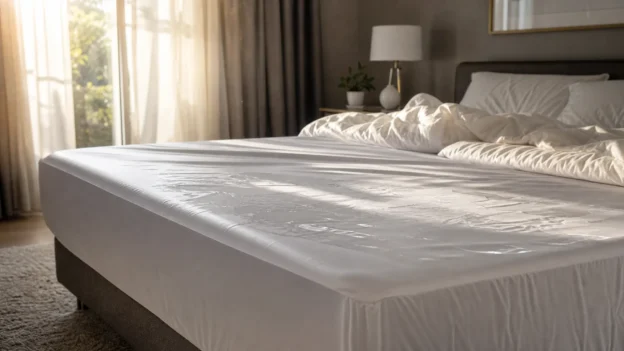
A king-size mattress is one of the largest purchases in your bedroom, and one of the most exposed to daily wear. Choosing the right mattress protector king size isn’t just about keeping the surface clean. It’s about protecting a significant investment from spills, sweat, allergens, and the kind of slow degradation that voids manufacturer warranties. This guide focuses on the decisions specific to king-size beds: sizing accuracy, pocket depth, waterproof vs. hypoallergenic priorities, and what a warranty length actually tells you about a product.
Why King Size Beds Need a Different Kind of Protection
A king mattress covers 6,080 square inches of sleeping surface. That’s roughly 25% more area than a queen, which means more exposure to everything, spills, sweat, pet dander, and allergens, every single night.
King beds are also more likely to be shared. Couples, families with young children who climb in overnight, pets, the traffic is heavier than on a single or a smaller guest bed. That combination of larger surface and higher occupancy makes king mattress protection genuinely different from protection on smaller sizes.
The mattress itself is a major investment. A quality king, hybrid or memory foam, typically costs between $1,000 and $3,000 or more. A protector that fails, shifts, or degrades early doesn’t just mean replacing the protector. It can mean losing your mattress manufacturer’s warranty coverage, which almost universally requires a clean, undamaged surface. Protecting the mattress isn’t optional maintenance; it’s warranty compliance.
Waterproof vs. Hypoallergenic: Which Priority Fits Your Household?
Most buyers come to this decision with one of two primary concerns: keeping liquids out, or keeping allergens out. The good news is that the best king size mattress protector handles both, but understanding each priority helps you evaluate whether a product actually delivers.
King Mattress Cover Waterproof: Who Needs It Most
A king mattress cover waterproof barrier is essential for families with young children, pet owners, and anyone managing incontinence or night sweats. Liquid that reaches the foam or coil layers of a mattress doesn’t just stain, it creates conditions for mold and bacterial growth that no amount of airing out will fully reverse.
Waterproof doesn’t have to mean crinkly or hot. A quality waterproof membrane, typically a thin polyurethane laminate bonded to a fabric backing, blocks liquid while remaining breathable. If a protector sounds like a rain jacket when you move on it, the membrane is too thick or too rigid. A noiseless, breathable barrier is a design achievement, not a standard feature at every price point.
Hypoallergenic King Mattress Protector: Blocking Dust Mites and Allergens
Dust mites are microscopic. A standard king mattress without a cover accumulates mite colonies, shed skin cells, and pet dander across that large surface, a real concern for allergy and asthma sufferers.
A hypoallergenic king mattress protector creates a physical barrier between sleepers and the mattress surface, blocking mites from colonizing the top layers. Look for third-party certification rather than a manufacturer claim: GREENGUARD Gold certification independently verifies that a product meets strict chemical emissions standards, which matters for anyone sleeping close to the surface every night, especially children and allergy sufferers.
SureGuard’s king size mattress protector carries GREENGUARD Gold certification and combines a breathable pure cotton top with a waterproof membrane underneath. That pairing means you don’t have to choose between liquid protection and allergen control.
Does a King Mattress Protector Fit All King Beds?
This is one of the most common, and costly, buying mistakes. The short answer is no: not all king protectors fit all king beds.
Standard King vs. California King: Sizing Differences That Matter
A standard king measures 76 inches wide by 80 inches long. A California king measures 72 inches wide by 84 inches long. They share a name but are not the same size and are not interchangeable.
Buying a standard king protector for a California king leaves the corners exposed and the fit loose enough to bunch and shift during sleep. The reverse, a California king protector on a standard king, will pull at the corners and create pressure points. Always confirm which king size you have before purchasing. Your mattress tag or original packaging will list the dimensions.
Depth and Pocket Size: Getting the Fit Right
Sizing isn’t just about length and width. Most contemporary king mattresses, especially hybrid and memory foam models, fall between 10 and 18 inches in profile depth. A standard fitted protector without a deep-pocket design won’t stretch over a 14- or 16-inch mattress without popping off the corners.
Look for a protector specifically labeled “deep pocket” with a pocket depth of at least 18 inches. This gives you secure coverage across the range of modern king mattress profiles, with enough elastic tension to stay flat overnight without shifting.
SureGuard’s king size mattress protectors have deep enough pockets to fit up to 20 inches deep.
Key Features to Look for in a King Size Bed Protector
When evaluating a king size bed protector, run through this checklist before committing.
Waterproof Barrier That Stays Quiet and Breathable
The waterproof membrane should be noiseless under normal sleep movement. It should also be breathable enough that it doesn’t trap heat, membrane technology has improved significantly, and premium protectors use bonded laminates that allow air exchange while blocking liquid.
Surface material matters too. Cotton terry tops are softer and more breathable than polyester alternatives. For a king size waterproof mattress pad, a cotton surface means the protector feels like a natural extension of your bedding rather than a plastic insert.
Hypoallergenic certification (GREENGUARD Gold is the standard to look for) and ease of washing round out the essentials. A king protector you can’t machine wash easily won’t stay clean, and a dirty protector defeats the purpose.
Warranty Length and What It Tells You About Quality
Warranty length is a quality signal, not just a customer service benefit. A king mattress protector with warranty coverage of 10 years tells you the manufacturer is confident the waterproof membrane won’t degrade, crack, or delaminate within that window. A 1- or 2-year warranty on a product you plan to use every night for a decade is a red flag.
SureGuard backs its mattress protectors with a 10-year warranty, a meaningful contrast to the 1–2 year coverage common among lower-priced alternatives. For a product sitting between you and a multi-thousand-dollar mattress, that coverage gap matters. You can explore how mattress protector warranties compare across brands to see what’s standard vs. exceptional.
Value vs. Premium: What You’re Actually Paying For
Budget king bed mattress covers exist at low price points for a reason: they cut corners on breathability, surface softness, membrane durability, and certification. Many use thin polyester tops that pill quickly, membranes that crinkle or degrade within a year or two, and carry no third-party certifications. Some are also not recognized as “mattress protectors” by your mattress manufacturer, meaning they won’t satisfy the warranty’s protection requirement if you need to make a claim.
A premium protector costs more upfront but amortizes to a very low annual cost over a decade. Divide a $60–80 protector with a 10-year warranty by 10 years of nightly use and the math is straightforward. The best king size mattress protector in this category also preserves your mattress manufacturer’s warranty, which can be worth hundreds or thousands of dollars in coverage.
SureGuard has earned a 4.6-star average rating across more than 45,000 reviews on Amazon, reflecting over a decade of real-world customer experience since the brand launched in 2013. That volume of reviews at that rating is a credibility signal that’s difficult to manufacture and easy to verify.
How to Care for Your King Size Waterproof Mattress Pad
A well-made protector is low maintenance, but care steps do affect longevity.
Machine wash cool on a gentle cycle. Tumble dry on low heat. One practical note: a standard king protector needs a large-capacity washer, the kind you’d find at a laundromat or in a household machine with at least 4.5 cubic feet of drum space. A smaller machine won’t allow enough agitation to clean the full surface properly and can stress the seams.
Under normal use, washing every 1–2 months is sufficient. With pets or young children sharing the bed, every 2–4 weeks is more appropriate. Spot clean between washes when needed.
What to avoid: bleach degrades the waterproof membrane over time, and high heat in the dryer can cause the laminate to delaminate or shrink the fitted edges. Stick to low heat and skip fabric softener, it coats the cotton fibers and reduces absorbency.
For a full step-by-step guide, see how to wash and care for your mattress protector to keep your protector performing year after year.
King mattress protection that’s maintained properly will last the full warranty period. Your mattress stays clean, your warranty stays valid, and your household rests assured.

