
 (209) 878-7320
 info@sureguardmattress.com


Mini cribs save space in nurseries and shared rooms, but a smaller mattress still needs the same protection as a full-size one. Infants spend hours on these surfaces at an age when accidents are frequent and immune systems are still maturing. A dedicated mini crib mattress protector is the barrier against moisture, allergens, and the daily wear that degrades bedding over time.
You need that layer because even minor exposure to fluids or dust mites can affect both infant health and mattress condition. Parents often focus on sheet patterns or firmness ratings and overlook the waterproof foundation underneath. Get a certified protector now, and you avoid costly replacements later while keeping indoor air quality healthier through your child’s early years.
Why Every Mini Crib Needs a Waterproof Mattress Protector
Leave a mini crib mattress unprotected and urine, spit-up, and formula spills soak into the foam or fiber core within seconds. Once liquid saturates the inner materials, surface cleaning stops working, and mold can grow in hidden layers where bacteria thrive undetected. No amount of airing out fully fixes that.
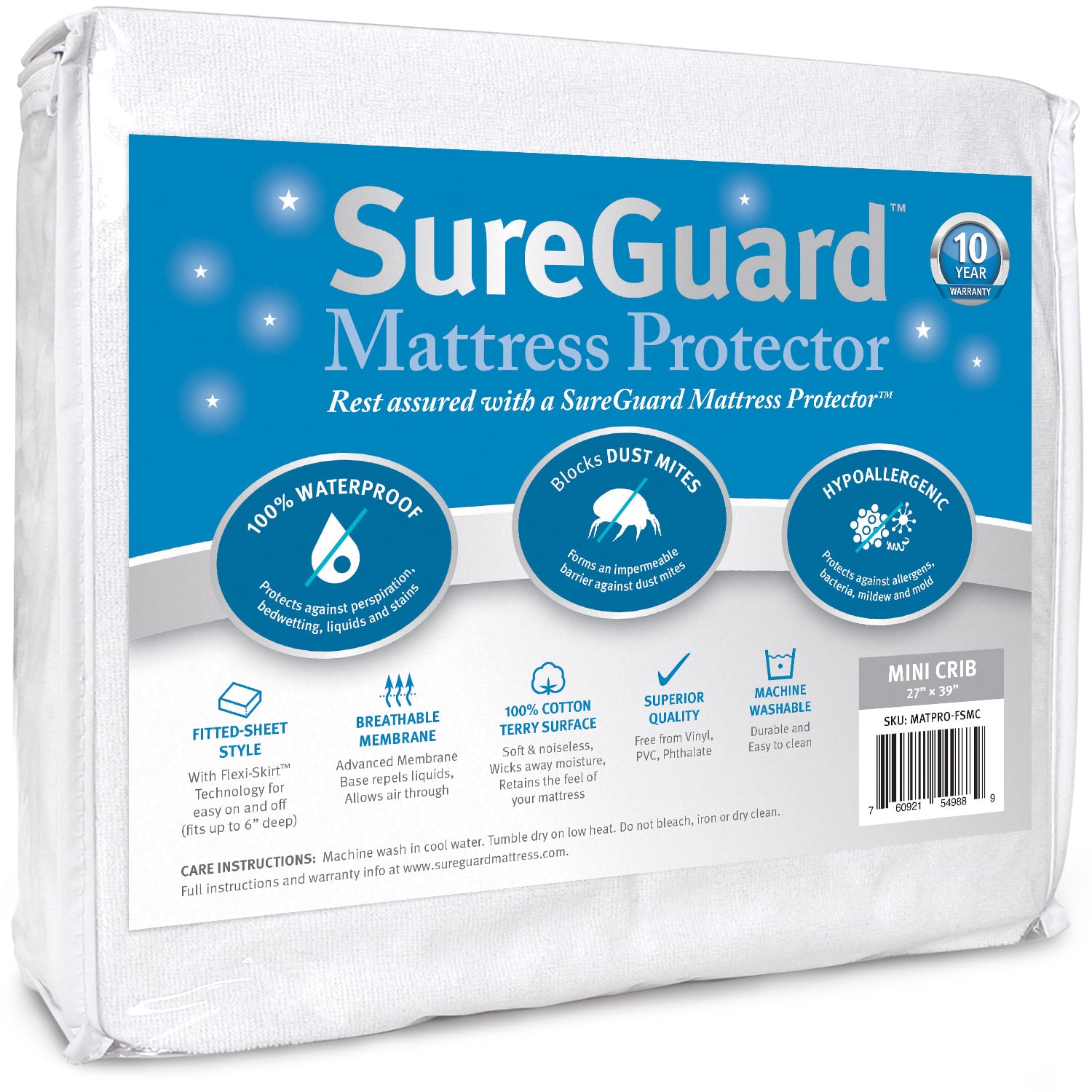
Most mattress manufacturers void their warranty if they find staining or fluid damage during an inspection. You can lose coverage on an expensive nursery essential simply because a protective layer was missing during routine use. Beyond the financial hit, repeated washing of soiled mattresses breaks down the structure faster and reduces the firmness infants need for safe sleep.
Waterproof protection also keeps pet dander and dust mite debris from building up inside the mattress. These irritants trigger respiratory issues and skin sensitivities that disrupt sleep and affect long-term health. A sealed barrier keeps the sleep surface hypoallergenic regardless of household pets or seasonal allergies.
Understanding Mini Crib Mattress Dimensions and Fit
Standard Mini Crib vs. Bassinet Sizes
Mini crib mattresses typically measure 24 inches wide by 38 inches long, though dimensions vary slightly between manufacturers and models. Bassinet mattresses are smaller and often oval, which makes them a poor match for rectangular mini crib frames despite how similar they look in marketing photos. Confuse the two sizes and you get dangerous gaps or bunched fabric, both suffocation hazards for a mobile infant.
Pack ‘n Play mattresses follow yet another sizing standard, different from both mini cribs and bassinets. Assume they’re interchangeable and you leave critical areas of the sleep surface exposed to liquid. Check the exact measurements on your mattress tag rather than trusting a generic category label when you shop for bedding accessories.
Ensuring a Snug, Safe Fit
An ill-fitting protector leaves loose fabric that can shift during sleep, creating an entanglement risk for an active baby. Confirm the length, width, and depth match your specific mattress before you buy a cover. Even a half-inch discrepancy can lift corners or snap elastic bands under nighttime movement.
Deep-pocket designs fit thicker mattresses without straining seams or losing waterproof coverage at the edges. A shallow protector on a thick pad leaves the sides exposed, which is exactly where leaks happen most during diaper changes or feeding. Look for products that list exact dimension compatibility rather than “universal fit,” which usually trades security for convenience.
Key Features in a Safe Mini Crib Mattress Protector
Breathable Waterproof Barriers
Modern waterproof membranes let air circulate while still blocking liquid, which addresses the overheating worry that comes up with extended sleep periods. Older vinyl covers trapped heat and made for uncomfortable, disrupted sleep. Current materials, polyurethane and similar fabrics, hold the line on impermeability without turning the mattress into a sauna.
Breathability affects whether the protector actually stays on: an uncomfortable one gets pulled off during a night change and never put back. Your baby sleeps longer, and more safely, when the barrier feels invisible against the skin instead of plastic or clammy. Check product descriptions for airflow testing or breathability claims alongside the waterproof rating.
Hypoallergenic and Certified Materials
GREENGUARD Gold certification means the protector meets strict limits for chemical emissions, which supports healthier indoor air in the nursery. Certifications matter because “hypoallergenic” by itself is an unregulated marketing term with no standardized test behind it.
SureGuard products have held an average customer rating of 4.6 out of 5 stars across more than 45,000 reviews since 2013. That kind of sustained rating points to consistent manufacturing and material quality parents can count on for a vulnerable infant. When you compare options, weigh verified certifications and long-term user feedback more heavily than unsubstantiated health claims.
Smooth vs. Terry Cotton Surfaces
A smooth cotton top gives a quiet, cool surface, good for sensitive skin and for light sleepers who startle at texture changes. The Smooth Mini Crib SureGuard Mattress Protector uses a pure cotton top surface built for quiet, comfortable infant sleep. It feels like a regular sheet while still delivering full waterproof protection underneath.
Terry cotton absorbs more for heavy leaks and adds a bit of cushioning over a firm mattress base. The standard Mini Crib SureGuard Mattress Protector uses a textured terry weave to pull moisture in fast before it spreads. Pick terry for an older infant with teething drool or frequent nighttime feeds, where volume outpaces what a smooth fabric can handle.
Choosing the Right SureGuard Mini Crib Protector
Both SureGuard mini crib options give you the same 100% waterproof protection, backed by the same warranty. All SureGuard mini crib protectors carry a 10-year warranty, which says something about how confident the company is in the waterproofing holding up through toddlerhood and beyond. Either style runs around USD 25.97, so price isn’t really the deciding factor.
Your choice comes down to texture preference and expected leak volume, not protection level, since that doesn’t change between the two. Smooth suits newborns with delicate skin and parents who want quiet nighttime changes. Terry suits an active toddler or a household where absorbency matters more than a sleek surface.
Neither model gives up anything on core function; both meet the same waterproof and material-safety standard. Pick based on how it feels against skin, knowing the performance underneath is identical.
Care Instructions for Long-Lasting Waterproof Protection
Wash mini crib protectors weekly, or right away after a visible accident, so stains and bacteria don’t get a chance to set. Use warm water and skip the bleach and fabric softener, both of which wear down the waterproof membrane over repeated washes. High heat permanently damages the polyurethane barrier, so tumble dry on low or air dry flat instead.
Good maintenance stretches the protector’s working life well past a typical ownership period and keeps the warranty valid. Skip washes and oils and proteins bond to the fibers, cutting absorbency and locking in odors that get harder to clean out later. Stick to a routine and the protector performs the same in year three as it did on day one.
Keep a spare protector on hand for when you need to rotate one out for laundry. A backup on hand means you’re never caught without coverage overnight.
Common Questions About Mini Crib Bedding Safety
Modern waterproof protectors stay silent during movement, none of the crinkling that came with older vinyl covers. The membrane flexes with the body instead of resisting it, so it doesn’t disturb a noise-sensitive infant’s sleep. Parents report no audible difference between a protected and unprotected surface during normal nighttime repositioning.
Heat retention was a problem with older products that lacked breathability engineering, not with current certified options. A contemporary barrier lets air exchange happen while still blocking liquid, keeping sleep temperature within safe pediatric guidelines. Watch the room’s ambient temperature and dress your infant for that, rather than assuming the protector adds heat on its own.
A fitted sheet goes on normally over a properly sized protector, without bunching or slipping. Match both the protector and the sheet to your mattress dimensions precisely, and the layers stay smooth and secure through the night. Compatibility problems come from sizing mismatches between pieces, not from any conflict between protection and bedding.
For broader context on material safety and waterproof technologies across age groups, see our waterproof bed cover guide. More on allergen-blocking construction is in our hypoallergenic mattress cover features resource.
Frequently Asked Questions
Do you need a waterproof mattress protector for a crib?
Yes, waterproof protection is essential for any crib mattress to prevent urine, spit-up, and formula from penetrating foam cores where mold and bacteria develop. Unprotected mattresses also void manufacturer warranties when staining occurs, making replacement necessary rather than optional. A certified waterproof barrier maintains hygiene and extends mattress lifespan through years of infant use.
Will a mini crib sheet fit a bassinet mattress?
No, mini crib sheets will not fit bassinet mattresses because the dimensions differ significantly in both size and shape. Mini crib mattresses are typically rectangular at 24×38 inches while bassinet mattresses are smaller and often oval. Using mismatched bedding creates dangerous gaps or loose fabric that poses suffocation hazards for infants.
Is a mini crib the same size as a pack n play?
No, mini cribs and Pack ‘n Plays use different mattress dimensions despite serving similar portable sleep functions. Mini crib mattresses typically measure 24×38 inches while Pack ‘n Play mattresses follow separate sizing standards. Always check your specific product’s measurements rather than assuming cross-compatibility between portable sleep categories.
What size mattress goes in a mini crib?
Standard mini crib mattresses measure 24 inches wide by 38 inches long, though some brands vary slightly from these dimensions. Always verify exact measurements on your mattress tag before purchasing protectors or sheets to ensure proper fit. Ill-fitting bedding creates safety hazards through gaps or bunched fabric that can endanger sleeping infants.

