
 (209) 878-7320
 info@sureguardmattress.com


Most shoppers spend weeks researching mattress materials but treat the foundation beneath it as an afterthought. You protect the surface where you sleep, yet the box spring underneath often sits completely exposed to the same hazards that threaten your mattress. That leaves a large part of your bed open to damage and contamination.
A decorative fabric wrap might dress up your bedroom, but it offers zero defense against biological threats or liquid accidents. A dust ruffle is there to be seen. A functional box spring cover is there to seal the entire foundation against pests, fluids, and allergens. Knowing the difference means you invest in actual protection instead of just a nicer-looking bed skirt.
Why Box Springs Need More Than Just Aesthetic Coverage
Decorative wraps drape over the sides of the foundation for appearance. Protective encasements fully seal the structure so contaminants can’t get into the internal framework. Many homeowners assume their box spring is safe because it sits below the mattress, but gravity pulls spills, skin cells, and dust downward into the unprotected fabric beneath. Your mattress protector catches what happens on top. Without a dedicated barrier below, liquids and particles migrate straight into the foundation’s porous materials.
Box spring construction hasn’t changed much in decades: wooden slats, fabric webbing, and metal coils, all stacked together in a way that creates dark crevices where debris collects over years of use. One industry write-up on box spring design even noted that the internal structure makes an ideal harborage site for pests, which is exactly why surface coverage alone falls short. Simple cloth covers cannot reach those gaps. The core of the bed stays open to infestation and mold growth that, over time, can affect the air quality in the room.
Bed Bug Defense Through Zippered Box Spring Encasements
Pests seek shelter in the deepest recesses of furniture, so partial coverage does little for serious prevention. A zippered box spring cover creates a sealed barrier that traps existing insects inside and keeps new ones from establishing colonies in the wooden frame. Surface sprays and powders can’t penetrate the internal lattice of a box spring. Mechanical exclusion, sealing the whole thing off, is the only reliable defense for this part of the bed.
You need a secure zipper closure to hold that seal through routine movement and cleaning. Learn more about how encasements stop infestations to see why gaps or loose fabric make pest protection pointless. Bed bugs can survive months without feeding inside an unsealed foundation, waiting to re-emerge when conditions turn in their favor.
This method won’t eliminate an active infestation elsewhere in the home, and it’s not a substitute for professional extermination in a widespread problem. It isolates the box spring as a harbor point. Treating walls, carpets, or other furniture where pests might also live is a separate job.
Waterproof Box Spring Cover Features for Spill Protection
Liquid damage voids most manufacturer warranties, since stains usually count as misuse rather than normal wear. A waterproof box spring cover keeps accidental spills from soaking into the absorbent fabric and wood underneath, where moisture invites mold and rot. Households with young children or pets carry more risk here, because accidents happen often and can go unnoticed until the liquid has already worked its way into the foundation.
Urine, water, and other fluids pass straight through standard cotton or polyester wraps, leaving damage that’s often permanent and that compromises both hygiene and support. A waterproof membrane in a quality encasement stops that transfer at the surface, so you can wipe away an accident before it does any real harm. Protecting the foundation also preserves warranty validity and stretches the functional life of the whole sleep system.
Allergen Barriers and Hypoallergenic Box Spring Protectors
Dust mites thrive in the warm, humid conditions inside an unprotected box spring, where they feed on accumulated skin cells. A tightly woven hypoallergenic fabric blocks these microscopic organisms and their waste from colonizing the foundation’s interior. Pet dander settles into exposed fabric the same way, building up a reservoir of allergens that releases into the air whenever weight shifts on the bed above.
Explore hypoallergenic cover features to see how fabric density affects allergen blocking. You breathe that air for roughly eight hours a night, so cutting the allergen load in your bed’s foundation has a direct effect on respiratory comfort and sleep quality. Washing the encasement removes surface allergens, but only a sealed barrier keeps new ones from building up inside, where cleaning can’t reach.
Choosing the Right SureGuard Box Spring Encasement Size
Getting the fit right means matching both the mattress dimensions and the depth of your foundation, so you get full 360-degree coverage without gaps. A Queen Size SureGuard Box Spring Encasement, for instance, is built to provide that same 360-degree protection against liquids, stains, allergens, and bed bugs for a fully sealed setup. The wrong size leaves edges exposed, or it bunches up and strains the zipper seal, which defeats the point of encasing it at all.
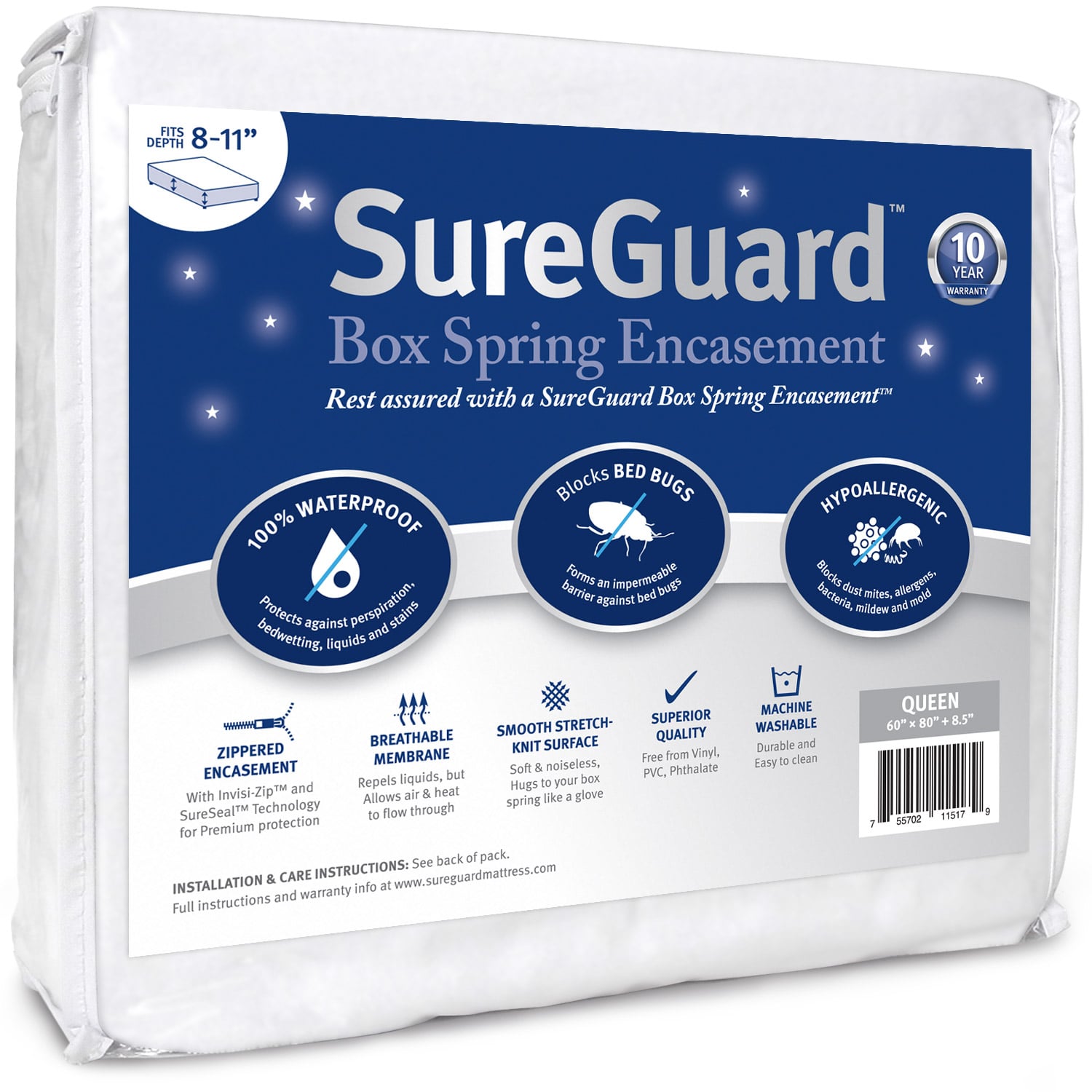
For larger beds, check whether you have a standard king or a split configuration before ordering, because the sizing differs. A Split King SureGuard Box Spring Encasement Pack includes two separate units, built for the dual-foundation setups common with adjustable bed frames. Full XL foundations need their own sizing, distinct from standard full dimensions. Guess wrong and you end up with gaps exactly where you can’t afford them.
SureGuard has protected millions of sleepers since 2013. Its encasements carry a 10-year warranty and GREENGUARD Gold certification, and more than 45,000 customer reviews across all products average 4.6 out of 5 stars on Amazon.com.
Installation Tips for Secure Zipper Closure and Fit
Accurate measurement is what prevents installation failures that compromise protection. Measure the exact depth of your box spring, including any padding or tufting, before you pick an encasement. Foundations vary a lot in thickness even within the same nominal size. Guessing based on mattress depth alone leads to a poor fit, since box springs often have a different profile than the mattress sitting on top.
Review zipper closure considerations to see how proper tab security keeps the seal intact during use. Position the zipper along the side or foot of the bed, somewhere you can reach it later but that won’t take much stress during sheet changes. Make sure the zipper tab locks fully into its pocket or guard flap after installation, so it can’t pop open and expose the foundation.
Launder the encasement per the care instructions before first use. That clears manufacturing residue and softens the fabric for easier handling. Two people make the job safer and faster, and cut the risk of tearing the material or damaging the zipper track while you stretch it into place.
Protecting Your Investment With Certified Bedding Safety
Certifications back up safety claims that marketing language alone can’t. GREENGUARD Gold certification means the product meets strict chemical emissions standards, so it’s not introducing volatile organic compounds into your bedroom. That third-party verification matters most for households with children, elderly family members, or anyone with chemical sensitivities who can’t tolerate off-gassing from uncertified synthetic barriers.
A long warranty signals that the manufacturer trusts its own materials and construction under normal residential use. Basic decorative covers carry neither certifications nor meaningful warranty coverage, because they were never built for protective performance. Certified protection costs more upfront than a simple fabric wrap. Given the difference in longevity and actual defense, it’s the more rational choice for protecting bedding you’ve already paid good money for.
Queen Size SureGuard Box Spring Encasement options start around USD 64.97, which puts certified protection within reach without a luxury markup.
Frequently Asked Questions
Should you put a cover on your box spring?
Yes, if you want to protect against bed bugs, spills, and allergens that accumulate in the foundation’s internal structure. A functional encasement seals the entire box spring, unlike decorative wraps that only improve appearance. Leaving it unprotected allows contaminants to build up over years and can void your mattress warranty.
How can I hide my box spring without a bed skirt?
A fitted box spring encasement provides a clean, tailored look that eliminates the need for traditional bed skirts while adding protection. Choose a neutral color that matches your bedding to create a streamlined appearance. This approach serves both aesthetic and functional purposes without the maintenance hassles of dust ruffles.
What is the thing that covers the box spring called?
Protective versions are called box spring encasements or box spring protectors, distinguished by their full zippered seal and barrier properties. Decorative versions are typically called box spring covers or dust ruffles and offer no functional protection. Using the correct terminology helps you find products designed for actual defense rather than just visual coverage.
Do box spring covers fit all foundation depths?
No, encasements come in specific depth ranges and you must measure your foundation before purchasing to ensure proper fit. Standard sizes accommodate common depths, but thicker or thinner foundations require corresponding encasement specifications. An ill-fitting cover leaves gaps that compromise protection against pests and liquids.

